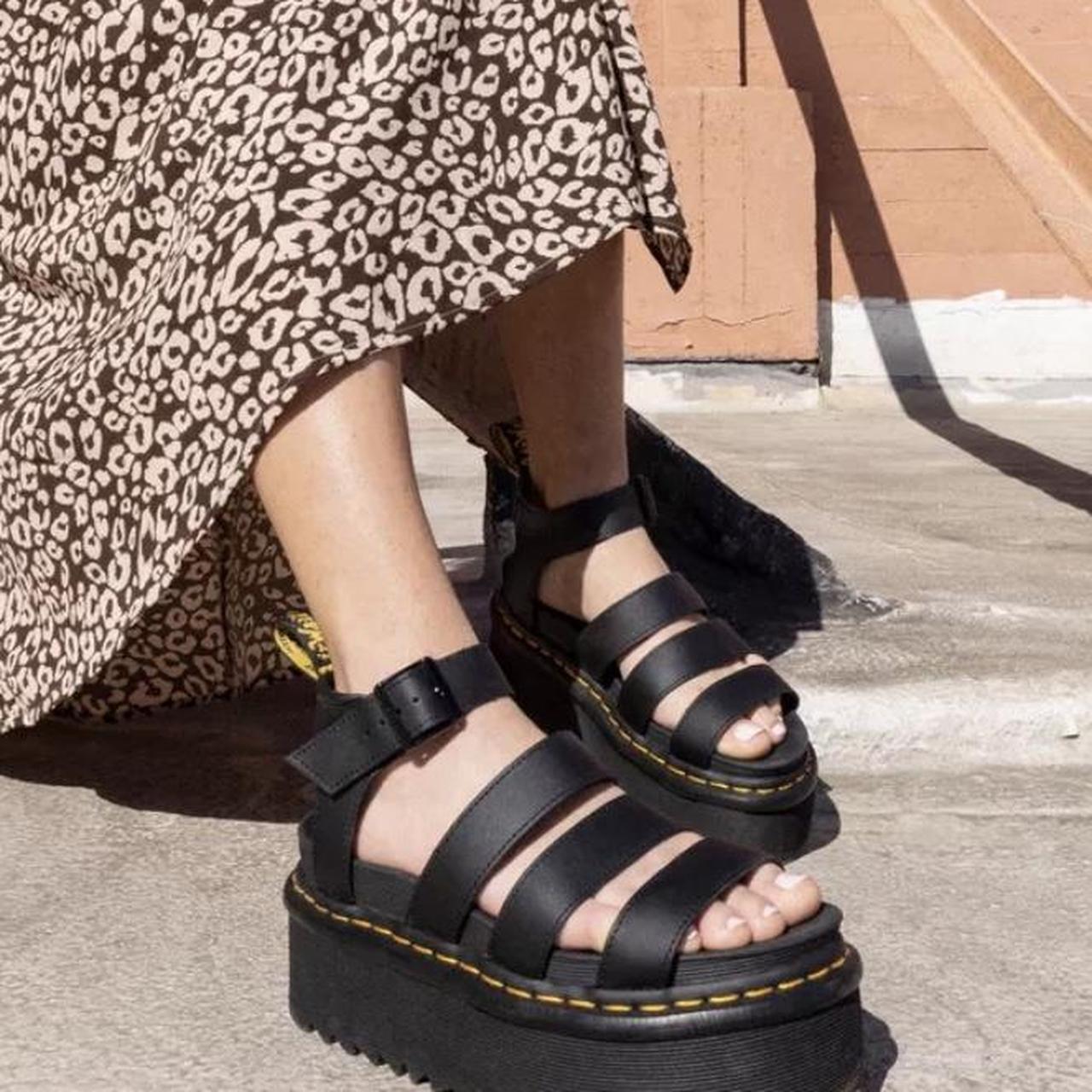
Honestly, if you weren’t scouring eBay or Depop for a pair of beat-up 8092 fisherman sandals lately, are you even doing the 90s revival right? People usually think of Dr. Martens and immediately see that iconic 1460 boot in their head. The yellow stitching. The black smooth leather. But for those of us who actually lived through the 1990s—or are obsessed with the era’s "ugly-cool" aesthetic—the sandals were the real MVP of the summer.
They were heavy. They were chunky. They looked like something a very fashionable hobbit might wear to a rave.
But there’s a massive difference between the 90s Dr. Martens sandals you buy at a mall today and the "Made in England" relics that defined the grunge era. If you’re trying to hunt down the authentic vibe, you need to know what actually happened back then.
Why the 90s Dr. Martens Sandals Still Matter
Back in the 90s, the brand was in its absolute prime. This was before the 2003 manufacturing shift to Asia. Every pair was coming out of the Northamptonshire factory. The leather was thicker. The soles weren't that translucent honey color you see now; they were dark, smoky, and felt like they could withstand a nuclear blast.
Grunge changed everything for Docs. Suddenly, you had Marc Jacobs putting models in flannel and heavy boots for his 1993 Perry Ellis collection. But when the weather got hot, the boots didn't go away—they just evolved.
The "Fisherman" style became the unofficial uniform of the alternative crowd. It was weird. It was anti-fashion. You’d see people pairing them with giant, oversized cargo shorts or floral maxi dresses that looked like they were stolen from a thrift store bin. It wasn’t about being pretty. It was about being "sturdy."
The Models That Defined the Decade
If you’re looking for the "Holy Grail" of vintage Docs, you aren't just looking for "sandals." You’re looking for specific silhouettes that have a weight to them that modern foam-sole shoes just can't replicate.
- The 8092 Fisherman: This is the big one. Wide straps, a serious buckle, and that blunt, rounded toe. It’s the shoe most people imagine when they think of 90s Dr. Martens sandals.
- The Shore Clarissa: While the Clarissa exists today, the 90s versions had a much stiffer leather. It took weeks to break them in. Your heels would bleed, but once they softened? They were yours for life.
- The Mule Slides: There were these chunky, open-back slides (like the 8418) that felt very "suburban dad" but were adopted by the riot grrrl scene.
- The Floral Embossed Styles: Every so often, you’ll find a pair with 90s "daisy" patterns pressed into the leather. These are incredibly rare now and usually go for a fortune on the resale market.
How to Spot "Real" 90s Vintage vs. Modern Remakes
I see people getting burned on this all the time. They buy a pair of "vintage" Docs only to realize they’re from 2014. If you want the actual 90s quality, you have to look at the details.
The Sole Opacity
Look at the bottom. Vintage 90s soles are dark. If you can see light through the sole easily, or if it looks like a bright "butterscotch" color, it’s likely a modern pair. The older rubber compounds were denser and much more opaque.
The "Made in England" Stamp
This is the easiest tell. Almost all 90s Dr. Martens sandals were made in the UK. Look for the "Made in England" embossing on the sole. If it just says "The Original" without the country of origin, it’s a post-2003 pair made in China, Vietnam, or Thailand.
The Heel Loop and Tags
In the mid-90s (around 1995), the brand switched from a printed heel loop to a woven one. If you find a pair with a printed "AirWair" tag that feels almost like paper or plastic, you’ve hit the 80s or very early 90s jackpot.
The "Ugly" Aesthetic: Why We’re Obsessed Again
Fashion is cyclical, sure, but the return of the chunky sandal is deeper than that. We’re currently in a "Post-Sneaker" world where people want footwear with some actual soul. Modern shoes feel disposable.
90s Dr. Martens sandals are the opposite of disposable.
They’re heavy. You feel every step. There’s something grounding about wearing a shoe that weighs two pounds. Plus, they fit perfectly into the "Gorpcore" and "Kinderwhore" aesthetics that are dominating TikTok and Instagram right now.
Breaking Them In (The Survival Guide)
If you do manage to snag a vintage pair, be warned: 90s leather is not your friend for the first month. It’s thick, "greasy" leather that hasn't moved in thirty years.
- Don't go barefoot. Not yet. Wear thick wool socks. Yes, the "socks and sandals" look is controversial, but your skin will thank you.
- Use Wonder Balsam. Or any heavy-duty leather conditioner. The leather on vintage sandals is often dry. You need to feed it before you flex it, or it might crack.
- The Hammer Method. I’ve known people who literally hit the heel counter with a rubber mallet to soften the fibers. It works, just be gentle.
Practical Steps for Your Hunt
If you’re ready to dive into the world of 90s Dr. Martens sandals, don't just search the generic terms. Use the model numbers.
Search for "Dr. Martens 8092 vintage," "MIE Doc Marten sandals," or "90s chunky fisherman sandals." Check the photos for the "Made in England" stamp on the footbed or the sole.
Prices are climbing. A good pair of vintage 8092s can go for anywhere between $120 and $250 depending on the condition. But remember: you aren't just buying a shoe. You’re buying a piece of subculture history that was built to outlast you.
Before you buy, ask the seller for a photo of the soles to check for "star cracks." Sometimes the old PVC soles can dry out and split. If the soles are solid and the leather is intact, you’re good to go.
Grab some leather conditioner, find your favorite pair of vintage Levi’s, and get ready for the best (and heaviest) summer of your life.
Next Steps for Your Vintage Search:
- Verify the Origin: Always ask for a photo of the bottom of the shoe to confirm the "Made in England" status.
- Check the Model: Look for the four-digit code inside the strap to identify the exact production year range.
- Condition the Leather: Once they arrive, apply a lanolin-based conditioner immediately to prevent the 30-year-old leather from cracking under new pressure.