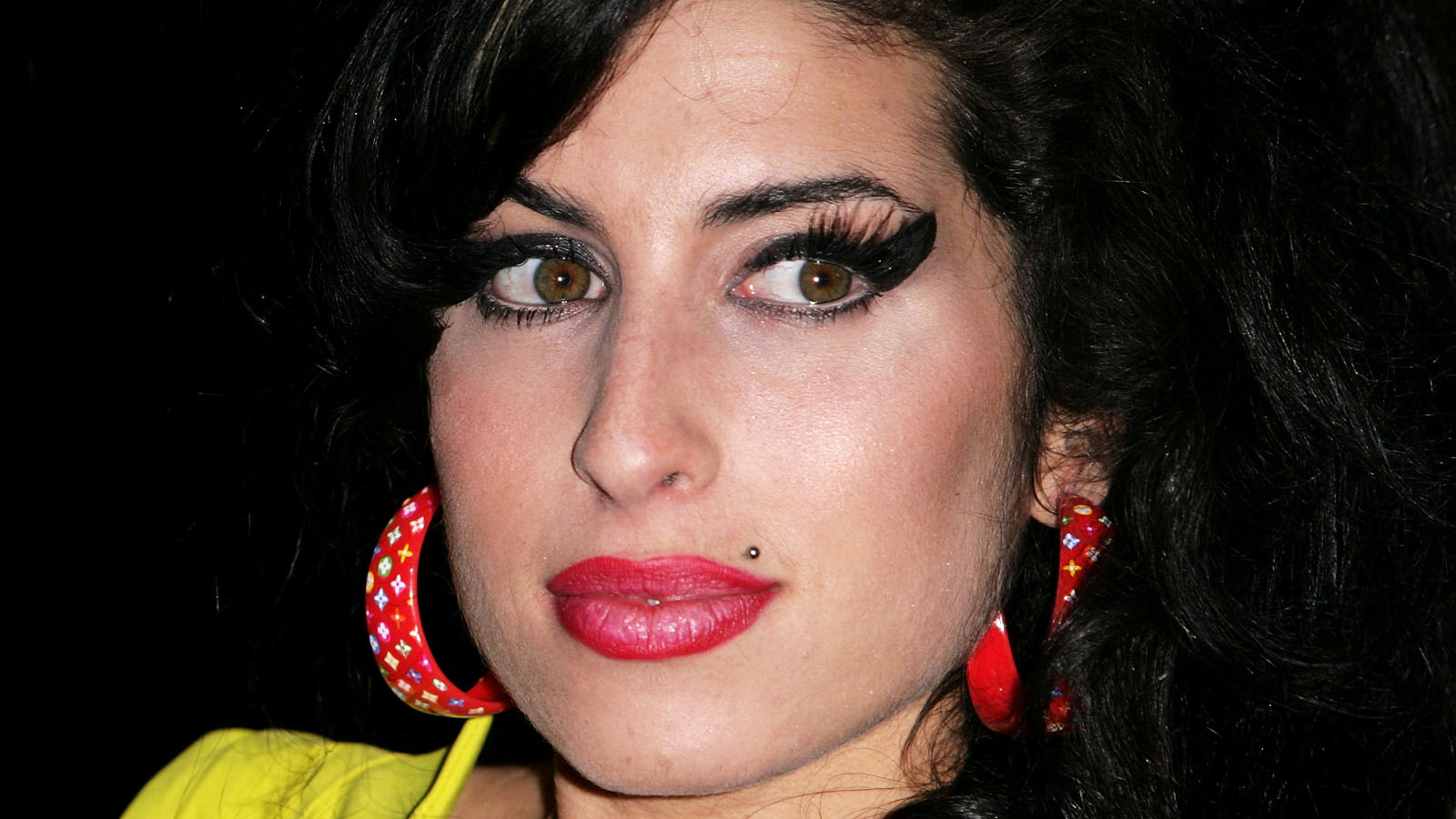
We all know the silhouette. The towering beehive, that thick-as-a-sharpie Cleopatra eyeliner, and the ballet flats scuffing against the pavement in Camden. It was a uniform. For Amy Winehouse, her aesthetic wasn’t just a fashion choice; it was an architectural feat. But behind the heavy ink and the hairspray, there was a face the public rarely got to see in its raw state. Seeing amy winehouse no makeup isn't just about satisfying curiosity. It’s about catching a glimpse of the person who existed before the "Amy Winehouse" persona took over.
Honestly, she looked like a completely different human. Soft. Younger. Strikingly vulnerable.
In the early days, around the Frank era in 2003, Amy was often fresh-faced. She’d walk around London with her hair down, maybe a little bit of frizz, and skin that looked like it actually saw the sun occasionally. There’s this famous photo of her in a simple green vest, smiling, with nothing but maybe a swipe of lip balm. It’s jarring if you’re used to the Back to Black imagery. You’ve got to wonder if the makeup eventually became a mask she couldn't take off.
Why Amy Winehouse No Makeup Photos Still Shock Fans
The contrast is wild. One minute she’s this 1960s girl-group powerhouse, and the next, she’s a girl from North London with freckles and bright, heavy-lidded eyes. Fans often hunt for these "bare" images because they feel more "real." It’s a way of connecting with the girl who wrote "Stronger Than Me" before the world turned her into a caricature.
Paparazzi in the late 2000s were relentless. They caught her at her highest and, unfortunately, her absolute lowest. Some of the most famous shots of amy winehouse no makeup come from those chaotic years in Camden. You see the toll the lifestyle took—the breakouts, the pale complexion, the exhaustion. But even then, there was something undeniably beautiful about her bone structure. She had these incredible, sharp cheekbones and a very expressive mouth that the heavy red lipstick often actually hid.
The Evolution of the Mask
It didn't happen overnight. Amy’s look evolved as her fame grew.
- 2003: Fresh-faced, curly hair, very little eye makeup.
- 2006: The eyeliner starts to wing out. The hair gets taller.
- 2008: The signature look is fully "on." The eyeliner is massive, often smudged.
Makeup artist Valli O’Reilly, who worked with Amy, once mentioned that the singer used Rimmel Exaggerate Liquid Eye Liner. It’s a drugstore staple. Cheap, inky, and stubborn. Amy liked things that stayed put, or at least things she could layer on herself. By the time she was a global superstar, the "no makeup" moments were relegated to private holidays or those rare, quiet mornings before the beehive was pinned into place.
Seeing the Person Behind the Beehive
There’s a specific video that did the rounds recently—unseen footage from her "In My Bed" shoot. She’s young. Her hair is just... hair. It’s flowing and dark, no extensions in sight. She looks happy. When people search for amy winehouse no makeup, this is often what they are looking for: the ghost of a version of Amy that seemed like she might have been okay.
Psychologically, heavy makeup can be a shield. For a girl who struggled with the spotlight and her own demons, drawing those thick black lines might have felt like drawing a boundary. "This is the performer; leave the girl alone." But the cameras never did.
Authentic Beauty vs. The Public Image
Some critics argue that our obsession with seeing celebrities without makeup is kind of intrusive. Maybe. But with Amy, it feels different. It feels like a search for the truth. She was so authentic in her lyrics—she told us everything about her heart—that we naturally want to see the face that matches that honesty.
Real skin has texture. It has pores. It has scars. Amy’s face without the "war paint" showed all of that. It showed the girl who loved jazz and her nan, Cynthia. It showed a woman who was, beneath the global fame, just a person trying to get through the day.
If you want to appreciate the "real" Amy, look at the 2011 photos of her walking in Camden just weeks before she passed. She’s often wearing very little makeup there. Her skin looks clearer, her eyes brighter. It’s a haunting reminder of the talent we lost.
Next Steps for Fans and Researchers:
- Watch the Documentary 'Amy' (2015): Asif Kapadia’s film uses tons of home movie footage where she is completely natural. It's the best way to see her personality shine through without the stage persona.
- Explore the 'Frank' Album Art: Revisit her debut era. The photography by Charles Moriarty captures her in a way that feels intimate and unpolished.
- Support Local Arts: Amy was a product of the London jazz scene. If you want to honor her legacy, go see a live show at a small club like the Jazz Café in Camden—the kind of place where she could just be herself.