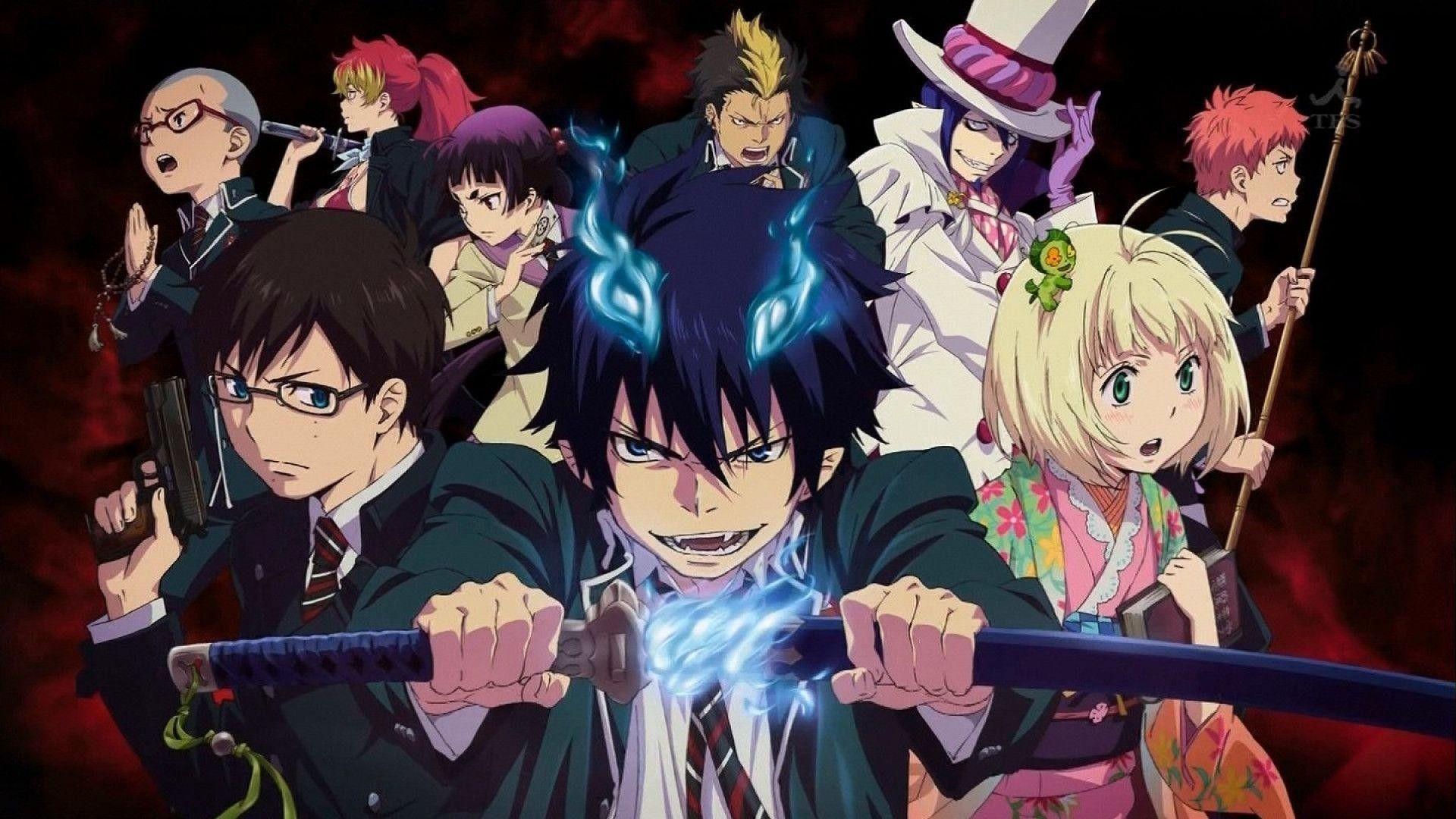
Kazue Kato probably didn't realize back in 2009 that she was creating a legacy that would stretch well into the late 2020s. Ao no Exorcist, or Blue Exorcist as most of us know it, isn't just another shonen about a kid with a sword. It’s a messier, more emotional look at family trauma masked by blue flames and Catholic-adjacent demonology. If you've been following Rin Okumura's journey from a delinquent kid to a Knight of the True Cross, you know the "Blue" in the title is more than just a color palette. It is a burden.
Rin is the son of Satan. That’s the hook. But the real meat of the story is how he handles that heritage without losing his humanity. Honestly, most series would have turned him into a brooding anti-hero by chapter ten. Instead, Kato kept him loud, impulsive, and deeply empathetic. It’s that human element that keeps the fandom alive even during those long hiatuses.
The Evolution of the Blue Flames
The blue flames represent the power of Gehenna. They are the signature of Satan himself. In the world of Ao no Exorcist Blue Exorcist, flames usually destroy, but Rin’s journey has always been about whether he can use that destructive force to protect. For years, the anime adaptation struggled to keep up with the manga's nuance. We had that weirdly divergent first season in 2011 that went off the rails into "anime-original" territory. It was confusing. Fans had to wait until Kyoto Saga and later the Shimane Illuminati Saga to see the actual depth of Rin’s power development.
The lore goes deep. We aren't just talking about fireballs. The series explores the concept of "Masho"—the spiritual wound received from a demon that allows a human to see the supernatural. It’s a clever metaphor for trauma. Once you’ve seen the darkness, you can’t unsee it. Rin and his brother Yukio represent two different reactions to that sight. One embraces the heat, while the other tries to control it through cold, clinical discipline.
The contrast between the two brothers is arguably the strongest part of the narrative. Yukio isn't just a sidekick; he's a ticking time bomb of resentment and repressed fear. Seeing his descent—and eventual reconciliation with his own heritage—is what makes the later arcs like the Section 13 revelations so gut-wrenching.
Why the Blue Exorcist Manga Hits Different
Most people started with the anime. I get it. The music by Hiroyuki Sawano is legendary. But if you haven't touched the manga, you are missing about 60% of why this series is actually a masterpiece of world-building. Kazue Kato’s art style is incredibly detailed, blending Gothic architecture with modern urban grit.
The Past Arc—which finally explains what happened between Yuri Egin and Satan—is some of the most heartbreaking storytelling in modern shonen. It moves away from the "monster of the week" format and dives into the philosophical question of whether a literal personification of evil can feel love. It turns out, the answer is complicated.
- Rin’s Koma Sword (Kurikara): It’s not just a weapon. It’s a seal. When the sword was forged, it essentially acted as a container for Rin’s demonic heart. This means every time he draws it, he’s literally playing with his own soul.
- The Vatican’s Role: The True Cross Order isn't exactly "the good guys." They are a political entity. They've done some pretty horrific experiments (look at Section 13) to try and weaponize Gehenna.
- The Shemihaza and Azazel Connections: The lore pulls from actual Abrahamic apocrypha, but twists it. The Grigori aren't just names; they are ancient entities trying to maintain a crumbling balance between Assiah (the human world) and Gehenna.
Dealing With the Hiatus and the Comeback
Let’s be real. Being a fan of Ao no Exorcist Blue Exorcist requires patience. Kato has taken several breaks for her health and to work on other projects like Eisner-nominated short stories. In 2021, she took a nearly year-long break to work on Strange Adventure of Atree. Fans were worried. But when she came back, the quality of the art and the pacing of the Illuminati fallout was top-tier.
The shift in the industry toward "seasonal" anime has actually helped the series. Instead of the endless filler we saw in the early 2010s, we are getting tighter, more faithful adaptations of the manga's complex later arcs. This has allowed the Blue Night mystery to finally get the screen time it deserves.
Addressing the Common Misconceptions
People often think this is just a "Naruto with demons" clone. It’s an easy comparison, but it’s lazy. Rin doesn't want to be the "Exorcist King." He just wants to prove he isn't a monster. That's a huge distinction. The stakes are personal, not just political.
Another mistake? Thinking Yukio is the "stable" one. If anything, Yukio is the most unstable character in the entire franchise. His struggle with his own latent demonic powers—and his jealousy of Rin’s perceived "freedom"—is the primary engine of the plot for the last fifty chapters. The series isn't about killing Satan; it's about two brothers trying not to kill each other while the world ends around them.
The world of Assiah is fragile. The barrier is thinning. We see this in how demons are appearing more frequently in mundane settings like grocery stores and schools. It’s a slow-burn apocalypse that feels very grounded, despite the literal blue-flamed teenagers running around.
Actionable Steps for New and Returning Fans
If you're looking to get back into the series or start fresh, don't just wing it. The timeline is a bit messy because of the 2011 anime's ending.
- Watch the first 17 episodes of Season 1. Stop there. The rest of that season is non-canonical filler that will confuse you later.
- Jump straight to the Kyoto Impure King Saga. This picks up right after the trial where the school finds out Rin is the son of Satan. It ignores the fake ending of Season 1.
- Read the manga from Chapter 34. This is where the Kyoto Saga ends. If you want the full experience, start from Chapter 1. Kato’s art has details the anime simply cannot replicate, especially regarding the designs of the higher-tier demons like Beelzebub or Egyn.
- Check out the Blue Exorcist: Kyoto Saga OST. Even if you aren't watching, the music by Kohta Yamamoto and Hiroyuki Sawano sets the perfect mood for the series' darker themes.
- Follow Kazue Kato on social media. She often posts sketches and behind-the-scenes looks at her process. She is one of the few mangakas who is very transparent about the work-life balance in the industry.
The story of the blue exorcist is nearing its final stages. The battle between the Okumura brothers and the forces of Gehenna has reached a point of no return. Whether Rin can truly transcend his nature as a destroyer remains the central question. It’s a story about choice. We aren't defined by our parents or the "flames" we are born with, but by what we choose to protect. That’s why we’re still here, more than a decade later, waiting to see if Rin can finally put his demons to rest.
Crucial Insight for Readers: To truly understand the current state of the series, focus on the "Interdependence" theme. The series shifted from a solo hero journey to a collective survival story where the supporting cast (Shiemi, Izumo, Bon, Suguro) are just as vital to the world's survival as Rin himself. This isn't a "one hero" story anymore; it's a war of ideologies.