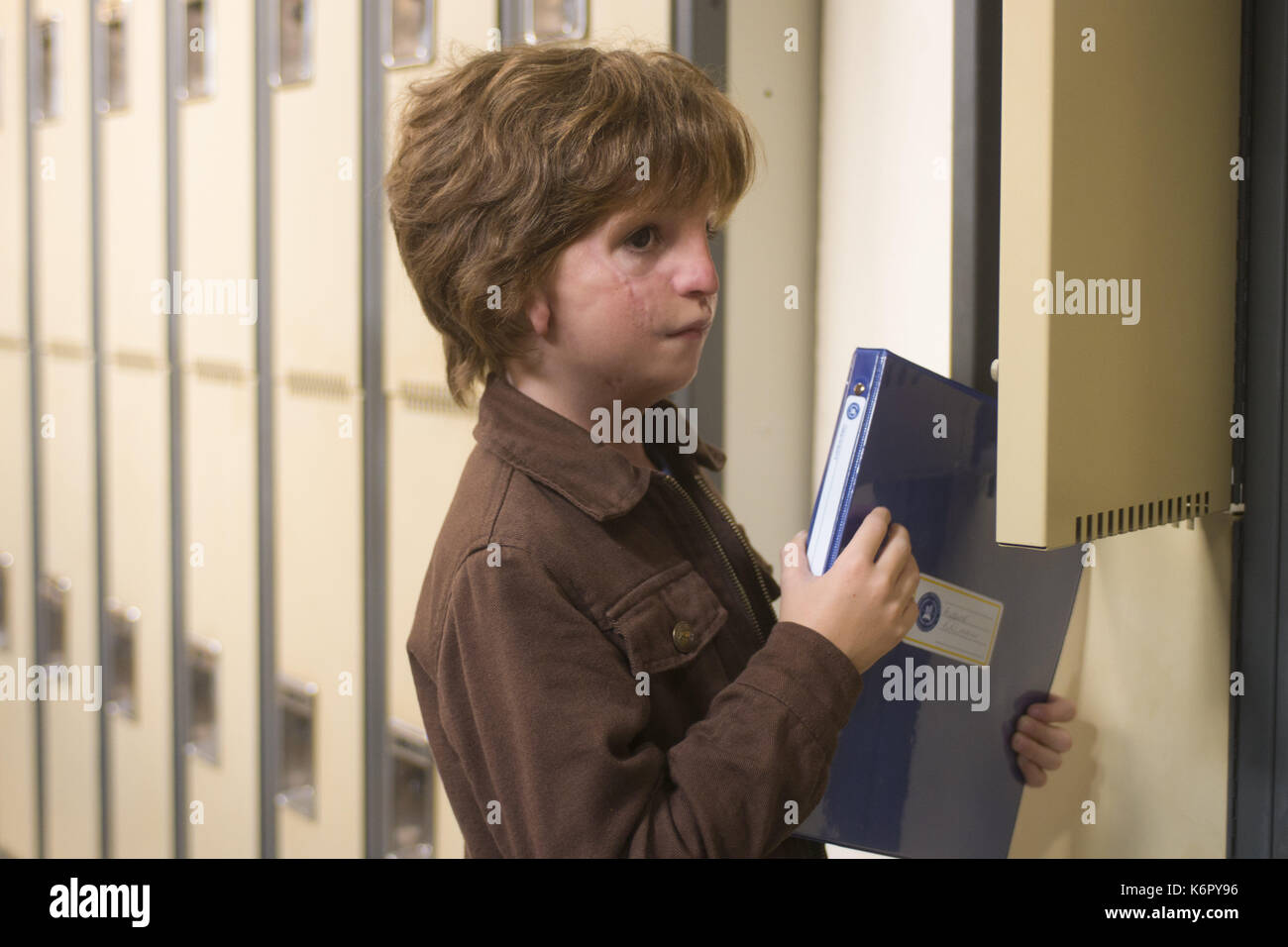
You’ve seen the astronaut helmet. You’ve probably cried through the movie or stayed up late turning pages of the book, rooting for the kid who just wanted to eat his lunch without being stared at. August "Auggie" Pullman feels like someone we actually know. But if you’re looking for a single person who is the literal Auggie Pullman in real life, the answer is a bit more layered than a simple "yes."
Basically, Auggie is a blend. He is a mix of a real-life moment that haunted an author, a very real teenager named Nathaniel Newman, and the collective experiences of thousands of kids living with Treacher Collins syndrome.
The Ice Cream Shop Incident That Started Everything
The story didn't start in a writer's studio with a mood board. It started at an ice cream shop. R.J. Palacio, the author of Wonder, was with her two sons when she saw a little girl with a severe craniofacial difference. Her youngest son, only three at the time, saw the girl and started crying.
In a moment of pure, panicked instinct, Palacio tried to whisk her kids away to avoid making the girl feel bad. It backfired. It felt clumsy. She heard the girl’s mother say, in a voice that was incredibly calm and kind, "Okay guys, I think it's time to go."
That stayed with her. She couldn’t shake the guilt of how she handled it. That night, she started writing what would become Wonder. She wanted to explore what it was like to be that child—to be the person everyone is trying not to look at.
Who is Nathaniel Newman?
While the book isn't a biography, there is one boy who has been called "Auggie Pullman come to life" by Palacio herself. That’s Nathaniel Newman.
Nathaniel was born with Treacher Collins syndrome, a rare genetic condition that affects how the bones in the face develop. Specifically, it can mean missing cheekbones, malformed ears, or a very small jaw. For Nathaniel, this meant undergoing over 60 surgeries by the time he was a teenager.
Honestly, his life mirrors the Pullman family’s reality in ways that feel eerie. When Nathaniel’s parents, Magda and Russel, first read the book, they actually wondered if Palacio had been spying on them. The details were that accurate. Nathaniel has spent his life navigating the same stares, the same surgical recoveries, and the same "first day of school" jitfuls that Auggie faces.
He even wrote a letter to his classmates before starting middle school—just like a scene you might imagine from the book—explaining his face and asking them to just treat him like a normal kid who happens to love Pokémon and Star Wars.
Life With Treacher Collins Syndrome
It’s not just about looking different. People often forget the physical toll.
- Breathing and Eating: Many kids with this condition need a tracheostomy (a tube in the neck) to breathe because their airways are so narrow.
- Hearing Loss: Because the ears often don't form correctly, many use bone-anchored hearing aids.
- The Surgery Cycle: It’s not one and done. As a child grows, their bones change, meaning they have to go back under the knife again and again.
Nathaniel Newman didn't get his "trach" removed until he was 13. Imagine not being able to submerge your head in a pool or take a shower alone for thirteen years. That’s the "real life" part that the movie touches on but can’t fully convey.
Is Auggie Pullman Based on a Real Person?
Technically, no. Auggie is a fictional character. But he is a "composite."
Jacob Tremblay, the actor who played Auggie, actually reached out to real kids with facial differences to prepare for the role. He kept a binder of letters and photos from these kids and read them before every emotional scene. He wanted to make sure he wasn't just "playing a part," but representing their actual frustration and resilience.
One of those kids was Vanessa Wiens, who grew up with a very small jaw due to medical issues. She’s talked about how kids would tell her to go kill herself or how she’d hide in the bathroom during recess. When she saw the movie, she said it felt like watching her own life.
Why We Keep Talking About "The Real Auggie"
The reason people search for Auggie Pullman in real life is that they want to know if that kind of strength actually exists. It does.
Nathaniel Newman is now a young man who drives a car, draws, and hangs out with his dogs. He and his mom even wrote their own memoirs called Normal: One Kid’s Extraordinary Journey and Normal: A Mother and Her Beautiful Son.
His take on the word "normal" is pretty great. He basically says that if everyone were normal, we’d all be exactly the same, which sounds incredibly boring.
Actionable Insights for Moving Forward
If you want to take the lessons from Auggie’s story into your actual life, here is how you can actually do it without being "clumsy" like the author felt at that ice cream shop:
- Don’t Look Away: If you or your child see someone with a facial difference, don't panic and pull them away. A simple smile or a "hello" acknowledges their humanity rather than making them feel like a problem to be hidden.
- Educate Before the Encounter: Talk to kids about the fact that some people are born with "different faces" but have the same "insides." Mention Treacher Collins or other craniofacial conditions as just another way a body can be.
- Support Real Organizations: The story is fiction, but the medical bills are very real. Organizations like myFace or the Children’s Craniofacial Association (CCA) provide resources and surgeries for families like the Newmans.
- Practice the "Precepts": In the book, Mr. Browne has his students follow "precepts" or rules to live by. The most famous one is: "When given the choice between being right or being kind, choose kind." It sounds cheesy until you’re the one standing in the lunchroom alone.
Auggie Pullman might be a character in a book, but the "wonders" he represents are walking around in the real world every day, living lives that are much harder—and much more impressive—than any two-hour movie can show.