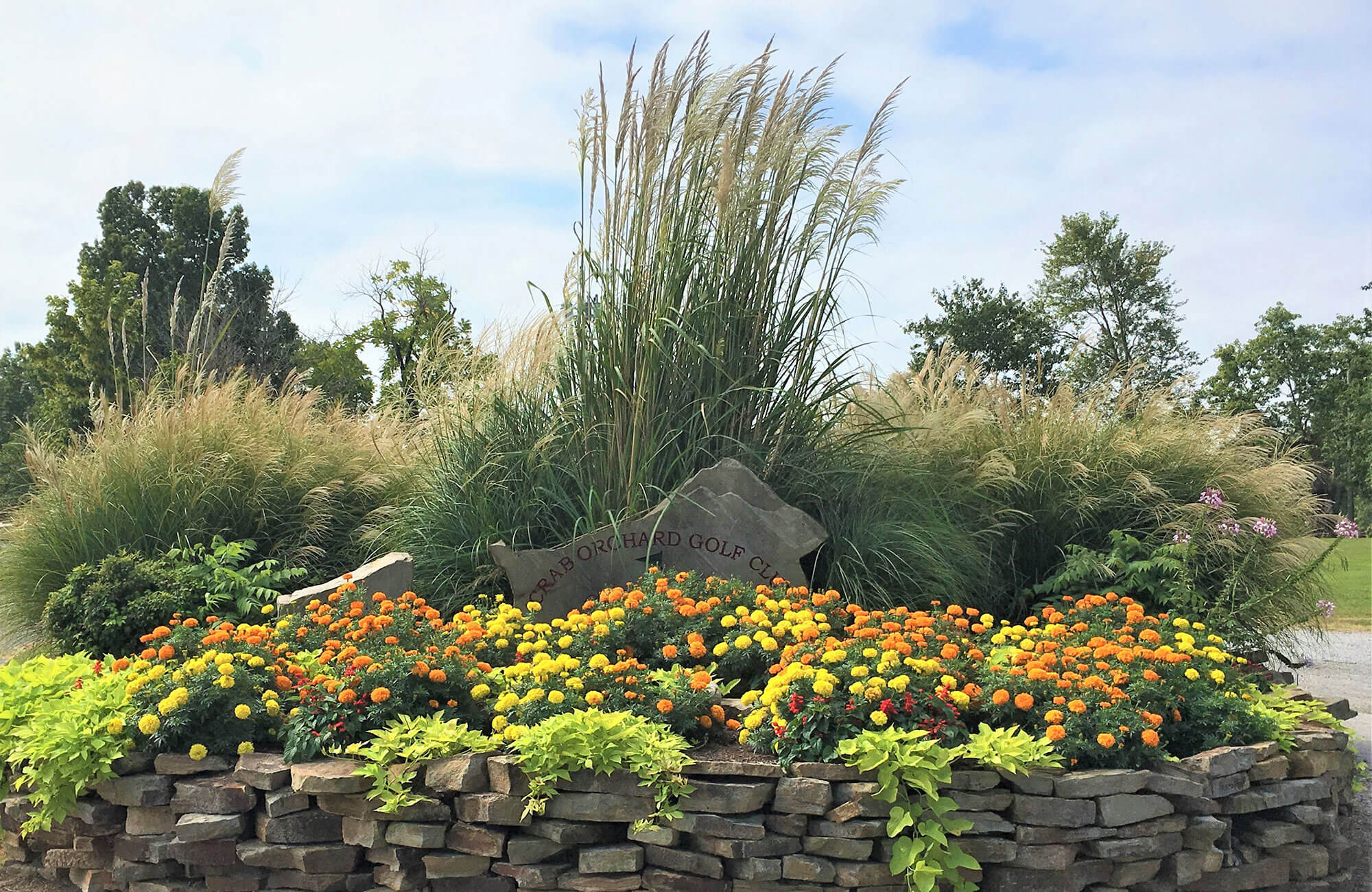
If you’ve ever driven down Route 13 through Southern Illinois, you know the vibe. It’s rolling hills, a lot of corn, and that heavy, humid air that makes the grass grow thick. Tucked right into the heart of it is a place that locals basically treat like a second home. Crab Orchard Golf Club Carterville isn't just a patch of mowed grass. It’s a 100-acre slice of history that has somehow managed to stay relevant while other rural courses have folded under the pressure of maintenance costs and dwindling memberships.
Most people see a 6,400-yard course and think it’s a pushover. It’s not. Honestly, if you show up thinking you’re going to tear this place apart just because it’s a Par 70, you’re in for a long afternoon. The layout is tight. Like, "don't-miss-the-fairway-or-you're-punching-out-of-a-pine-tree" tight.
The Layout That Most People Get Wrong
The first thing you’ll notice about Crab Orchard Golf Club Carterville is that it doesn't try to be a links course. It knows what it is: a classic, tree-lined Midwestern track. It was established way back in 1959, and you can tell. The trees have had decades to grow into massive, ball-swallowing obstacles.
The front nine and back nine feel like two different worlds. You start out relatively flat, but don't let that fool you. The greens are where the real fight happens. They’re bentgrass, and they’re kept surprisingly fast for a public-access course in a small town. You’ve got to be careful with your approach shots. If you leave yourself a downhill putt on a hole like number 4, you might as well just pray.
The back nine? That’s where the character really shows up. You get more elevation changes. More opportunities to lose a Titleist. It’s a fun mix. One minute you’re looking at a wide-open look, and the next you’re staring down a narrow corridor of oaks. It keeps you on your toes.
Why the Condition Matters Here
Maintaining a course in the "Transition Zone" of the United States is a nightmare. For those who aren't turf nerds, the transition zone is that middle slice of the country where it’s too hot for cool-season grasses (like bluegrass) to thrive in the summer, but too cold for warm-season grasses (like bermuda) to stay green in the winter.
Crab Orchard Golf Club Carterville manages this balance better than most. They use Zoysia fairways. If you haven't hit off Zoysia, you're missing out. It’s like hitting off a carpet. The ball sits up perfectly. You almost have to try to chunk it. This choice of grass is a huge reason why the course stays playable even when the Southern Illinois heat is trying to bake everything into a crisp.
But it's not just the grass. It’s the drainage. A few years back, they put some serious work into the infrastructure. This is key because Carterville gets those massive Midwestern thunderstorms that can turn a golf course into a swamp in twenty minutes. Because of the upgrades, Crab Orchard dries out remarkably fast. You can usually get a cart out there a day after a downpour when other local spots are "path only" or closed entirely.
The Local Culture and the Clubhouse
Let’s be real: a golf course is only as good as the vibe in the 19th hole. The clubhouse here isn't a stuffy, "jackets required" kind of place. It’s the kind of spot where you’ll see a farmer in overalls sitting next to a lawyer, both complaining about their three-putt on 18.
The pro shop is stocked, sure, but it’s the staff that makes it. They’ve been there forever. They know the regulars by name. They know what you’re going to order before you even sit down. It adds a level of comfort that you just don't get at the high-end resort courses in bigger cities.
And the food? It’s surprisingly good. We’re talking classic American grill stuff—burgers that actually have flavor and fries that aren't soggy. It’s the perfect capstone to a round, especially if you’ve just spent four hours fighting the wind.
Surprising Challenges and Myths
There’s a myth that short courses are easy. Crab Orchard Golf Club Carterville proves that’s nonsense. Because the course is a Par 70, you have fewer Par 5s to make up strokes. You have to be precise.
Take the Par 3s, for example. They aren't exceptionally long, but they are guarded. If you miss the green, you aren't just in the grass; you're often in a bunker or dealing with a nasty slope.
- The Wind Factor: Because the course is somewhat tucked away but still near the open fields of the Crab Orchard National Wildlife Refuge, the wind swirls. It’s rarely a straight "in or out" breeze. It’s a "guess and check" situation.
- The Greens: They don't have massive tiers like a modern signature course, but they have subtle breaks. You think it’s straight. It’s not. It’s moving three inches to the left at the very end.
- The Rough: Depending on the time of year, the rough can get "grabby." If your ball settles down into that thick fescue/bluegrass mix, you're going to need some wrist strength to get it out.
What to Know Before You Go
If you’re planning a trip, keep a few things in mind. First, book a tee time. While it’s a public course, it gets busy. Between the local high school teams (the Carterville Lions use this as their home base) and the weekend warriors from nearby Carbondale and Marion, the grid fills up fast.
Also, check the weather. Southern Illinois weather is bipolar. You can start in a pullover and end in a t-shirt.
For the gear-heads: you don't need a driver on every hole. Honestly, leave the big stick in the bag for a few of the tighter par 4s. A 3-wood or even a long iron into the fairway is a much better play than trying to hero-ball it over the treeline. Accuracy over distance. Every single time.
Expert Insights: Why This Place Lasts
Golf is in a weird spot right now. Lots of courses are being turned into housing developments. But Crab Orchard Golf Club Carterville stays profitable because it understands its community. They host a ton of scrambles and charity events. This isn't just a place for "golfers." It’s a community asset.
The course also benefits from its proximity to Southern Illinois University. You get a steady stream of students and faculty coming out to play. This keeps the energy high and ensures there’s always someone on the practice green.
From a technical standpoint, the greenskeeping team deserves more credit than they get. Managing the pH levels in the soil here is tricky because of the clay content typical of the region. They’ve managed to keep the greens consistent, which is the number one thing golfers care about. If the greens are good, people come back. And the greens here are almost always good.
Actionable Next Steps for Your Round
Ready to play? Here is exactly how to handle your first (or next) visit to ensure you don't leave frustrated.
- Warm up on the range: They have a solid practice facility. Don't go to the first tee cold. The first hole is a tester, and a cold slice will put you right behind a tree before you’ve even broken a sweat.
- Focus on the Par 3s: This is where you can actually score. If you can play the Par 3s at even or +1, you’re going to have a great round.
- Stay below the hole: As mentioned, the greens are fast. Putting uphill is a necessity. Putting downhill is a gamble.
- Try the Zoysia: Seriously, pay attention to the fairway feel. It’s one of the best features of the course. Use it to your advantage by taking a slightly more aggressive line when you know you have a perfect lie.
- Hit the clubhouse after: Grab a burger and talk to the locals. You’ll learn more about the course "secrets" over a beer than you ever will from a yardage book.
Crab Orchard is a reminder that you don't need a $200 greens fee to have a "premium" experience. You just need a course that’s well-loved, well-maintained, and just difficult enough to keep you coming back to try and beat it. Whether you're a scratch golfer or someone who loses a sleeve of balls every nine holes, this place is worth the drive.