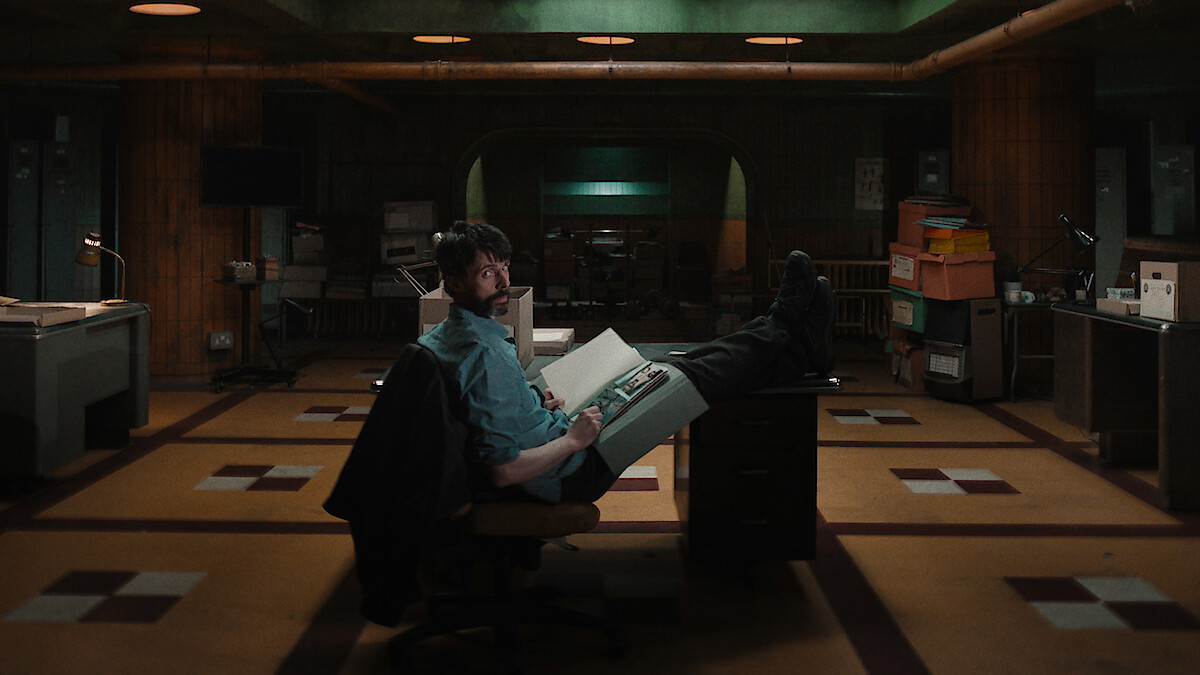
So, I finally sat down and binged the Netflix adaptation of Dept. Q. Honestly, it’s a lot. If you’re coming from the original Jussi Adler-Olsen novels, the move to Edinburgh might feel a bit jarring at first, but Matthew Goode as DCI Carl Mørck really sells that "man who has absolutely had it with the world" energy. But the character that kept me up thinking isn't even the guy in the basement office. It’s Graham Finch.
He’s the kind of villain that feels too real. He isn't some mustache-twirling mastermind hiding in a volcano; he’s a wealthy businessman with enough influence to make the legal system bend until it snaps.
The Graham Finch Murder Trial: What Really Went Down
Let’s get into the weeds of the backstory because the show throws a lot at you quickly.
Basically, the whole catalyst for the series—the reason Merritt Lingard disappears and why Mørck ends up in a literal basement—stems from a failed trial. Merritt, an ambitious and sharp lawyer, tried to nail Graham Finch (played with a chilling, smug energy by Douglas Russell) for the murder of his wife, Andrea. The accusation was brutal: Finch allegedly threw his wife through a window and down a flight of stairs.
It should have been an open-and-shut case. Merritt had a witness, Kirsty Atkins, who had met Andrea at a domestic violence shelter. Kirsty was ready to testify that Finch was a serial abuser. Then, the Crown Office effectively sabotaged the trial. Lord Advocate Stephen Burns, who should have been Merritt’s strongest ally, blocked Kirsty from testifying.
Finch walked.
The fallout of that acquittal is basically the "original sin" of the show. It’s why Merritt receives death threats and why she eventually vanishes on that ferry. You’ve gotta wonder: how does one guy have that much pull?
Influence and Intimidation: How Finch Operates
Graham Finch isn't just lucky; he’s dangerous. One of the most disturbing parts of the Dept. Q storyline is seeing how he uses "goons" to do his dirty work. This isn't just speculation. The show makes it pretty clear that Finch was behind the intimidation of Stephen Burns’ daughter. She was run off the road during the trial. That’s why Burns blocked the witness. He was a father choosing his daughter over justice.
It’s messy. It’s human. And it makes Finch terrifying because he knows exactly where to push.
Later in the series, when Mørck starts poking around the cold case, Finch doesn't just sit back. He sends people to harass the previous detectives. He even targets Mørck’s stepson, Jasper. Most criminals try to hide. Finch tries to dominate.
There’s this weird discrepancy in the plot that some fans on Reddit have been tearing apart. In the show, Finch’s lawyer claims they heard about the secret witness, Kirsty, from "Sam Haig." But Mørck eventually realizes that "Sam" might have been an impostor or that the information leaked through a deeper level of corruption. Whether it was a plot hole or a sign of just how deep the Finch-related rot went in the Edinburgh police force is still a hot debate.
Why Finch Matters to the Big Picture
If you’re watching Dept. Q for the mystery of Merritt’s disappearance, you might think Finch is a red herring. He’s the obvious choice, right? But he represents the "unsolved" nature of the world the show inhabits.
- Institutional Corruption: He proves that the "bad guys" aren't just the ones in masks. They’re the ones in tailored suits.
- The Weight of Cold Cases: The department exists because people like Finch are allowed to win.
- Personal Stakes: For Carl Mørck, Finch is the physical manifestation of the system he’s grown to loathe.
Honestly, Douglas Russell’s performance is what makes it work. He doesn't have a ton of screen time compared to the detectives, but every time he’s there, you feel the weight of his money and his lack of a conscience. He’s the guy who thinks he’s untouchable because, for a long time, he was.
Spotting the Real Graham Finch
If you’re trying to keep track of the names while watching, remember that Finch is the businessman. Don't confuse him with the "Fake Sam" or the various other suspects that pop up in the later episodes.
The real horror of the Finch storyline is how Kirsty Atkins was treated. She was a prolific drug offender, which gave the "respectable" men in the Crown Office an excuse to ignore her. They labeled her "unreliable." Finch knew that. He used the system’s own prejudices against it. That’s a level of villainy that goes beyond just a single murder.
Actionable Insights for Fans
If you're looking to dive deeper into the world of Dept. Q, here’s how to get the most out of the Graham Finch arc:
1. Re-watch Episode 1 and 7: These are the bookends. Episode 1 sets up the trial failure, and Episode 7 (the recap) really dives into how Stephen Burns was coerced. Look for the small glances between the lawyers—it’s all there.
2. Watch the background of the trial scenes: There are some fans who swear you can see the "Fake Sam" sitting right behind Burns in the gallery. It’s a "blink and you’ll miss it" moment that changes how you view the conspiracy.
3. Read the book "The Keeper of Lost Causes": While the show moves the setting to Scotland, the original novel by Jussi Adler-Olsen gives a much grittier look at the "rich man gets away with it" trope that Finch embodies.
4. Pay attention to the "Informant" subplot: When Mørck goes to a lineup to find the person who shot his partner, he realizes the shooter might have been an informant. This connects back to Finch because it shows the police were already "in bed" with the types of people Finch employs.
Finch might not be the one holding the door shut on Merritt’s prison, but he’s the one who built the world where she could be taken in the first place.