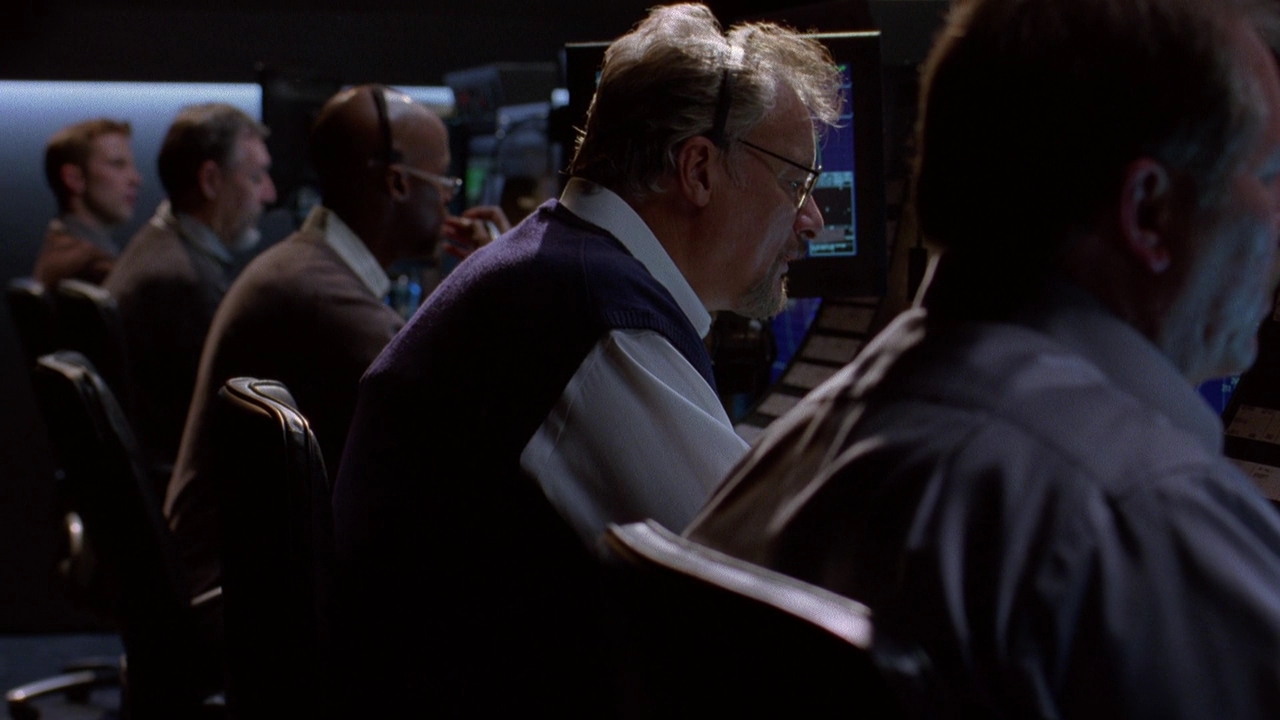
He was just a guy doing his job. Honestly, when you think about the high-stakes world of Breaking Bad, you usually think of kingpins, chemists, or cartel hitmen. You don't think about a middle-aged man in a nondescript button-down shirt working a radar screen. But Donald Margolis, better known to most fans as Jane’s dad, ended up carrying the heaviest emotional weight of the entire series. It’s a gut-punch that still hurts years later.
John de Lancie played him with this weary, frantic kind of love that anyone who has ever dealt with a family member's addiction recognizes instantly. He wasn't a villain. He wasn't even "in the game." He was just a father trying to keep his daughter from slipping through his fingers, and his failure—which wasn't even his fault—triggered the greatest mass casualty event in the show’s history.
The Impossible Burden of Being Donald Margolis
Let's get real for a second. Donald was the ultimate outsider to Walter White’s chaos.
When we first meet him, he’s just a landlord. He’s the guy breathing down Jesse Pinkman’s neck for a security deposit. But the layers peel back quickly. We find out he’s been through the ringer with Jane’s recovery for years. He’s the one driving her to N.A. meetings. He’s the one who bought the building so she’d have a safe place to live. He did everything "by the book," yet the book failed him.
The scene where he discovers Jane has relapsed is hard to watch. It’s not just anger; it’s this profound, soul-crushing disappointment. He gives her one last chance. He lets her have one more night before rehab. That one night was when Walt showed up. That one night was when Walt watched Jane die and did absolutely nothing.
Donald didn't know that. He didn't know a meth cook was standing over his daughter's bed while she choked. He just knew he found her body the next morning.
The Way Jane’s Dad Changes the Show's Moral Compass
Most people focus on the Wayfarer 515 crash as a plot device. They see it as a "holy crap" moment for the Season 2 finale. But if you look closer, Donald's arc is actually the moment the show stops being a dark comedy and starts being a Greek tragedy.
Think about the sheer randomness of it.
Donald meets Walt at a bar. They don't know each other’s names. They talk about family. Donald actually gives Walt the advice that leads him back to Jesse’s apartment: "Family. You can't give up on them." It’s the ultimate irony. Donald’s own compassion and fatherly wisdom indirectly led to his daughter’s death because it sent Walt back to that bedroom at the exact wrong time.
Vince Gilligan and the writers used Donald to show that Walt’s "business" wasn't happening in a vacuum. The ripple effects were hitting people who didn't even know what blue meth was.
Why the Wayfarer 515 Crash Still Sparks Debate
People still argue about whether Donald should have been back at work. He was an Air Traffic Controller. He was grieving. He was clearly distracted.
The NTSB would have had a field day with the Albuquerque ARTCC. Donald is sitting there, staring at the screen, and he sees the blips. He sees the codes. But his brain isn't there. He’s thinking about the dress Jane was buried in. He’s thinking about the fact that he failed.
- The Error: He gives the wrong instructions.
- The Result: Two planes collide over a residential neighborhood.
- The Toll: 167 lives.
Was he responsible? Legally, maybe. But the show makes it clear: Walt is the primary mover. If Walt doesn't let Jane die, Donald isn't distracted. If Walt doesn't sell meth, Jane doesn't relapse. The blood is on Walt’s hands, but Donald is the one who has to pull the trigger on those 167 people. It's a level of cruelty that makes the later seasons feel almost inevitable.
The Aftermath and the "What Ifs"
The last time we see Donald, he’s in his car. He’s got a gun. He’s broken.
Later, we hear a news report on the radio while Walt is moving house. The report mentions that Donald was rushed to the hospital with a self-inflicted gunshot wound. We never officially see him die on screen, but the implication is that he couldn't live with the guilt. The man who spent his life trying to save one person ended up being the instrument of death for hundreds.
It’s honestly one of the darkest threads in the whole narrative. Even Jesse, who loved Jane, got to have some semblance of a "happy" ending in El Camino. Donald got nothing. He was just a casualty of a war he didn't even know was being fought.
Understanding the Reality of the Role
John de Lancie brought something special to this. Before this, he was mostly known as "Q" from Star Trek. He played an omnipotent, playful god. In Breaking Bad, he played the most helpless human imaginable.
That contrast matters.
It highlights the fragility of the "normal" world. Donald represented the audience. He represented the average person who just wants their kid to be okay and for the planes to land on time. Watching that normalcy get shredded by Walter White’s ego is what makes the show a masterpiece of television.
Actionable Takeaways for Breaking Bad Fans
If you’re revisiting the series or diving into the lore, there are a few things you should look for regarding Donald’s character to truly appreciate the writing:
Watch the Bar Scene Again
Pay close attention to the dialogue between Walt and Donald in the bar (Season 2, Episode 12, "Phoenix"). Notice how Donald’s philosophy is the mirror image of Walt’s. Walt thinks he’s doing everything for family, but he’s actually destroying them. Donald is actually doing everything for family, and it destroys him.
Look for the Color Symbolism
Jane is often associated with the color black (her hair, her clothes, her room). Donald is often seen in muted, "safe" colors like beige and blue. When the crash happens, the pink teddy bear falls into Walt's pool. That pink bear is the only splash of vibrant color in the aftermath, representing the innocence that was lost—an innocence Donald tried so hard to protect.
Contextualize the "Fly" Episode
A lot of people hate the "Fly" episode in Season 3. But remember, Walt is obsessing over the fly because he’s losing his mind over the guilt of Jane and, by extension, what happened to Donald. You can't understand Walt's mental decline without acknowledging the ghost of Donald Margolis looming over him.
Research Air Traffic Control Stress
To understand Donald’s mistake, look into real-world aviation incidents. The show accurately portrays how a single moment of "mental lapse" or "cognitive tunneling" can lead to catastrophe. Donald wasn't incompetent; he was a victim of acute psychological trauma.
Donald Margolis serves as the ultimate reminder that there is no such thing as a "victimless crime" in the world of narcotics. Every choice Walt made had a trajectory, and unfortunately, it landed squarely on a father who just wanted his daughter to come home.
Next Steps for Deep Context:
To get a full picture of the fallout, re-watch the Season 3 premiere, "No Más," and focus specifically on the town hall meeting. It shows how the community reacted to the crash Donald caused, further emphasizing the isolation and shame he must have felt before his final scene. Check out the official Breaking Bad Insider Podcast episodes from 2009 where Vince Gilligan discusses the decision to make Donald the "unintentional" villain of the Season 2 finale.