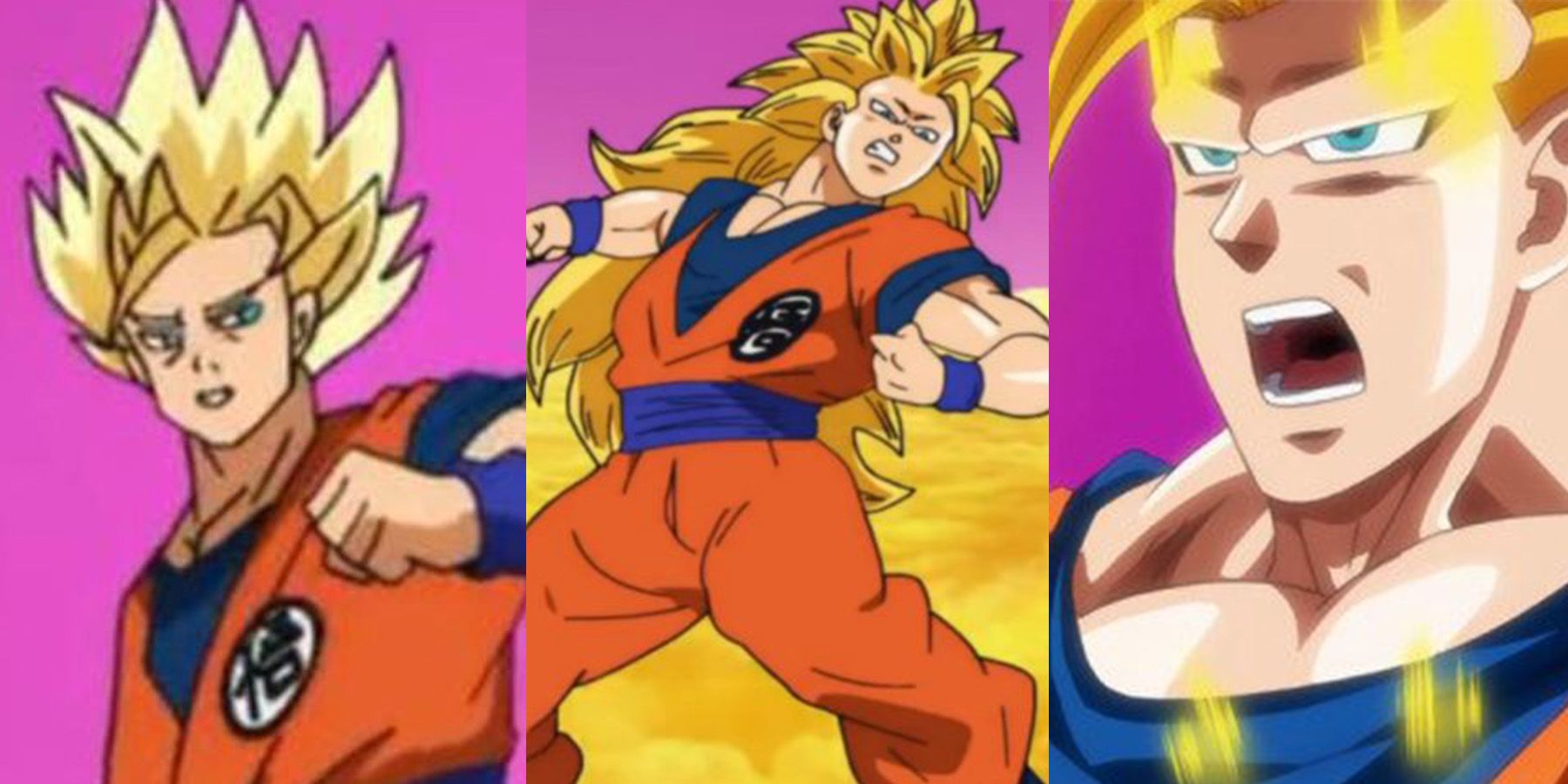
Honestly, if you were on the internet back in 2015, you probably remember the meltdown. It was everywhere. Twitter, Reddit, and every niche anime forum on the planet were flooded with screenshots that looked... well, they looked rough. We’re talking about the Dragon Ball Super bad animation phenomenon, specifically that infamous Episode 5. Watching Goku fight Beerus on King Kai’s planet felt like watching a high-stakes battle drawn by someone using their non-dominant hand while riding a roller coaster.
It was a heartbreak for fans. We had waited nearly two decades for a canonical TV return to the Dragon Ball universe, and what we got initially was a mess of off-model faces and stiff movements. But why did it happen? Was Toei Animation just being "lazy," or was there something more systemic breaking down behind the scenes of the most famous anime franchise in history?
The Infamous Episode 5 and the Melted Faces
Episode 5 is the one that launched a thousand memes. Goku’s Super Saiyan 3 form, which is supposed to be this peak of intimidation and power, looked like a melting wax sculpture. His proportions were nonsensical. His eyes were drifting apart. Even his hair, which is usually a crisp, spiked golden crown, looked like a bunch of limp bananas.
It wasn't just a single frame, either. The entire sequence lacked "weight." When Goku threw a punch, there was no sense of impact. When he moved, he glided across the screen like a Flash animation from 2004. This wasn't the Dragon Ball Z we grew up with, where every blow felt like it could crack a planet. This was something else entirely. It felt cheap.
The backlash was so severe that it actually forced Toei to make significant corrections for the Blu-ray releases. If you watch that episode on a streaming service today, it probably looks "fine." Not great, but fine. But the ghost of the original broadcast still haunts the show's reputation. It created a narrative that Dragon Ball Super was a low-effort cash grab, a label the series spent the next three years trying to outrun.
Why Dragon Ball Super Bad Animation Actually Happened
People love to blame "budget." You’ll hear fans say Toei didn't want to spend the money. That’s almost never how the anime industry works. Money isn't the bottleneck; time is.
The production of Dragon Ball Super was rushed beyond belief. Usually, a long-running series needs months—sometimes a year—of "lead time" before the first episode airs. This allows the staff to build up a buffer of completed episodes. Super didn't have that. The series was announced and rushed into production shortly after the Resurrection ‘F’ movie, leaving the animators with almost no breathing room.
The Outsourcing Problem
When an anime studio is crunched for time, they outsource. They send "in-between" frames or even entire sequences to smaller, cheaper studios in other countries. In the early arcs of Super, a lot of work was sent to studios that simply weren't equipped to handle the complex character designs of Akira Toriyama.
Animators like Norihiro Shishido and Naoki Tate, who are actually legends in the industry, were spread too thin. When you have a talented supervisor who has to fix 300 drawings in a single night because the outsourced work came back unusable, things are going to slip through the cracks. That is how you get Dragon Ball Super bad animation. It’s the result of exhausted humans trying to meet an impossible weekly deadline.
It Wasn't Just the Battle of Gods Arc
While the first two arcs (retelling the movies) got the brunt of the hate, the "Golden Frieza" arc wasn't much better. Look at Episode 24. Goku and Frieza are fighting in their new blue and gold forms, and the choreography is... static. They literally just hover in the air, swapping identical-looking punches in a loop.
There’s a specific term for this: "limited animation." But there’s a difference between using limited animation to save time and using it because you have no other choice. In these early Super episodes, it felt like the latter. The background art was often flat, and the digital compositing—the way the characters are layered onto the backgrounds—made everyone look like they were glowing in a way that felt artificial and distracting.
The Redemption: How Things Changed
You can't talk about the bad without acknowledging the incredible turnaround. Around the "Future Trunks" arc, something shifted. Toei started bringing in "Webgen" animators—younger talents who grew up on the internet and had a more fluid, kinetic style.
The Tournament of Power was where the show finally found its soul again.
Remember the Goku vs. Jiren finale? Or the Ultra Instinct transformation? Those weren't just "good for Super." They were some of the best-animated sequences in modern shonen history. Animators like Yuya Takahashi brought back the sharp, detailed shading of the 90s (the "Z look"), while Naotoshi Shida provided that weirdly smooth, almost psychedelic movement that made the high-tier fights feel god-like.
The production finally caught up with the ambition. They had better schedules. They had a clearer vision. By the time we got to the Dragon Ball Super: Broly movie, the "bad animation" era felt like a fever dream. The movie opted for simpler character designs that were easier to animate fluidly, proving that "detail" doesn't always equal "quality."
The Lasting Impact on Anime Culture
The saga of Dragon Ball Super bad animation changed how fans watch anime. Before Super, most casual viewers didn't know what a "Sakuga" (high-quality animation) community was. They didn't know the names of individual animators.
The failure of those early episodes turned fans into amateur investigators. People started looking into production cycles, searching for the names of animation directors in the credits, and learning about the brutal conditions of the industry. It sparked a conversation about why our favorite shows sometimes look like garbage. It made us realize that even a multi-billion dollar franchise isn't immune to poor management.
Real Talk: Is it Still Worth Watching?
If you’ve stayed away from the show because of the memes, you’re missing out. Yes, the beginning is a slog. Yes, it’s frustrating to see Frieza look like a lumpy marshmallow in some shots. But the "bad" parts of Super are a small fraction of the total runtime.
The Reality Check
- The Blu-rays fix a lot: Seriously, if you can, avoid the original TV broadcast versions. The home releases fixed the most egregious "melting" faces.
- The Manga is an alternative: If you truly can't stand the visual inconsistencies, Toyotaro’s manga art is consistently solid and follows a slightly different (and some say better) pacing.
- Skip the first two arcs: You can literally watch the movies Battle of Gods and Resurrection ‘F’ and then jump into the "Universe 6" tournament (Episode 28). You’ll miss almost nothing and save yourself the visual headache.
Actionable Steps for Fans and Critics
If you're looking to dive back into the series or analyze why it went wrong, here is how you should approach it:
- Identify the Animator: When you see a scene you love (or hate), check the credits. Look for names like Yuya Takahashi (the goat of the later arcs) or Naoki Tate (who has a loose, expressive style that people often mistake for "bad" but is actually very artistic).
- Compare the Versions: Go to YouTube and look up "Dragon Ball Super TV vs. Blu-ray." It is a fascinating lesson in how much "polishing" can happen after a show airs. It’ll give you a lot of empathy for the artists who were clearly just out of time.
- Watch the Broly Movie: If you want to see what happens when the Dragon Ball staff is actually given the time and budget they deserve, watch Dragon Ball Super: Broly. It is the gold standard and essentially the "apology" for the early TV episodes.
- Support the Industry: The reason these crunches happen is often due to the "Production Committee" system. Supporting official releases and streaming platforms helps (even if just a little) provide the financial stability needed for better production cycles.
Dragon Ball Super's animation journey is a classic "redemption arc." It started in the gutter, became a global laughingstock, and ended by breaking the internet with some of the most beautiful fight scenes ever put to paper. It’s a reminder that in the world of anime, time is the most valuable resource of all—more than power levels, more than Zenny, and definitely more than nostalgia.