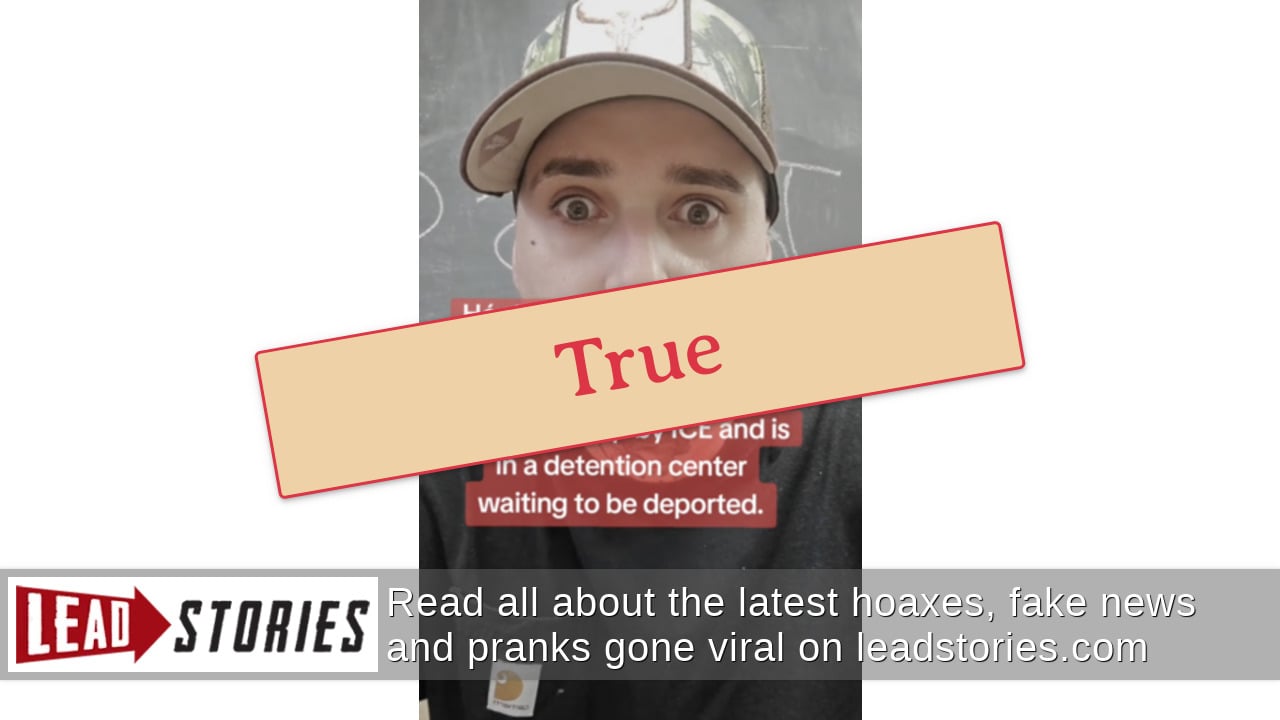
If you’ve been scrolling through social media lately, you’ve probably seen the name Héctor Luis Valdés Cocho pop up in some pretty heated threads. It’s a wild story. One minute he’s a celebrated human rights activist fleeing a dictatorship, and the next, he’s a lightning rod for controversy in Florida. Honestly, trying to keep up with the narrative shifts is enough to give anyone whiplash.
The truth is rarely as simple as a 280-character post. We’re looking at a man whose life has been defined by extreme pivots—from the streets of Havana to the political rallies of Miami. Because there is so much conflicting noise, a Héctor Luis Valdés Cocho fact check isn't just helpful; it’s basically a necessity if you want to understand the current immigration and political climate.
The Cuban Exile: Forced Out or Fled?
Let’s look at the bedrock facts first. Back in January 2022, Valdés Cocho was essentially kicked out of Cuba. This wasn't some quiet departure. He was an independent journalist with ADNCuba and a member of the San Isidro Movement, a group of artists and activists that the Cuban government really, really disliked.
The Inter-American Commission on Human Rights (IACHR) actually granted him precautionary measures in 2021 because he was facing "serious, urgent risk." He was being harassed for his journalism and his identity as a gay man.
The way it went down was pretty brutal. Reports from the Committee to Protect Journalists (CPJ) and the U.S. State Department confirm that he and fellow journalist Esteban Rodríguez were taken to the airport by state security. They ended up stranded in an airport in El Salvador because Nicaragua (their original destination) denied them entry. Eventually, El Salvador let them in on humanitarian grounds.
That part of the story is documented and verified by international human rights bodies. He was, by all objective measures, a political exile.
The Miami Pivot: From Activist to ICE Custody
Fast forward to late 2024 and early 2025. This is where the Héctor Luis Valdés Cocho fact check gets complicated and, frankly, a bit surreal.
After making his way to the United States, Valdés Cocho didn't just fade into the background. He became a vocal supporter of Donald Trump. He was seen at rallies and even identified himself in some circles as a founder of "Latinos for Trump" groups. It’s a move that confused a lot of people—an exile fleeing a regime often associated with the far-left, moving to the U.S. and throwing his weight behind the "MAGA" movement.
But then, the irony hit hard.
In February 2025, news broke that Valdés Cocho had been taken into custody by Immigration and Customs Enforcement (ICE) in Florida. You can imagine the field day social media had with that. A prominent supporter of an administration known for strict immigration enforcement getting caught in the gears of that very system.
Why was he detained?
It wasn't about his politics. It was about his status.
- Parole Status: Many Cubans who entered during that period were on temporary humanitarian parole.
- Legal Limbo: If that parole isn't renewed or converted into a more permanent status (like the Cuban Adjustment Act), you're technically "removable."
- The ICE Sweep: His detention coincided with a broader push to process and sometimes deport individuals with outstanding orders or expired documents.
Fact Checking the "Criminal" Rumors
When someone becomes a polarizing figure, the "rumor mill" goes into overdrive. You might have seen claims on Reddit or X (formerly Twitter) accusing him of everything from petty theft to more serious crimes.
Here is what we actually know. While there are plenty of anecdotal "he ripped me off" stories in the Miami Cuban community—specifically regarding "mula" trips (people who carry goods to Cuba)—there hasn't been a public, high-profile conviction for these specific claims that led to his detention. Most of his legal trouble in the U.S. appears to stem from his immigration status, not a criminal rap sheet.
It’s easy to confuse "controversial guy people dislike" with "convicted criminal." For a proper Héctor Luis Valdés Cocho fact check, we have to separate the community gossip from the court documents. As of early 2026, the primary reason he faced deportation was the expiration of his legal right to stay in the country.
The San Isidro Movement Connection
Does he still have support from his old colleagues? It’s a mixed bag.
The San Isidro Movement (MSI) was built on the idea of artistic freedom. While many still acknowledge the persecution he faced in Havana, his political shift in the U.S. created a rift. Some see his support for restrictive immigration policies—policies that eventually affected him—as a betrayal of the "freedom" he fought for in Cuba. Others argue that as an exile, he has the right to support whatever political party he chooses.
Actionable Insights for Following the Story
If you're trying to stay informed about this case or similar immigration stories, don't just rely on viral "gotcha" videos.
- Check IACHR and CPJ Archives: These organizations provide the most reliable documentation of his original exile from Cuba.
- Verify via PACER: If you want to see if there are actual federal criminal charges against a public figure in the U.S., use the Public Access to Court Electronic Records system.
- Distinguish between "Detained" and "Deported": Being in ICE custody is a process. It doesn't always result in an immediate flight back to the country of origin, especially with Cuba's complicated repatriation agreements.
The story of Valdés Cocho is a messy reminder of how quickly the "hero" or "victim" narrative can change when politics enters the room. Whether you see him as a journalist who fell through the cracks or a political opportunist, the facts show a man caught between two very different, yet equally unforgiving, political systems.
To keep track of his specific legal status, you can monitor the ICE Online Detainee Locator System if you have his full biographical details, which provides real-time updates on where an individual is being held.