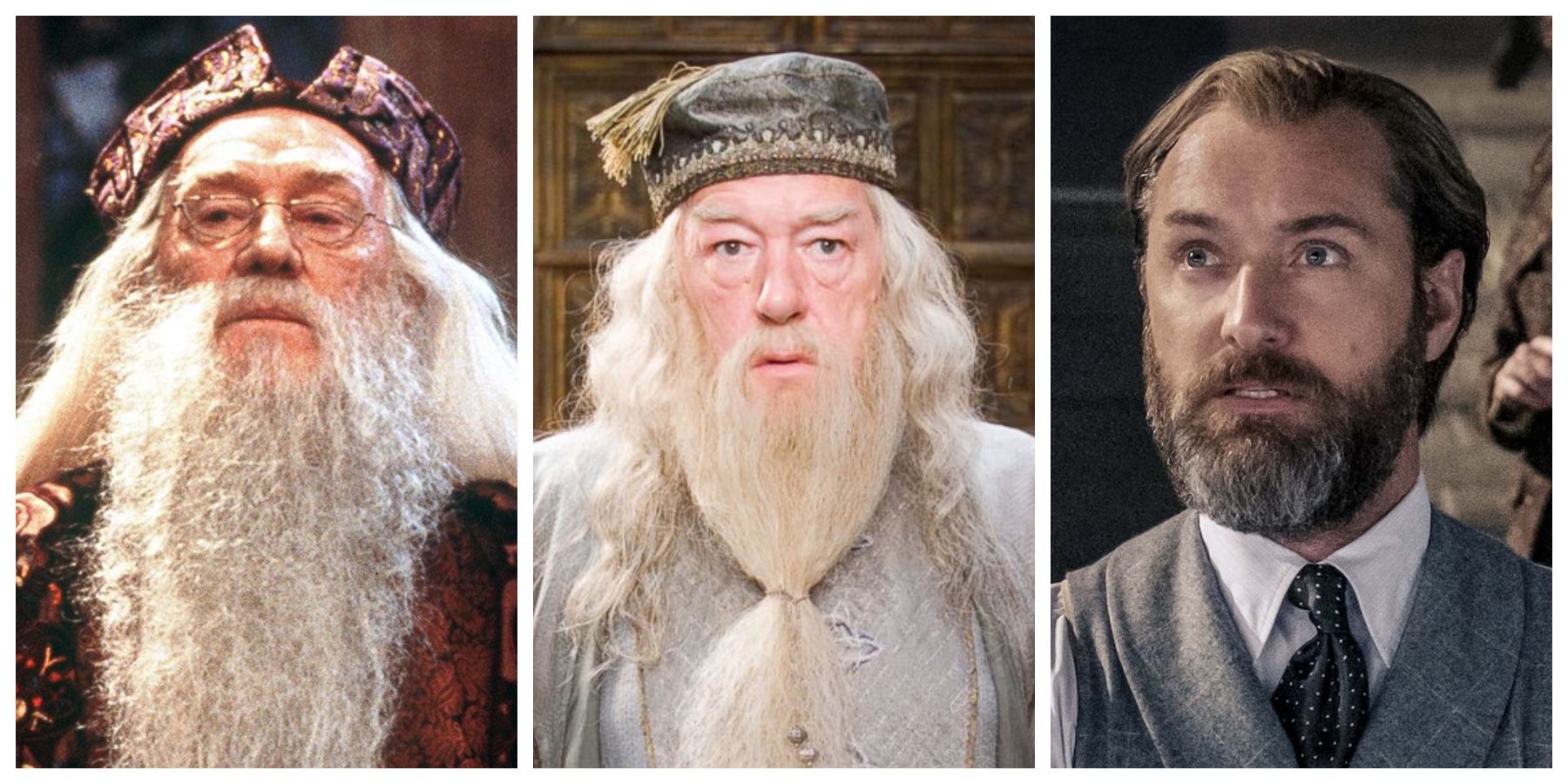
Albus Dumbledore wasn't just old. He was "ancient-even-for-wizards" old. When he finally fell from the Astronomy Tower in 1997, he was roughly 115 years old. To a Muggle, that’s a record-breaking lifespan spent mostly in a wheelchair. To Dumbledore, it was a century of dueling dark wizards, discovering the twelve uses of dragon's blood, and eating lemon drops. But how did Dumbledore live so long without looking like a shriveled raisin?
It's a question that gets asked a lot because the math in the Harry Potter universe can be a bit wonky.
Honestly, the secret isn't one single "immortality button." It’s a mix of biological wizarding advantages, some very specific alchemical history, and the fact that wizards simply don't die from the stuff that kills us. They don't get the flu and keel over. They don't usually suffer from the same cellular decay at the same rate.
The Wizarding Baseline: Why 115 Is the New 70
Wizards live longer. Period.
Newt Scamander was still trekking across the globe in his late 90s. Bathilda Bagshot lived well into her hundreds before a giant snake took up residence in her skin—which, let's be real, is a workplace hazard, not a health failure. According to J.K. Rowling and various Wizarding World lore entries, the life expectancy of a wizard is significantly higher than that of a non-magical person. The Ministry of Health (if such a thing was organized) would tell you the average is around 137 years.
By those standards, Albus was actually middle-aged-plus.
Their physiology is just sturdier. They can survive being hit by Bludgers that would liquefy a human ribcage. They can regrow bones overnight with Skele-Gro. When your medical care involves literally "vanishing" sickness or "mending" organs with a flick of a stick, you're going to stick around for a while. Dumbledore had access to the best magical healthcare on the planet. He lived at Hogwarts, which has a dedicated Matron and probably some of the most potent protective enchantments in existence.
But there’s more to it than just "being a wizard."
The Nicolas Flamel Connection
You can't talk about how did Dumbledore live so long without mentioning the red stone in the room.
The Sorcerer’s Stone.
Dumbledore was close friends with Nicolas Flamel. Like, "send-each-other-Christmas-cards-for-centuries" close. Flamel lived to be over 660 years old because he and his wife, Perenelle, drank the Elixir of Life. Now, did Dumbledore sneak a sip?
There is zero evidence in the books that Dumbledore used the Elixir of Life for himself. In fact, Dumbledore’s entire philosophy was built around the idea that "to the well-organized mind, death is but the next great adventure." Taking a shortcut to immortality would have gone against his core character. However, his deep study of alchemy with Flamel gave him an intimate understanding of life-extending magic.
He understood the cost of living too long. He watched Flamel prepare for death once the Stone was destroyed. Dumbledore chose to age naturally, but he did so with the benefit of being one of the greatest alchemists of his age.
Magic as a Biological Battery
Think of magic as a physical force. In many fantasy settings, and subtly in Harry Potter, powerful magic seems to sustain the body. Dumbledore was arguably the most powerful wizard of the 20th century. This wasn't just "book smarts." It was raw, vibrating power.
His duel with Grindelwald in 1945 wasn't just a fight; it was a peak physical and magical exertion. He won. He was already in his 60s then.
Powerful wizards tend to live longer because their magic acts as a secondary immune system. It wards off minor curses, environmental toxins, and perhaps even the standard oxidative stress that causes aging in Muggles. Dumbledore's vitality was legendary. He could swim to a sea cave, climb jagged rocks, and fend off a thousand Inferi while poisoned. That's not "old man" energy. That's high-tier magical resonance.
Misconceptions About Dumbledore’s Age
A lot of people think he was 150. He wasn't.
The confusion usually stems from the films or early interviews where dates hadn't been fully mapped out. When Rowling released the "Wizard of the Month" calendars and later the Pottermore (now Wizarding World) archives, the timeline solidified.
- Born: 1881
- Died: 1997
- Final Age: 115 or 116
For a human? Incredible. For a wizard? Pretty standard for a Great Wizard. Armando Dippet, the Headmaster before Dumbledore, lived to be over 300 years old. Compared to Dippet, Dumbledore died quite young.
So, when we ask how did Dumbledore live so long, we have to realize he didn't actually live that long relative to his peers. He was cut down in his prime—at least, his magical prime. If Draco Malfoy hadn't cornered him, and if he hadn't put on that cursed Gaunt ring, Dumbledore likely would have been around to see Harry's great-grandchildren.
The Toll of the Dark Arts
Ironically, the thing that kept him "young" (his magic) is also what ended him.
The cursed necklace, the potions in the cave, and the Horcrux ring—these things eat away at magical vitality. In The Half-Blood Prince, we see Dumbledore's hand looking like a blackened, dead thing. That wasn't just a wound. It was a rotting curse that was actively killing him.
Snape managed to "trap" the curse in the hand for a while, but it was a death sentence.
Dumbledore’s longevity was basically traded for the destruction of a Horcrux. He chose to end his life at 115 to ensure Voldemort's downfall. Without that curse, Dumbledore’s "long life" might have stretched into the 22nd century.
Habits of the Ancient
If you want to live like Albus, it wasn't just about the wand. It was the lifestyle.
- Mental Stimulation: He never stopped learning. He was a regular contributor to Transfiguration Today. He kept his brain sharp, which we know in the real world helps stave off cognitive decline.
- Diet (Sort of): He had a weird obsession with sweets, specifically lemon drops and jam. Maybe high glucose is the secret? (Probably not, don't try that at home).
- Physical Activity: He walked. A lot. Hogwarts is a giant stair-master.
- Purpose: He had a reason to get up every morning. Whether it was protecting Harry or managing a school of rowdy teenagers, he remained engaged with the world.
Wizards who "retire" and stop using magic or engaging with the community seem to fade faster. Dumbledore stayed in the thick of it until his final breath.
What We Can Learn From Albus
The reality of Dumbledore's age is that it was a combination of genetic luck (the Dumbledore family had strong, if tragic, blood), environmental factors (Hogwarts is a magical nexus), and magical mastery.
He didn't use a Philosopher's Stone. He didn't make a Horcrux. He just lived.
If you're looking to apply "Dumbledore-ism" to your own life, focus on the non-magical parts. Stay curious. Keep your "wand" (or your mind) active. Don't be afraid of the "next great adventure."
The most fascinating part of Dumbledore’s long life isn't how it started or how it was sustained—it’s how he was willing to give it up. He lived long enough to see his mistakes come full circle and long enough to find the person who could fix them.
Next time you’re re-watching the films or re-reading the books, look at the way he moves in the earlier installments. There’s a grace there that belies a century of weight. That’s the real answer. It wasn't about the years in his life, but the magic in his years.
To really understand the mechanics of wizarding longevity, you'd have to look into the specifics of "Magical Resilience," a concept often discussed in broader lore circles. It suggests that magic isn't just a tool, but a biological component that reinforces cellular structure. While Albus never wrote a book on it, his life was the primary case study.
Actionable Insights for the Curious:
- Check the official "Wizarding World" timeline to compare Dumbledore's age with characters like Grindelwald (who also lived past 110).
- Look into the "Twelve Uses of Dragon's Blood"—it's implied that Dumbledore's work in alchemy contributed to his understanding of life-sustaining substances.
- Research the life of Armando Dippet if you want to see what "extreme" wizarding old age actually looks like.