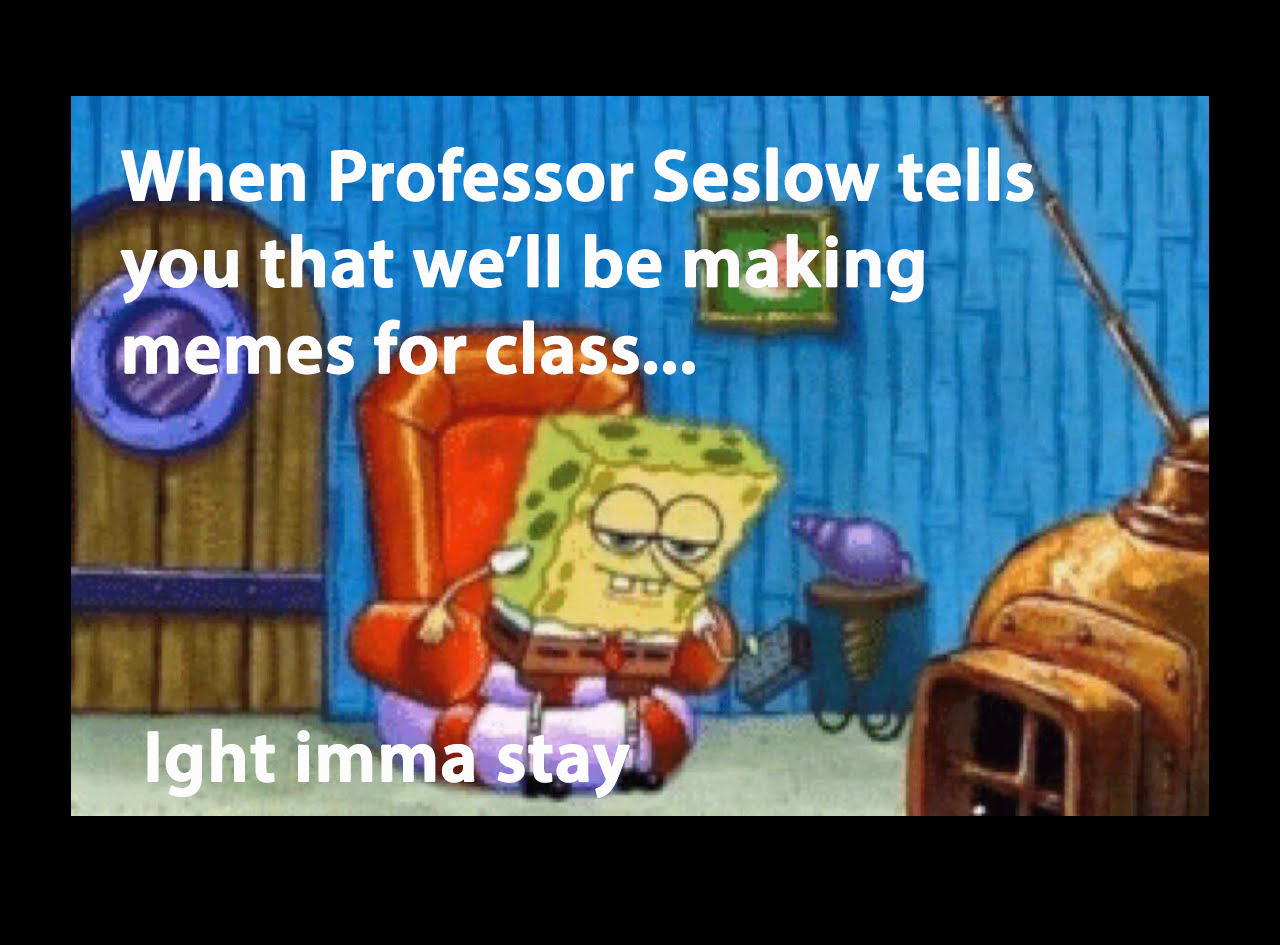
You’ve seen it. Everyone has. It’s that grainy, slightly distorted image of SpongeBob SquarePants—the world’s most famous sea sponge—rising from his green chair, TV remote in hand, looking like he’s reached the absolute limit of his patience. It’s the "Ight imma head out" meme. It isn't just a funny picture; it’s a cultural shorthand for that universal feeling of being done. Done with the conversation, done with the party, done with the awkward silence after someone says something "cringe."
Memes usually have the shelf life of an open carton of milk in the sun. They’re here, they’re everywhere for a week, and then they disappear into the graveyard of "Remember when?" But SpongeBob is different. This specific frame from a 2001 episode titled "The Smoking Peanut" has somehow become the internet's most reliable exit strategy.
The Origin Story Nobody Asked For (But Everyone Needs)
The year was 2001. Season 2, Episode 32b. In the actual show, SpongeBob isn't leaving because he's annoyed. He's just getting up from his chair. There’s no deep philosophical meaning behind the movement in the original animation. But the internet doesn't care about original context.
Around July 2018, people started pairing this image with the phrase "Ight imma head out." It wasn't an overnight explosion. It simmered. By August 2019, it hit critical mass on Twitter and Reddit. Why? Because the slang "Ight"—a shortened version of "Alright"—perfectly captured the casual, almost bored energy of the image. It’s the verbal equivalent of a shrug.
When you look at the composition, it’s perfect. SpongeBob’s posture is slightly hunched. He looks like he’s physically dragging himself away from a situation that no longer serves his interests. It’s relatable. It’s honest. Honestly, we’ve all been there. Whether it’s a Slack thread that won’t end or a family dinner where someone brings up politics, the urge to just head out is a fundamental human instinct.
Why Does "Ight Imma Head Out" Still Rank?
Search engines love this meme because humans love it. It’s high-intent content. People look for the template to make their own versions, or they search for the "SpongeBob leaving chair" clip to prove a point in a group chat. But there’s a deeper reason for its longevity: versatility.
Most memes are one-note. The "Distracted Boyfriend" meme is always about choosing one thing over another. "Woman Yelling at a Cat" is always about an irrational vs. rational conflict. But "Ight imma head out" is a Swiss Army knife.
- Social Anxiety: "When the host says the party is just getting started."
- Gaming: "When you see a Level 100 player in the beginner lobby."
- Corporate Culture: "When the 4:55 PM meeting invite hits your inbox."
- Sports: "When your team is down by 30 in the first quarter."
It works because it’s a reaction. We live in an era of "reaction culture." We don’t just watch things; we react to them. This meme provides the perfect visual punctuation mark for the end of a social interaction. It’s the digital Irish Goodbye.
The Psychology of the Exit
Psychologically, the meme taps into our "fight or flight" response, but it leans heavily into the "flight." Except it’s not a scared flight. It’s a dismissive one.
According to meme historians—yes, that’s a real thing, or at least a subset of digital anthropologists like those at Know Your Meme—SpongeBob memes thrive because the show was a foundational text for Gen Z and Millennials. We speak SpongeBob fluently. When you use this meme, you aren't just sending an image; you're signaling your membership in a specific cultural generation.
There is a specific power in leaving. In a world where we are constantly tethered to our phones and notifications, the act of "heading out" is a form of boundary setting. It’s funny because it’s a micro-rebellion. You’re saying, "This content/person/situation is not worth my energy."
Breaking Down the Variations
While the classic "Ight imma head out" features the standard SpongeBob, the internet has naturally iterated on it.
The Deep-Fried Version
Internet subcultures love to "deep-fry" memes—applying heavy filters, distortion, and high contrast. This makes the meme feel more chaotic. It’s usually used for more extreme situations, like when a situation goes from awkward to actually dangerous or nonsensical.
The Crossover
You’ll often see this meme blended with other franchises. There’s a version with SpongeBob wearing a Jedi robe or one where he’s rendered in 4K high-definition 3D. These variations keep the meme fresh. They prevent "meme fatigue," which is the death knell for most viral trends.
The Inverse
Sometimes, you see the meme played in reverse, where SpongeBob is sitting down. "Ight imma head in." This is usually for when something interesting finally happens. It’s less common, but it shows the flexibility of the template.
The Cultural Impact on Language
Think about how often you actually say "Ight imma head out" in real life now. The meme has crossed the digital divide into actual spoken vernacular. It’s a linguistic feedback loop. The phrase existed in AAVE (African American Vernacular English) long before the meme, but the meme gave it a specific visual anchor that caused it to spread globally across different demographics.
This is how modern language evolves. We don't just get words from dictionaries anymore; we get them from 100x100 pixel JPEGs of cartoons. It’s fascinating and a little bit weird.
Making Your Own: The "Head Out" Framework
If you’re trying to use this meme effectively for social media or just to be the funniest person in the Discord, you need to understand the "Drop-Off Point."
The Drop-Off Point is the exact moment a situation becomes untenable.
- The Setup: A normal or slightly annoying situation.
- The Catalyst: The specific sentence or action that ruins it.
- The Payoff: The "Ight imma head out" image.
Example:
Setup: You're at a nice dinner party.
Catalyst: Someone says, "Actually, I think the movie Cats (2019) was a misunderstood masterpiece."
Payoff: Ight imma head out.
It’s about timing. If the catalyst is too small, the meme feels forced. If it’s too big, the meme feels too light. It’s a delicate balance.
The Future of the Meme
Will we still be using this in 2030? Honestly, probably. SpongeBob is the "The Simpsons" of Gen Z memes. There is an infinite supply of frames to pull from, and the character is globally recognized.
We’ve seen other memes like "Pepe the Frog" get co-opted and ruined by political groups, but SpongeBob remains remarkably "pure." He’s a chaotic but ultimately neutral force. He’s just a guy who wants to flip burgers and occasionally leave a room when things get weird.
Actionable Steps for Meme Enthusiasts
If you want to dive deeper into the world of SpongeBob-era internet culture or use these tools for your own content, here is what you should actually do:
- Audit Your Reactions: Notice when you feel the "heading out" urge in real life. Documenting these moments is the best way to create relatable content.
- Use High-Quality Templates: Don't use a blurry, watermarked version. If you're going to use the meme, find a clean HD template. It makes the "ironic" nature of the meme hit harder.
- Context is King: Don't force it. The "Ight imma head out" meme works best when the exit is justified.
- Explore the "SpongeBob Cinematic Meme Universe": Familiarize yourself with "Mocking SpongeBob," "Tired SpongeBob," and "Primitive Sponge." Understanding the relationships between these memes allows you to use them like a language rather than just a one-off joke.
The internet is a loud, crowded, and often exhausting place. Sometimes, the most powerful thing you can do is just stand up, grab your remote, and head out.