You’re staring at your bed. It’s fine, sure, but it’s not quite that five-star hotel vibe you were dreaming of when you dropped a paycheck on it. Maybe it feels a little stiff, or maybe you’re just tired of waking up in a pool of your own sweat because your synthetic sheets are basically acting like a plastic bag. Enter the Saatva organic mattress pad.
Look, I’ve tested a lot of bedding. Most of it is marketing fluff wrapped in "eco-friendly" buzzwords that don't actually mean anything once you read the fine print. But Saatva usually plays a different game. This isn't a mattress topper—let’s get that straight right now. If your mattress is sagging like a hammock, this pad won't save you. It’s a layer of protection and a bit of "oomph" for the surface. It’s for the person who wants their bed to feel crisp, clean, and—most importantly—breathable.
What's actually inside this thing?
The build is pretty straightforward, but that’s kind of the point. We're talking about a 100% organic cotton cover. Underneath that, there's a layer of organic cotton batting. That’s it. No weird foams, no chemical fire retardants that smell like a factory, and definitely no polyester fill that traps heat like a greenhouse.
Why does organic matter here? It’s not just about being "green" for the sake of your Instagram feed. Non-organic cotton is one of the most chemically treated crops on the planet. When you’re pressing your face and body against something for eight hours a night, you probably want fewer pesticides in the mix. The Saatva organic mattress pad uses GOTS-certified cotton. GOTS (Global Organic Textile Standard) is basically the gold standard. It means the entire supply chain, from the farm to the factory, met strict environmental and social criteria.
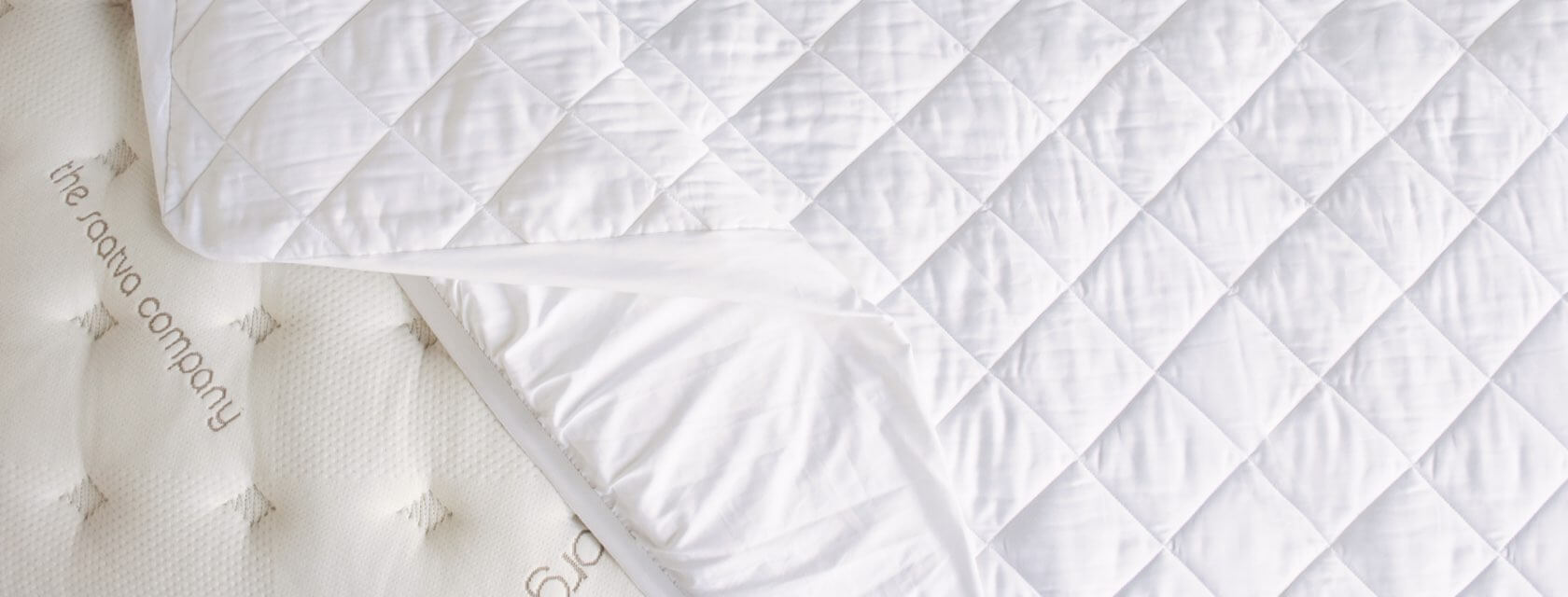
The side skirts are surprisingly deep. They use a diamond-quilt pattern to keep the cotton fill from shifting around, which is a massive pet peeve of mine. Ever had a cheap pad where the stuffing bunches up in one corner? Yeah, that won't happen here.
The "Crisp" Factor: How it actually feels
If you're expecting a cloud-like transformation, you’re going to be disappointed. This is a pad. It’s thin. It adds maybe a half-inch of loft.
However.
There is a specific "crispness" to high-end organic cotton that you just don't get with synthetic blends. It feels like a high-thread-count button-down shirt for your mattress. When you climb in, there’s a distinct lack of that "squishy" feeling. Instead, it feels firm, structured, and very clean.
The real magic is the temperature regulation. Cotton is naturally moisture-wicking. If you're a hot sleeper—and I mean the kind of person who flips the pillow every twenty minutes—this is a game-changer. It creates a breathable buffer between you and your mattress. Most modern mattresses, even the fancy ones, use some form of foam that can trap heat. Putting a thick layer of organic cotton on top allows air to circulate. It’s a subtle difference that you notice around 3:00 AM when you realize you aren't overheating.
Is it actually waterproof?
Nope. Not even a little bit.
This is where people get confused. Most "mattress protectors" have a polyurethane backing to stop spills. The Saatva organic mattress pad is a pad, not a waterproof barrier. If you spill a glass of red wine or if your golden retriever has an accident, it’s going through to the mattress.
So, why buy it?
Because those waterproof covers are loud. They crinkle. They feel like sleeping on a diaper. Saatva chose comfort and breathability over total moisture protection. If you have kids in the potty-training phase, you might want to layer a thin waterproof protector under this pad. But for most adults, the pad provides enough of a barrier against skin oils and general wear-and-tear without ruining the feel of the bed.
Durability and the "Wash Test"
I’ve seen people complain that organic cotton shrinks. Well, yeah. It’s a natural fiber.
Saatva suggests machine washing in cold water and tumble drying on low. If you blast this thing on high heat, it will shrink, and you’ll be fighting to get those corners over your mattress. But if you follow the directions, the cotton actually gets softer over time.
The elastic band around the edge is beefy. It’s called "SideSymmetry" elastic, and it’s designed to fit mattresses up to 16 inches deep. I’ve tried it on a 14.5-inch Saatva Classic and a thinner 10-inch guest bed. It stayed put on both. No sliding. No "popping off" in the middle of the night when you roll over.
The Price Tag Argument
It’s expensive. Let's be real. You can go to a big-box store and buy a mattress pad for forty bucks. The Saatva version is going to run you significantly more—usually somewhere between $195 and $300 depending on the size and if there's a sale running.
Is it worth three times the price of a standard pad?
- Materials: You’re paying for the GOTS certification. That’s a real cost.
- Longevity: Cheap pads use polyester "clumps" that flatten out in six months. Long-staple organic cotton batting holds its shape for years.
- Health: If you have allergies or sensitive skin, the lack of synthetic dyes and chemicals is a legitimate medical benefit, not just a luxury.
If you’re on a tight budget, this is a luxury you can skip. But if you’ve already invested in a high-quality mattress, putting a cheap, scratchy polyester pad on top of it is like putting plastic hubcaps on a Porsche.
A Note on Ethics and Sourcing
I appreciate that Saatva is transparent about their manufacturing. They don't just say "organic" and hope you don't check. Their pads are handcrafted in the USA using imported materials. The Fair Trade certification is also a big deal here. It ensures that the farmers growing the cotton are paid a living wage.
In a world where the textile industry is often a race to the bottom in terms of labor rights, knowing that your bedding didn't come from a sweatshop helps you sleep a little better. Literally.
Comparing the Options
There are other organic pads on the market. Coyuchi and Avocado both make similar products.
Avocado’s pad is a bit thicker but can feel a little "lumpy" because of the way they tuft their wool/cotton blends. Coyuchi is beautiful but often even more expensive than Saatva. Saatva hits that middle ground where the finishing is very professional—the seams are tight, the quilting is uniform, and it feels like a "finished" product rather than a DIY craft project.
Common Misconceptions
- "It will make my firm bed soft." It won't. It adds a tiny bit of surface cushion, but your bed’s firmness level will stay about the same.
- "It’s a cooling pad." It’s not "cooling" in the sense that it has gel or ice-tech. It’s "temperature neutral." It stays at room temperature and doesn't trap your body heat.
- "One size fits all." Check your mattress depth. If you have a massive 18-inch pillow top plus a topper, this might be a tight squeeze.
Final Thoughts on the Investment
If you’re looking for a way to protect your mattress while actually improving the tactile experience of your bed, the Saatva organic mattress pad is one of the best options currently available. It’s a "quiet" luxury. You won't see it under your sheets, but you’ll feel the difference in the airiness of the fabric and the lack of morning stuffiness.
It isn't for everyone. If you need a waterproof shield or if you want to turn a hard bed into a marshmallow, look elsewhere. But for the purist who wants natural materials and high-end construction, it’s a solid win.
Actionable Next Steps
- Measure your mattress height: Before ordering, ensure your mattress is under 16 inches thick to guarantee the side skirts fit securely.
- Check for GOTS labels: If you decide to shop around, always look for the actual GOTS license number on the product tag to verify organic claims.
- Plan your wash cycle: When the pad arrives, wash it once in cold water before use to soften the cotton fibers and remove any "new fabric" scent.
- Layer wisely: If you have a memory foam mattress that runs hot, use this pad as your first layer, then 100% cotton or linen sheets on top to maximize the airflow benefits.