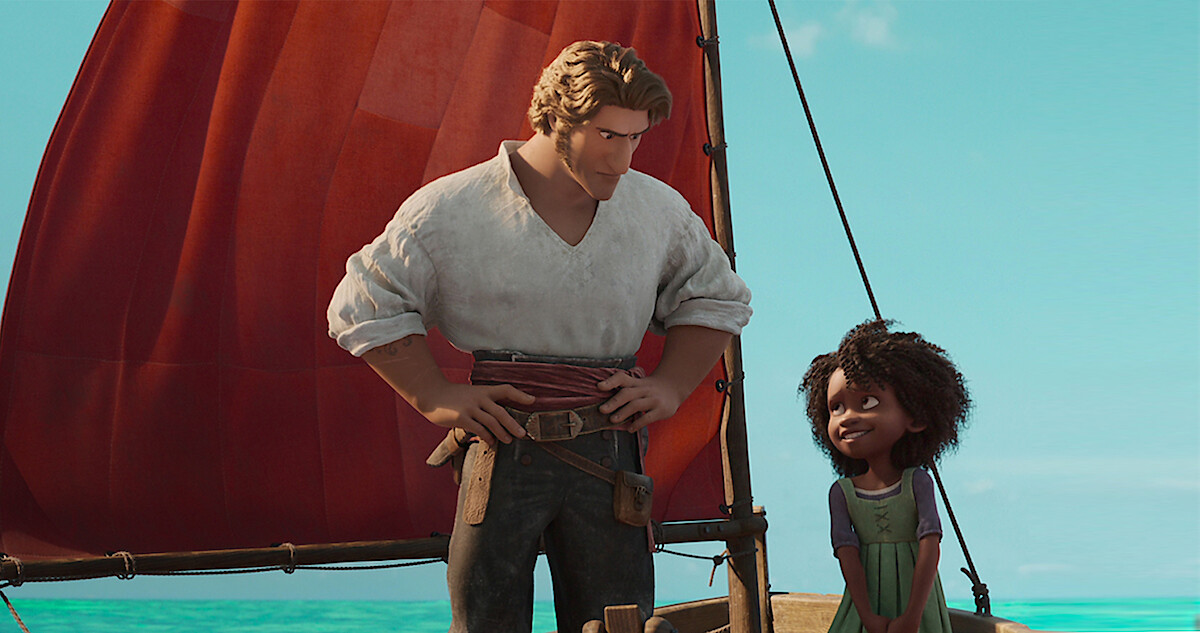
Jacob Holland is a brick wall of a man with a heart that's basically been sutured together by years of salt spray and trauma. If you've watched Netflix's The Sea Beast, you know he isn't your typical shiny, untouchable hero. He’s messy. He’s tired. He’s a guy who has spent his entire life believing one very specific, very violent lie. When we first meet him, he’s the poster boy for the Inevitable, the most famous monster-hunting ship on the theoretical "Seven Seas." He’s the heir apparent to Captain Crow, a man whose obsession with a creature called the Red Bluster makes Captain Ahab look like a casual hobbyist.
Most people see a "Jacob Holland Sea Beast" search and expect a simple character bio. But Jacob is more of a case study in how we unlearn hatred.
He was an orphan. The monsters—the "Beasts"—took his family. Or so he was told. That’s the foundation of his entire identity. He kills because he thinks it’s the only way to keep the world safe. Then a stowaway named Maisie Brumble shows up and ruins everything by being right.
The Reality of the Hunter’s Code
Jacob lives by the Hunter’s Code. It’s a set of rules that justifies the carnage. "Live a great life, die a great death." It sounds noble until you realize it’s just a recruitment slogan for a war that shouldn't exist. Director Chris Williams, who previously worked on Moana and Big Hero 6, didn't just want to make a movie about big kaiju battles. He wanted to talk about propaganda.
Jacob is the primary victim of that propaganda.
He’s incredibly skilled, sure. You see it in the way he handles a harpoon or how he moves across the deck of the Inevitable. The animation team at Sony Pictures Imageworks did a phenomenal job giving him weight. When Jacob moves, you feel the physics. When he takes a hit, it looks like it actually hurts. He’s covered in scars, each one a "souvenir" from a beast that allegedly tried to eat him.
But here’s the thing: Jacob isn't a bad guy. He’s a loyal guy who gave his loyalty to the wrong institution. He views Captain Crow as a father figure, which makes the eventual friction between them feel like a genuine betrayal rather than just a plot point. Crow wants vengeance; Jacob, deep down, just wants a family.
Why Maisie Brumble Changes Everything
Maisie is the catalyst. Without her, Jacob dies at sea, probably inside the belly of a creature, still believing he’s the hero. She’s the one who points out the holes in the history books. She asks the questions Jacob was too afraid—or too conditioned—to ask.
When they get swallowed by the Red Bluster (Red), the dynamic shifts. Jacob wants to fight. He wants to "win." But you can’t win a fight against a creature that isn't actually fighting you. Red isn't a mindless killing machine. She’s a parent. She’s a protector. Jacob’s realization of this isn't some sudden, magical epiphany. It’s slow. It’s uncomfortable. He fights it every step of the way because if Red isn't a monster, then Jacob is a murderer. That’s a heavy realization for a guy who prides himself on honor.
The Design and Voice of a Sea-Worn Legend
Karl Urban provides the voice for Jacob, and it’s a perfect casting choice. Urban has this specific gravel in his voice that suggests a man who hasn't slept in three days. He brings a vulnerability to Jacob that balances out the "action hero" physique. Honestly, if it were a more generic "brave" voice, the character would have fallen flat. Urban plays him as someone who is constantly skeptical but has a hidden reservoir of kindness.
Visually, Jacob Holland is a masterpiece of character design.
His clothes are worn.
His hair is a bit of a mess.
He looks like he belongs in the 1700s, but with a slight fantasy twist.
The animators focused on the "lived-in" feel. His equipment isn't new. It’s maintained. That’s a key distinction for a character like this. It tells you he respects the tools of his trade, even if he eventually grows to despise the trade itself.
Breaking the Cycle of Violence
The climax of the story isn't about killing the biggest monster. It’s about standing in the way of the people who want to keep killing. Jacob’s ultimate act of heroism isn't slaying a beast; it’s dropping his sword.
This is where The Sea Beast separates itself from stuff like How to Train Your Dragon. While both involve "taming" creatures, Jacob’s journey is more about political awakening. He realizes the Crown—the King and Queen—are the ones who started the war to keep their own power. The monsters were just a convenient enemy.
Jacob has to choose between the life he was promised (becoming Captain) and the truth. He chooses the truth. He chooses Maisie. He chooses a life where he doesn't have to kill to feel important.
What Most People Miss About Jacob's Arc
There is a subtle thread about legacy here. Jacob was supposed to be the "next" Captain Crow. Crow is obsessed with his own legend. He wants to be the man who finally killed the Red Bluster.
Jacob realizes that a legacy built on blood isn't worth having.
It’s a quiet subversion of the "chosen one" trope.
He wasn't chosen by fate.
He was groomed by a system.
When he finally confronts the King and Queen at the end, he’s not just speaking for himself. He’s speaking for every hunter who died for a lie. It’s a powerful moment because it’s not about physical strength. It’s about the moral courage to admit you were wrong.
The film ends with Jacob, Maisie, and Red finding a new way to live. It’s not a "happily ever after" where everything is perfect, but it’s a start. They are outcasts now. They’ve traded their status for their integrity.
Actionable Takeaways for Fans and Creators
If you’re looking to dive deeper into the world of Jacob Holland and The Sea Beast, or if you're a storyteller looking to learn from his character design, here’s how to apply these insights:
- Study the "Unlearning" Arc: Jacob is a prime example of a character whose growth comes from losing things, not gaining them. He loses his job, his mentor, and his worldview. If you're writing a hero, consider what "truth" they believe that might actually be a lie.
- Analyze the Visual Storytelling: Watch the movie again, but focus only on Jacob’s body language when he’s around Captain Crow versus when he’s with Maisie. The shift from rigid soldier to protective "older brother" is told through animation, not just dialogue.
- Check Out the Concept Art: Look up the work of Woonyoung Jung and the other visual developers for the film. Seeing the early iterations of Jacob shows how much work went into making him look like a "hero who is tired of being a hero."
- Question the Narrative: Take a leaf out of Maisie’s book. Jacob’s story teaches us to look at the "official" history and ask who benefits from it. In a world of misinformation, that’s a pretty relevant lesson for 2026.
- Support Original Animation: The Sea Beast was a massive hit for Netflix because it felt like a classic high-seas adventure but with modern sensibilities. Watching and sharing these types of character-driven stories encourages studios to take risks on new IPs rather than just sequels.
Jacob Holland isn't just a guy who hunts monsters. He’s a man who had the guts to stop when he realized the "monsters" weren't the ones with the teeth. He’s a reminder that it’s never too late to change your mind, even if you’ve built your entire life on a mistake.