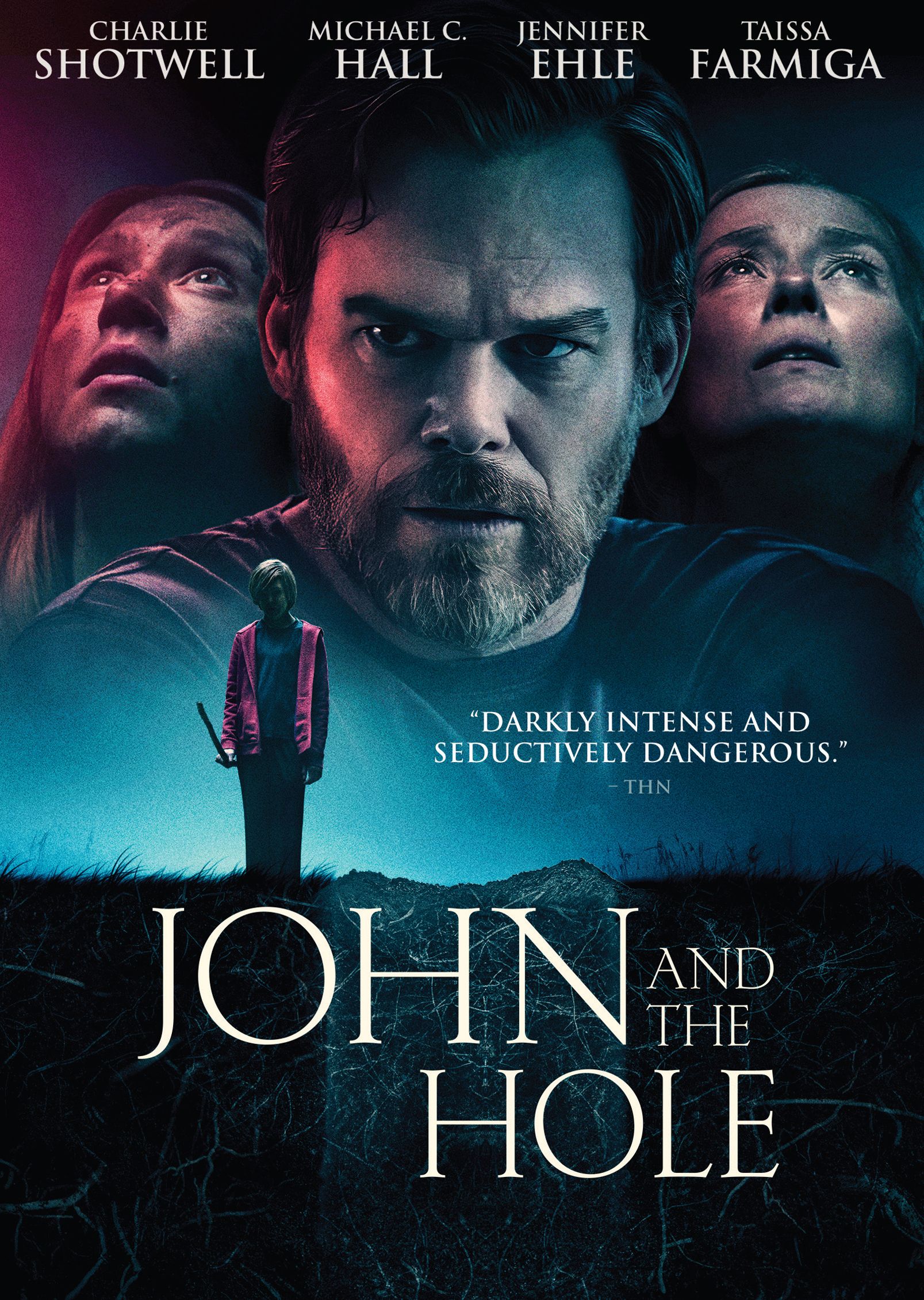
Kids are weird. Everyone knows that. But the kid in John and the Hole takes "weird" to a level that most psychological thrillers wouldn't dare touch.
When the film debuted at Sundance and later hit theaters in 2021, it didn't just divide audiences; it basically fractured them. Some people saw a profound meditation on the terrifying rush of sudden adulthood. Others just saw a spoiled brat and a plot that refused to explain itself. It's a "slow burn" in the truest sense of the word, meaning it simmers until you’re either mesmerized or screaming at your TV for something—anything—to actually happen.
The premise is deceptively simple. John, played with a hauntingly blank stare by Charlie Shotwell, finds an unfinished bunker on his family’s massive estate. Instead of playing in it, he drugs his parents and older sister, drags them out to the woods, and drops them in the pit. Then, he goes home and plays house.
What John and the Hole Is Actually Trying to Say
A lot of the frustration with this movie comes from trying to treat it like a standard thriller. If you’re waiting for a "why," you’re going to be waiting forever. Director Pascual Sisto and writer Nicolás Giacobone (who co-wrote Birdman) aren't interested in traditional motives. They aren't giving you a backstory about abuse or a chemical imbalance.
John is just... bored. Or maybe he’s curious.
Honestly, the film feels more like a dark fable than a realistic drama. It’s about that specific, awkward transition from childhood to the "real world." John asks his mother what it’s like to be an adult, and her answer—full of talk about responsibilities and burdens—clearly doesn't sit well with him. So, he decides to trial-run adulthood by removing the adults.
He eats junk food. He drives the car. He invites a friend over to play a dangerous "drowning" game in the pool. He tries to figure out how to navigate the mundane tasks of life, like withdrawing money or ordering food, but he does it with the emotional intelligence of a houseplant. It’s deeply uncomfortable to watch because there is no malice. There's just a complete lack of empathy.
The Problem With the Ending (And Why It’s Better Than You Think)
Let’s talk about that ending. If you haven't seen it, stop reading. Or don't. The ending is essentially a non-ending.
After days of leaving his family in the hole—feeding them via a bucket and watching them slowly lose their minds—John just lets them out. He drops a ladder down. He goes back to the house, cleans up, and waits. When the family finally returns, bedraggled and traumatized, they find him sitting at the dinner table.
And they eat dinner.
That’s it. No cops. No screaming matches. No John being sent to a psychiatric ward. The silence in that final scene is heavier than any dialogue could have been. It suggests a terrifying complicity. The family is so broken, or perhaps so desperate to return to a "normal" status quo, that they simply absorb the trauma. They go back to being a family because the alternative is admitting their son is a monster they can't control.
The Weird Side Plot Everyone Forgets
One of the strangest choices in John and the Hole is the framing device involving a mother telling this story to her daughter, Lily. This happens in a completely different timeline or reality.
The mother tells the story of John as a warning. When the daughter asks what happens next, the mother basically says, "That’s the end," and then reveals she’s leaving the daughter behind to go live her own life. It’s a jarring, meta-commentary on abandonment and the cycle of parenting.
It’s easy to dismiss this as "pretentious fluff," but it actually provides the only real context we get. It frames John’s story as a modern-day fairy tale—think Brothers Grimm, but with a suburban minimalist aesthetic. It tells us that the "hole" isn't just a physical place in the ground. It’s the gap between generations.
Is It Worth the Watch?
If you like your movies wrapped up with a neat little bow, stay away. Seriously. You’ll hate it.
But if you’re into the "uncomfortable cinema" vibe of someone like Yorgos Lanthimos or Michael Haneke, John and the Hole is a fascinating study in restraint. It’s shot in a 4:3 aspect ratio, which makes everything feel cramped and claustrophobic, even though the family is incredibly wealthy and lives in a massive, open-concept house.
The performances are the anchor here. Michael C. Hall and Jennifer Ehle do a lot of heavy lifting with very little dialogue. Watching their physical and mental deterioration in the hole is harrowing. They go from confusion to anger to a sort of pathetic, animalistic desperation.
Actionable Takeaways for the Curious Viewer
If you’re planning on diving into this one, or if you’ve seen it and are still scratching your head, here is how to process the experience:
- Watch the body language, not the lips. John rarely says what he’s thinking. His movements—how he sits at the table, how he holds a video game controller—tell the story of a kid trying to wear a suit that doesn’t fit.
- Compare it to Funny Games. If you want to understand the "pointless violence" aspect, look at Michael Haneke’s work. Both films explore the idea of characters who don't follow the "rules" of cinema.
- Don't look for a hero. There isn't one. The parents aren't particularly warm, the sister is a typical teenager, and John is... well, John.
- Focus on the sound design. The silence in the film is intentional. It’s meant to make you feel as isolated as the people in the pit.
John and the Hole isn't a movie about a crime. It's a movie about the terrifying realization that we don't actually know the people we live with. It’s about the holes we leave in each other’s lives and the silence that fills them up when we stop pretending everything is okay. It’s a difficult, prickly piece of filmmaking that stays in your brain long after the credits roll, mostly because it refuses to give you the satisfaction of an answer.