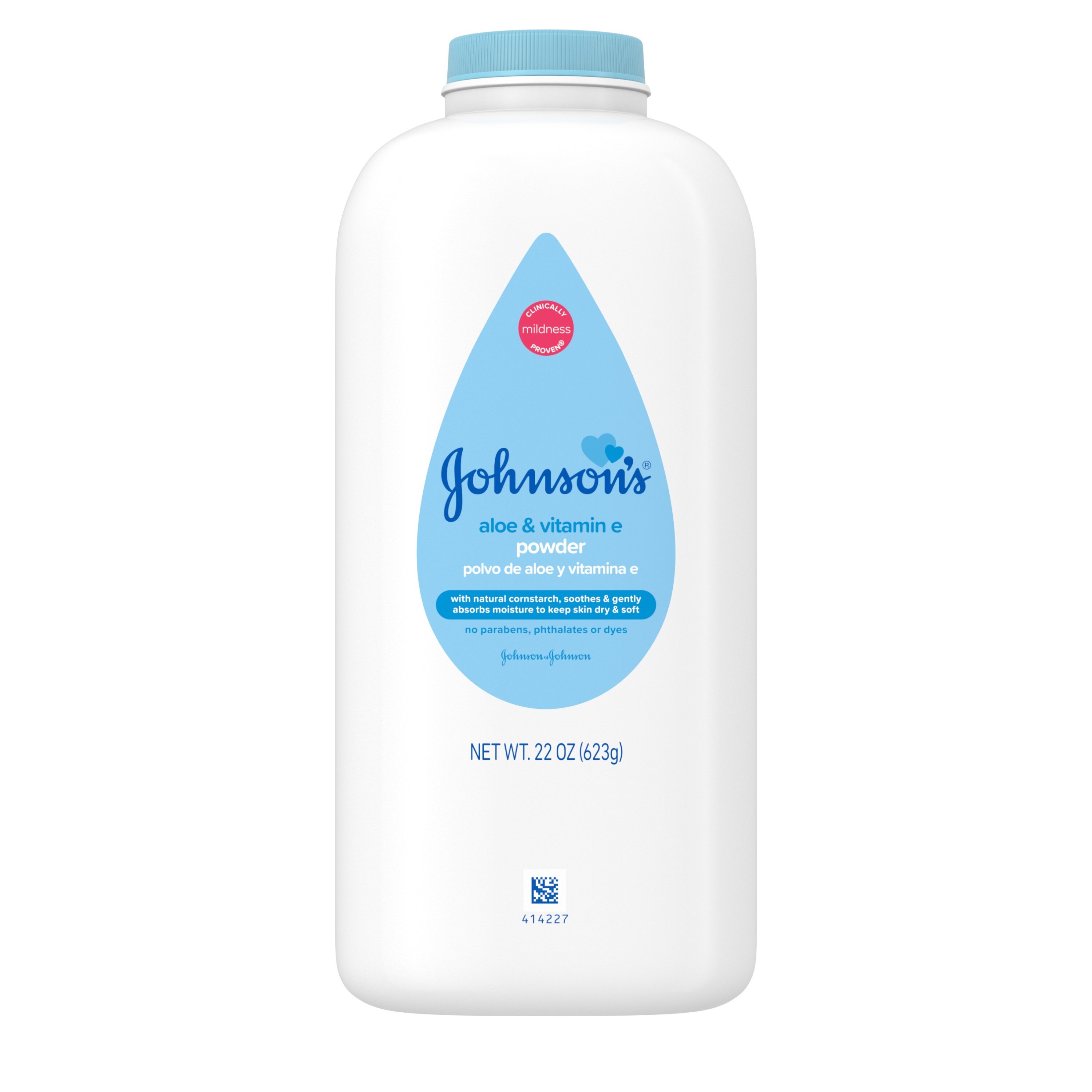
It's one of those smells. You know the one. That clean, powdery scent that instantly teleports you back to childhood or that first week of bringing a newborn home. But lately, the conversation around Johnson’s aloe and vitamin e powder has changed. People aren't just grabbing it off the shelf without a second thought anymore. They’re flipping the bottle over. They're squinting at the ingredients list.
Is it just for babies? Honestly, no. Adults have been using this stuff for decades to prevent thigh chafing during summer or to freshen up after a gym session. But with all the headlines about talc and safety over the last few years, there’s a lot of confusion about what’s actually in that white plastic bottle with the green cap.
Let's clear the air.
The Cornstarch Shift: What’s Actually Inside?
If you haven't checked the label recently, you might be surprised. Johnson & Johnson officially transitioned their global powder portfolio to a cornstarch base. This was a massive move. For years, the debate raged about talc—a naturally occurring mineral that can sometimes be found near asbestos deposits. While the company maintained for a long time that their talc was safe, they eventually made the pivot to cornstarch to appease consumer concerns and simplify their supply chain.
The Johnson’s aloe and vitamin e powder you find on shelves today is built on Zea Mays (corn) starch. It’s a plant-based alternative. It’s highly absorbent. In fact, many dermatologists argue that cornstarch is actually better at soaking up moisture than talc ever was.
But it’s not just starch. The "Aloe and Vitamin E" part isn't just marketing fluff, though the concentrations are exactly what you'd expect for a mass-market topical product—effective enough for surface-level soothing but not a replacement for a concentrated serum. The Vitamin E (Tocopheryl Acetate) acts as an antioxidant. It helps stabilize the skin barrier. The Aloe Barbadensis leaf extract is there to provide that cooling, anti-inflammatory kick that people crave when they have a heat rash.
Why Adults Are Buying This in Bulk
It’s not just for diaper changes. Not even close.
I’ve seen marathon runners swear by this specific green-labeled bottle. When you’re at mile 18 and your shorts are starting to feel like sandpaper against your skin, a cornstarch-based powder is a lifesaver. It creates a physical barrier. It reduces friction.
Then there’s the "dry shampoo" hack. We’ve all been there—running late, hair looking a bit greasy, and no time for a shower. A tiny sprinkle of Johnson’s aloe and vitamin e powder at the roots can soak up excess sebum. Because it’s cornstarch-based, it tends to blend a bit better into lighter hair than the old talc formulas did, though it can still leave a white cast if you’re not careful.
- Shoe deodorizer? Check.
- Sand removal? If you’ve ever been to the beach, you know the struggle. Rubbing some powder on your legs makes the sand fall right off. It’s basically magic.
- Post-shave soothing. Men and women use it to calm down razor burn. The aloe helps here.
A Quick Word on Safety and Inhalation
Here’s the thing. Even though it’s cornstarch and generally recognized as safe (GRAS), you still shouldn't be breathing it in. Small particles in the lungs are never a good idea. Pediatricians often recommend shaking the powder into your hand away from the baby’s face first, rather than puffing it directly onto the skin. It’s a small distinction, but it matters for respiratory health.
Dermatologist Perspectives: Is It Good for Your Skin?
Most skin experts will tell you that cornstarch is a "double-edged sword" for certain people. If you have a fungal infection—like a yeast-based diaper rash or athlete's foot—cornstarch can actually act as a food source for the fungi. It’s organic material. In those specific cases, a medicated powder or an oil-based barrier cream might be a better call.
However, for simple moisture management? It’s hard to beat. The addition of Vitamin E is a nice touch because cornstarch on its own can be a bit drying. The Vitamin E helps mitigate that "parched" feeling on the skin surface.
Comparison: Aloe & Vitamin E vs. The Original Pink Label
People always ask: "Does it really matter which one I get?"
The classic "Pink" Johnson’s baby powder is the standard scent. It’s the baseline. The Johnson’s aloe and vitamin e powder (the Green label) is formulated to be slightly more "soothing." In terms of texture, they feel almost identical. The difference lies in the scent profile—which is a bit fresher and more "botanical"—and that tiny extra bit of skin conditioning from the additives. If you have particularly sensitive skin that gets red easily, go for the green.
Breaking Down the Ingredients
If you look at a standard bottle today, you'll see:
- Zea Mays (Corn) Starch: The heavy lifter.
- Tricalcium Phosphate: An anti-caking agent so it doesn't turn into a brick in your bathroom cabinet.
- Fragrance: That iconic smell.
- Aloe Barbadensis Leaf Extract: The plant-based soother.
- Tocopheryl Acetate: Vitamin E.
It’s a short list. That’s usually a good sign in the world of skincare. Fewer ingredients mean fewer chances for a random allergic reaction, though "fragrance" is always a bit of a wildcard for people with extreme sensitivities.
The Environmental Angle
Since the switch to cornstarch, the product has become more biodegradable. Talc is a mineral; it doesn't "break down" in the traditional sense. Cornstarch is a renewable resource. For the eco-conscious consumer, this is a subtle win. It’s not a "green" product in the artisanal, small-batch sense, but it’s a step away from heavy mineral mining.
How to Get the Best Results
If you're using it for chafing, timing is everything. Apply it to bone-dry skin. If you apply it to skin that is already soaking wet, it can clump. You want that smooth, silken glide. For footwear, dusting your socks rather than the shoes themselves often works better for long-term odor control.
Interestingly, some makeup artists use a tiny bit of this powder to "set" lipstick or create a matte finish on the face. It’s an old-school theater trick. Because it's finely milled, it works surprisingly well as a translucent powder, provided you use a very light hand.
Final Real-World Tips
Don't overthink it. It's a classic for a reason. Whether you're trying to keep a baby comfortable or just trying to survive a humid commute without your thighs catching fire, Johnson’s aloe and vitamin e powder remains a staple.
Just remember to keep the container closed tight. Humidity is the enemy of cornstarch. If you leave it open in a steamy bathroom, it’ll lose that fluffy texture pretty fast.
Practical Next Steps:
- Check your current stock: If you have an old bottle from five-plus years ago, check if it’s talc or cornstarch. If you’re concerned about talc, it might be time to toss it and grab the new cornstarch version.
- Patch test for "Fragrance": If you're using it on a newborn or have eczema, try a small amount on the inner forearm first to ensure the scent doesn't cause a flare-up.
- Application technique: Always pour into your palm first, away from the face, to avoid inhaling the fine particles.
- Storage: Keep the bottle in a cool, dry place to prevent the cornstarch from clumping due to moisture.