Ever get that feeling that some people just don't change? Not in the "he still forgets to do the dishes" way, but in the bone-chilling, "there is a void where their soul should be" way. That is the exact nerve Junji Ito touches with his short story, The Bully (or Ijimekko).
Most of the time, when we talk about Junji Ito, we’re picturing giant floating heads with nooses or people turning into human snails. It’s usually big, loud, cosmic body horror. But Junji Ito The Bully is different. It’s quiet. It’s grounded. And honestly? It’s arguably one of the most upsetting things he has ever put to paper because it could actually happen. There are no ghosts here. Just people being monsters to each other.
The Story of Kuriko and Nao (It's Not a Love Story)
The plot follows a woman named Kuriko. On the surface, she seems like a normal, perhaps slightly stressed, adult. But she’s carrying a secret from her childhood that is beyond "kids being kids."
When she was a young girl, she met a smaller, timid boy named Nao. At first, she was nice to him. Her mom even encouraged it. But Nao was clingy. He followed her everywhere. He wanted her constant attention.
And something in Kuriko just... snapped.
She didn't just tell him to go away. She started a campaign of psychological and physical torment. We’re talking about making him eat dirt, dragging him around, and eventually, a horrific incident involving a dog that leaves Nao scarred. She did it because she could. She did it because she was bored and frustrated with her own life, and Nao was an easy target who wouldn't fight back.
Eventually, Nao’s family moves away. Kuriko grows up. She feels guilty—or at least, she tells herself she does. Then, years later, Nao reappears. He’s handsome, kind, and seemingly has no memory of the trauma. He forgives her. They fall in love. They get married.
If you know Ito, you know this is where the floor drops out.
Why Junji Ito The Bully Works Without Monsters
The real horror of Junji Ito The Bully isn't the bullying itself, though that’s hard to read. It’s the "Long Game."
After Kuriko and Nao have a son, Nao disappears. He just leaves a note and vanishes. Kuriko is left alone with a child who looks exactly like the boy she used to torture. This is where the cycle of abuse turns into a spiral.
Is Nao’s disappearance a calculated revenge? Most readers think so. By marrying her and leaving her with a "mini-Nao," he forces her back into her old patterns. He knew she hadn't changed. He knew that under that mask of a "repentant adult," the bully was still there, waiting for a victim.
The Final Panel is a Nightmare
Ito is famous for "page-turn" scares. In The Bully, the final image isn't a monster. It’s Kuriko, dressed in her childhood clothes, her face twisted into a sadistic, childish grin, looming over her own son in the park.
It suggests that she has completely regressed. She isn't a mother anymore; she’s that cruel little girl again. The cycle isn't just continuing; it's eating the next generation.
Real Life Inspiration: The Park on the Corner
Interestingly, Junji Ito didn't just pull this out of thin air. In various interviews and author notes—specifically found in French editions like La Sadique—Ito has mentioned that the story was inspired by a memory from his own childhood.
He recalled a neighborhood park where a group of children used to pick on a younger boy. He remembered them hoisting the kid to the top of a slide and demanding he jump. Ito wasn't one of the bullies, but he watched. He felt a deep sense of sadness and nostalgia for that kid who eventually moved away. He wondered what happened to him.
That "what if" is what birthed the story. What if that kid came back? What if he wanted to break the person who broke him?
Breaking Down the Themes
Why does this story rank so high for fans? It's the E-E-A-T (Experience, Expertise, Authoritativeness, Trustworthiness) of Ito's psychological insight. He understands that:
- Cruelty can be addictive: Kuriko describes the "pleasure" she felt. It wasn't about the boy; it was about the power.
- Guilt is often a mask: Kuriko’s adult life was built on "being sorry," but the moment she was stressed and abandoned, she went right back to her worst self.
- Trauma is a circle: Nao’s revenge makes him a bully in his own right. He abandons his son just to hurt his wife. Nobody wins.
How to Experience This Story Today
If you want to read or watch Junji Ito The Bully, you have two main options:
- The Manga: Look for the collection titled Deserter (published by VIZ Media). It contains many of Ito’s early works, including this one. The line work is raw and perfectly captures the transition from "cute kid" to "demon child."
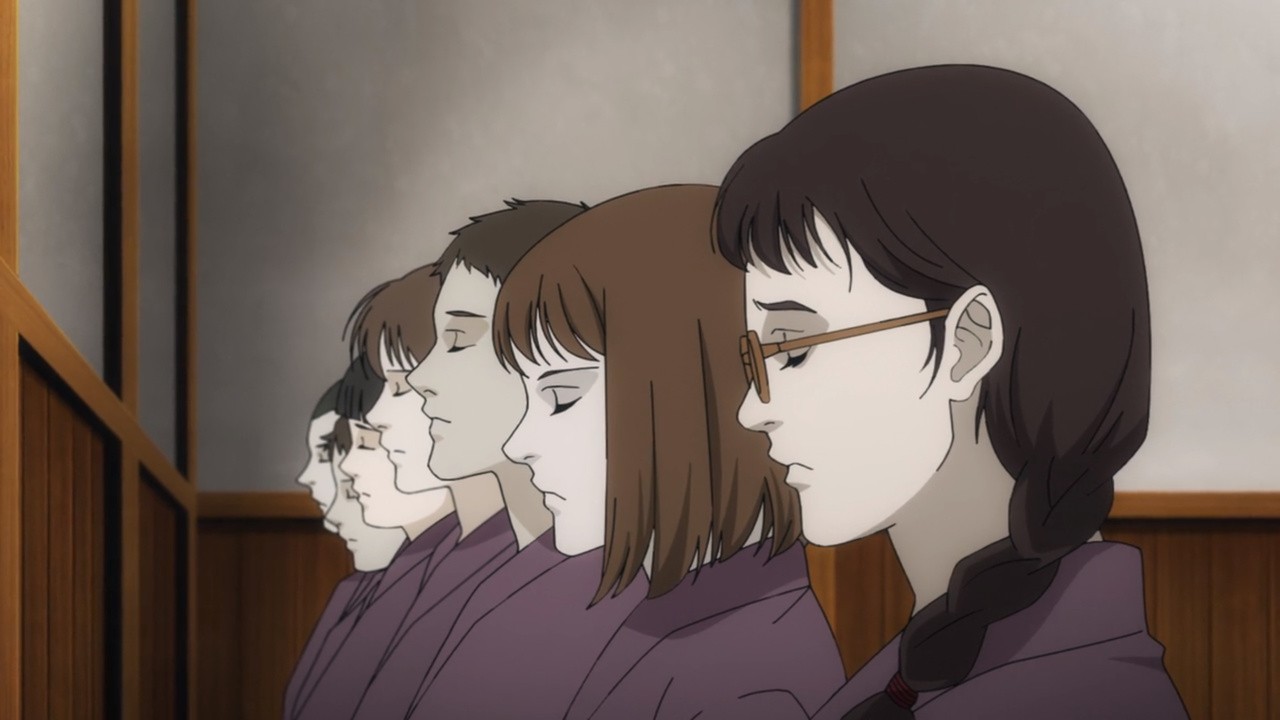
- The Anime: It was adapted in the Netflix series Junji Ito Maniac: Japanese Tales of the Macabre (Episode 10). While some fans feel the animation doesn't quite hit the same level of dread as the manga, the voice acting for Kuriko’s breakdown is genuinely unsettling.
Actionable Insights for Horror Fans:
If you are diving into Ito's work for the first time, don't start with the supernatural stuff. Start here. It sets a baseline for his understanding of human darkness.
- Read "The Bully" first to see how Ito handles "human monsters."
- Compare it to "The Whispering Woman" (another story in the Maniac series) to see how he explores different types of psychological obsession.
- Pay attention to the background art. Ito often uses the environment (like the empty park) to reflect the emotional isolation of his characters.
You can find Deserter at most major bookstores or through digital manga platforms. Just don't expect to feel good after finishing it. This one stays with you.