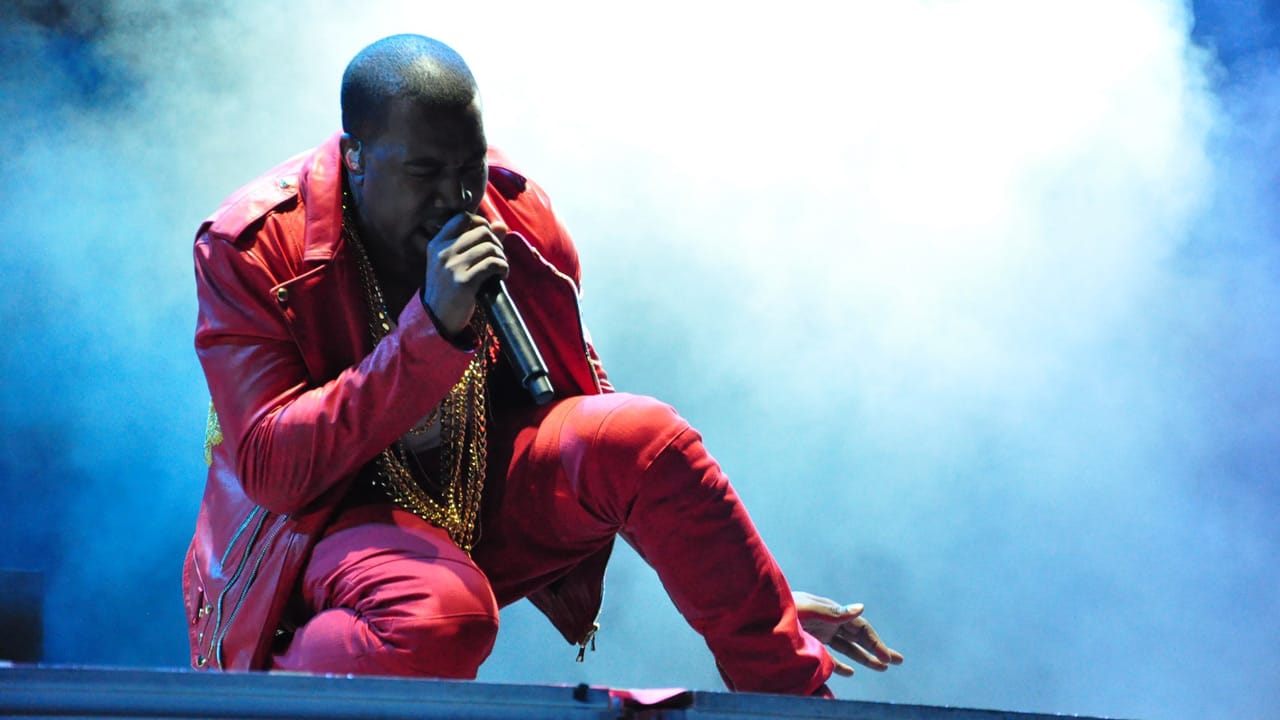
"Wake up, Mr. West!"
If you grew up in the mid-2000s, those four words are basically hardwired into your brain. You can almost hear the tapping on the shoulder, the groggy realization of a student caught napping in class, and the smooth transition into some of the most soulful production in hip-hop history. But for Kanye West, "Wake Up Mr. West" isn't just a nostalgic skit or a clever intro. It’s a mission statement. It’s a recurring theme that has followed him from the polo-and-backpack era of 2005 all the way to the chaotic, polarizing figure we see in 2026.
Honestly, the phrase has taken on a life of its own. It started as a funny bit with Bernie Mac (rest in peace) and morphed into a battle cry for someone who felt the world was sleeping on his genius.
Where the Hell Did It Come From?
The origin is actually pretty specific. It first appeared on Kanye’s sophomore album, Late Registration, released in August 2005. The very first track is literally titled "Wake Up Mr. West." It’s a 41-second skit featuring the legendary comedian Bernie Mac, playing a disgruntled professor or school official.
Bernie is yelling at Kanye to wake up because he’s sleeping in class—again.
"Wake up, Mr. West! Mr. West! Mr. Fresh, Mr. by-himself-he's-so-impressed!"
It was hilarious because it played into the "College Dropout" persona Kanye had built. He was the guy who didn't fit the academic mold but was clearly smarter than the curriculum. The skit samples "Someone Saved My Life Tonight" by Elton John, which is just classic Ye—taking a tiny fragment of a legend's work and turning it into a foundation for something new.
But there’s a layer of irony here. While Bernie Mac is telling him to "wake up" in the literal sense, Kanye is using the album to show how "awake" he actually is to the social issues around him. This was the same year he looked into a camera during a Hurricane Katrina telethon and said the words that would define his early political legacy: "George Bush doesn't care about Black people."
He wasn't the one sleeping. We were.
The Evolution: From Skits to Social Commentary
By the time Graduation rolled around in 2007, the phrase evolved. The opening track, "Good Morning," starts with that same energy. "Wake up, Mr. West!" only this time, he’s not just waking up from a nap; he’s waking up to his own superstardom.
You’ve probably noticed how the tone changed.
In Late Registration, it felt like a nudge. In Graduation, it felt like an arrival.
Then things got complicated. In 2013’s "New Slaves," Kanye brought the concept back but with a much darker, more aggressive edge. The phrase appears as a sample, but the context is no longer about a kid in a classroom. It’s about the "New Slaves" of consumerism and the prison-industrial complex.
It’s interesting how he uses the same words to mean different things as he ages.
- 2005: Wake up and realize you're late for your future.
- 2007: Wake up and see that you've made it.
- 2013: Wake up and realize you're still being controlled by the system.
A lot of fans and critics, like Dr. Joshua Wright in his book Wake Up, Mr. West: Kanye West and the Double Consciousness of Black Celebrity, argue that this phrase is the perfect lens to view Kanye’s entire career. It’s about the struggle of being "awake" in a society that wants you to just follow the script.
Why People Still Use It (And Get It Wrong)
You’ll see the phrase all over TikTok and X (formerly Twitter) today. Usually, people use it when Kanye does something "crazy" or controversial. They say "Wake up, Mr. West" as if they’re trying to snap him back to the 2004 version of himself.
But that misses the point entirely.
Kanye never wanted to go back. For him, "waking up" means moving forward, even if it’s off a cliff. When he started the Yeezy line, people told him to stay in his lane. He ignored them. When he switched his sound to the harsh, industrial noise of Yeezus, people hated it. Now, it’s considered a masterpiece.
The phrase has become a bit of a double-edged sword. To his fans, it’s a sign of his prophetic nature. To his critics, it’s a plea for him to return to reality.
The Cultural Footprint: Beyond the Music
It’s not just music. This drop has leaked into fashion and art. You’ll see "Wake Up Mr. West" printed on bootleg streetwear and high-end gallery walls.
- The Fashion Shift: It marked the transition from "baggy jeans" hip-hop to the "luxury rap" era. Suddenly, it was okay for a rapper to be into Dior and Louis Vuitton.
- The Academic Narrative: Kanye changed how we talk about education in music. Before him, school was either "good" or you were a "gangster" who didn't need it. Kanye made it okay to be a "dropout" who was actually an intellectual.
- The Voice of a Generation: For Millennials, that Bernie Mac voice is a core memory. It represents a time when hip-hop felt like it was breaking through a ceiling.
What's the Real Takeaway?
If you're looking for the "old Kanye," you're probably going to be disappointed. He’s spent twenty years trying to wake everyone else up to his vision, whether they wanted to see it or not.
"Wake Up Mr. West" is more than a skit. It’s the sound of a man who refuses to be quiet, refuses to be predictable, and refuses to stay in the classroom where society tried to put him. Whether you love him or can't stand him, you have to admit: the man is definitely wide awake.
How to Listen to the Evolution
If you want to really understand how this theme progressed, don't just shuffle a "Best of" playlist. You need to hear the transitions.
- Listen to "Wake Up Mr. West" (Late Registration): Pay attention to the Bernie Mac delivery. It's frustrated but parental. It's the sound of someone who cares.
- Listen to "Good Morning" (Graduation): Notice how the "Wake up" line is now surrounded by triumphant synthesizers. The struggle is over, or so it seems.
- Listen to "New Slaves" (Yeezus): The sample is distorted. It’s no longer a joke. It’s a warning.
To truly track the legacy of this phrase, your next step should be watching the jeen-yuhs documentary on Netflix. It provides the raw footage of these early years, showing exactly how much work it took for "Mr. West" to finally wake up the rest of the world to his sound.