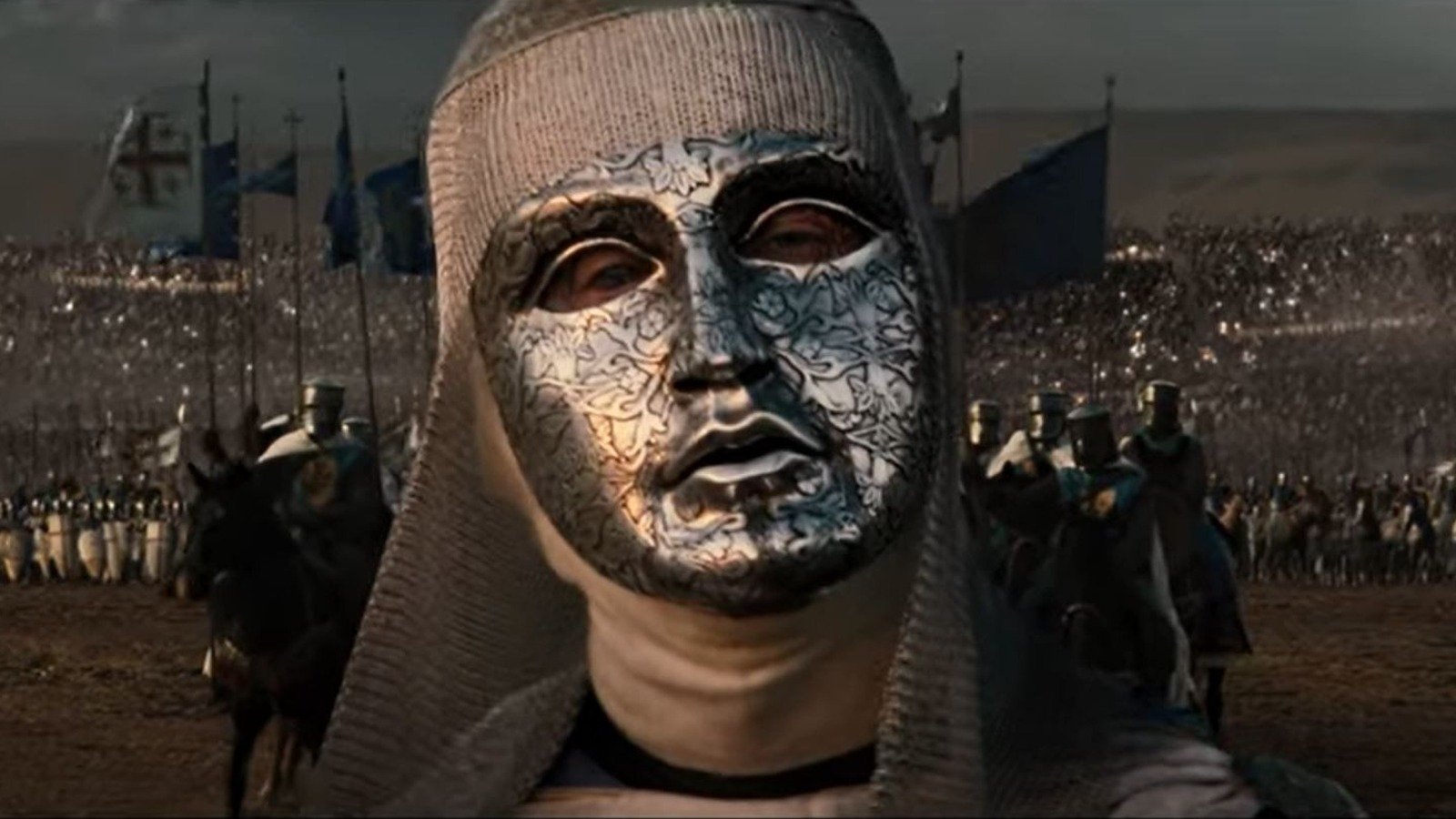
If you’ve seen the movie Kingdom of Heaven, you probably have a very specific image of King Baldwin IV burned into your brain. He’s the guy in the shimmering silver mask, sitting on a throne with an eerie, calm voice, played by Edward Norton. It’s iconic. It’s mysterious. It’s also, honestly, mostly a Hollywood invention.
In the real 12th century, there was no silver mask.
People often search for "King Baldwin no mask" because they want to know the truth behind the cinematic myth. They want to know if he was actually hiding behind metal or if that was just a creative choice by Ridley Scott to make a dying king look like a superhero. The reality is a lot more human and, frankly, much more tragic.
The Myth of the Silver Mask
Let’s get the big one out of the way first. There is zero historical evidence that Baldwin IV ever wore a mask. None.
No contemporary chronicler mentions it. William of Tyre, who was Baldwin’s tutor and basically his childhood best friend/biographer, never wrote about a mask. He wrote about the King’s "halting speech" and how he looked like his father, Amalric. He described the King’s skin, his face, and his eventual blindness in detail. If Baldwin had been walking around in a custom-forged metal faceplate, William definitely would have put that in the notes.
So why do we all think he wore one? Basically, it’s a vibe.
In the movie, the mask serves as a metaphor for a man whose body is failing but whose spirit is untouchable. It’s a great storytelling device. But in 1180, a heavy metal mask would have been a nightmare. It would have been heavy, hot as hell in the Jerusalem sun, and incredibly unsanitary for someone whose skin was literally falling apart from lepromatous leprosy.
What Did He Actually Use?
If he wasn't wearing a mask, what was he doing? Most historians, like Bernard Hamilton in his book The Leper King and His Heirs, suggest that if he covered up at all, it was with a simple cloth veil.
Chroniclers like Roger of Howden mention that the King sometimes used a veil or a hood in his later years. This wasn't to look cool. It was to avoid "frightening or disgusting" his subjects. Leprosy in its late stages is brutal. It causes "leonine facies," where the skin on the face thickens and sags, giving a lion-like appearance. Your nose can collapse. You lose your eyelashes and eyebrows.
But here’s the kicker: for a huge chunk of his reign, Baldwin IV likely didn't cover his face at all.
He was a king. In the Middle Ages, kings were supposed to be the "touchable" presence of God’s will on earth. He rode out to battle at Montgisard when he was only 16, leading his troops from the front. You can’t command a cavalry charge if you can’t see or breathe through a metal bucket. He was visible. He was out there. He didn't hide his disease; he forced everyone else to deal with it.
The Timeline of the "No Mask" Reality
To understand why "King Baldwin no mask" is the more interesting version of the story, you have to look at how the disease progressed.
- Age 9: Discovery. William of Tyre notices Baldwin playing with other kids. They’re pinching each other’s arms, but Baldwin doesn’t feel a thing. This was the first sign—nerve damage. No mask needed. He looked like a normal kid.
- Teenage Years: The "Comely" King. Early on, he was described as handsome. He looked like his father. He was a great horseman. The leprosy was there, but it hadn't started "eating" his face yet.
- Early 20s: The Breakdown. This is where it gets rough. The disease hits his extremities. He loses the use of his right hand. He begins to lose his sight. This is the period where a veil might have come into play, but he was still very much in the public eye.
- The End: By the time he died at 24, he was bedridden and blind. He didn't need a mask because he wasn't really "out" anymore. He was a shell of a man, yet he still managed to hold a kingdom together against Saladin.
Why the Maskless Reality Matters More
Honestly, the real story is way more "metal" than the movie version.
Imagine being a 16-year-old kid whose skin is dying. You know you’re going to be blind, paralyzed, and dead before you’re 30. Instead of hiding in a palace behind a silver mask, you strap yourself to a horse because you can’t hold the reins anymore. You ride into a desert sun to face one of the greatest military geniuses in history—Saladin—and you actually win.
That’s the "King Baldwin no mask" energy.
He didn't have the luxury of a cool aesthetic. He had sores, he had pain, and he had a kingdom that was falling apart at the seams. People stayed loyal to him not because he looked like a mysterious statue, but because they saw his literal face rotting and realized he was still showing up for work. That’s real leadership.
Common Misconceptions About the Mask
- "It was for hygiene." Not really. A metal mask would trap bacteria and moisture, making the infections worse. Linen veils were the move if you wanted to keep things "clean."
- "It was a tradition." Nope. No other Crusader king did this. It wasn't a "leper thing" either. Most lepers were just sent to colonies and told to ring a bell. Baldwin was the exception to every rule.
- "The mask in the movie is based on a real artifact." There are zero artifacts. The mask in Kingdom of Heaven is loosely inspired by Venetian masquerade masks, which didn't even exist in that style for another few hundred years.
Actionable Insights for History Buffs
If you’re doing research on Baldwin IV or just want to get your facts straight for the next time the movie comes on, here is what you need to remember:
- Primary Sources are King. If you want the real deal, look for the Historia by William of Tyre. It’s the most intimate account of Baldwin’s life.
- Check the Art. Medieval manuscripts showing Baldwin usually depict him with a "normal" face or perhaps slightly spotted. They almost never show him covered.
- Understand the Disease. Modern leprosy (Hansen’s disease) is treatable, but in 1185, it was a death sentence. Understanding the physical toll helps you realize why the "silver mask" theory is so impractical.
- Visit the Sources. If you're ever in Jerusalem, you can visit the Church of the Holy Sepulchre where he was buried. The physical locations bring the "human" aspect of his reign to life far better than any CGI.
The mask makes for a great poster, but the man behind it—scars and all—is the one who actually changed history.