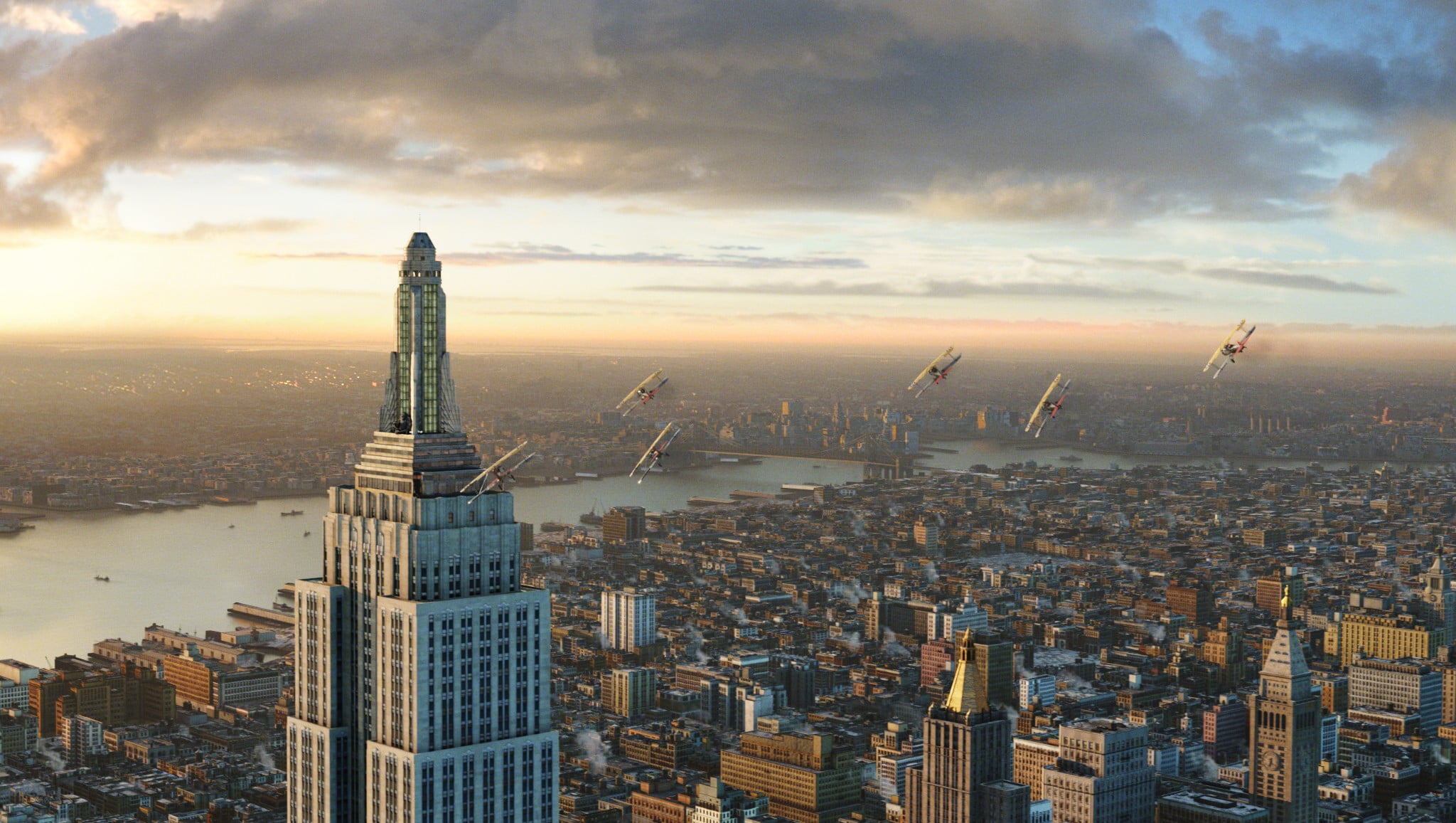
Honestly, if you ask anyone to picture a giant ape, they don't see him in a jungle. They see him clinging to a spire in Manhattan. It’s the image that defined a century of cinema. But there is a massive gap between the legend of King Kong on the Empire State Building and the technical reality of how that scene actually came to be.
Most people think they’re remembering a giant monster. They aren't. They’re remembering an 18-inch puppet made of rabbit fur and metal.
The Illusion of Scale: He Was Tiny
Let’s get the biggest misconception out of the way first. When King Kong "climbed" the Empire State Building in 1933, he wasn't a guy in a suit. He wasn't a giant robot. He was a miniature.
Willis O’Brien, the undisputed father of stop-motion, built a few different Kong models. They were basically high-tech dolls. They had metal ball-and-socket skeletons—called armatures—covered in foam and rubber. To make him look "ape-like," they used rabbit fur.
The process was grueling.
Imagine moving a tiny arm one millimeter. Click. Moving it another millimeter. Click. You do that 24 times just to get one second of film. If a fly landed on the set or a curtain moved, the whole shot was ruined. It was tedious work that took months.
The Building Wasn't Real Either
You can't exactly fly biplanes around a real skyscraper while a giant ape climbs it. Not in 1933. The Empire State Building seen in those wide shots was a miniature model.
To blend the live-action actress Fay Wray with the animated Kong, O’Brien used something called "miniature rear projection." Basically, they’d project previously filmed footage of Fay Wray onto a tiny screen inside the miniature set. Then they’d animate Kong next to it, frame by frame.
It was absolute wizardry for the time.
Why the Empire State Building?
Timing is everything. When King Kong was being filmed, the Empire State Building was the new kid on the block. It had only been open for about two years.
It was the tallest building in the world.
It was a symbol of American grit during the Great Depression.
Choosing this specific landmark wasn't just about height; it was about the "Race to the Sky." The building had just beaten out the Chrysler Building for the title of world's tallest. Putting the "Eighth Wonder of the World" on top of the world's tallest building was a marketing masterstroke.
Interestingly, the building was struggling at the time. It was nicknamed the "Empty State Building" because so many offices were vacant due to the economy. Kong basically gave the skyscraper its first big break.
The 1983 Balloon Disaster
Fast forward fifty years. For the film’s 50th anniversary, someone had the "brilliant" idea to put a real-life, 84-foot inflatable King Kong on the Empire State Building.
It was a total mess.
First, the crate containing the 3,000-pound balloon wouldn't fit in the elevator. Workers had to unpack the giant nylon ape and drag it through hallways and out of windows. During the struggle, the balloon's shoulder ripped.
Then the winds hit.
New York weather is no joke at 1,400 feet. The winds reached nearly 100 mph. Instead of a majestic gorilla, the balloon looked like a "giant brown garbage bag" flapping in the wind. It kept leaking. It kept sagging. It stayed up for about a day before they gave up and hauled it down.
Peter Jackson and the 2005 Remake
When Peter Jackson took a swing at the story in 2005, he wanted to pay homage to the original. He didn't use the World Trade Center (like the 1976 remake did). He went back to the 1930s.
But he changed the vibe of the climb.
In the 1933 version, the climb is a desperate escape. In the 2005 version, it’s almost poetic. VFX artist Robyn Luckham actually animated Kong with a slight "tremor" in his arm during the ascent. Why? Because by that point in the movie, Kong is exhausted and injured.
It’s those tiny details that make the CGI feel "heavy" and real.
Modern Ways to Experience the Legend
If you go to the Empire State Building today, they’ve leaned into the history. There’s a permanent exhibit on the 2nd floor where giant animatronic Kong hands appear to be breaking through the walls.
You can even stand in his palms for a photo. It’s a bit touristy, sure, but it shows how inseparable the building and the beast have become.
Actionable Insights for Fans and Travelers
If you’re a film buff or just visiting NYC, here’s how to actually appreciate the history of King Kong on the Empire State Building:
- Visit the 2nd Floor Museum First: Don't just rush to the 86th-floor observatory. The Kong exhibit has actual 1930s-style office recreations and the "broken window" installation that shows the scale the filmmakers were going for.
- Look for the Mooring Mast: When you’re at the top, look at the spire. That was originally intended to be a docking station for dirigibles (blimps). It never worked because of the wind, but that’s the exact structure Kong is supposed to be hanging onto.
- Watch the 1933 Original: Before you go, re-watch the final ten minutes. Pay attention to the "jerky" movement. That isn't a mistake; it's the thumbprint of a human animator moving a model by hand.
- Check the Weather: If you want to understand why the 1983 balloon failed, go up on a day with 20+ mph winds. You’ll feel the building sway slightly, and you'll realize why sticking a giant inflatable gorilla up there was a terrible idea.
The story of the ape and the skyscraper is really a story of two icons that saved each other. The building gave the movie a legendary finale, and the movie gave the building a permanent spot in the world's imagination.
To truly understand the legacy, your next step is to head to the Empire State Building’s official site and book a "Sunrise Experience" ticket. Seeing the sun come up over Manhattan from the spot where Kong "fell" is the only way to feel the true scale of the legend.