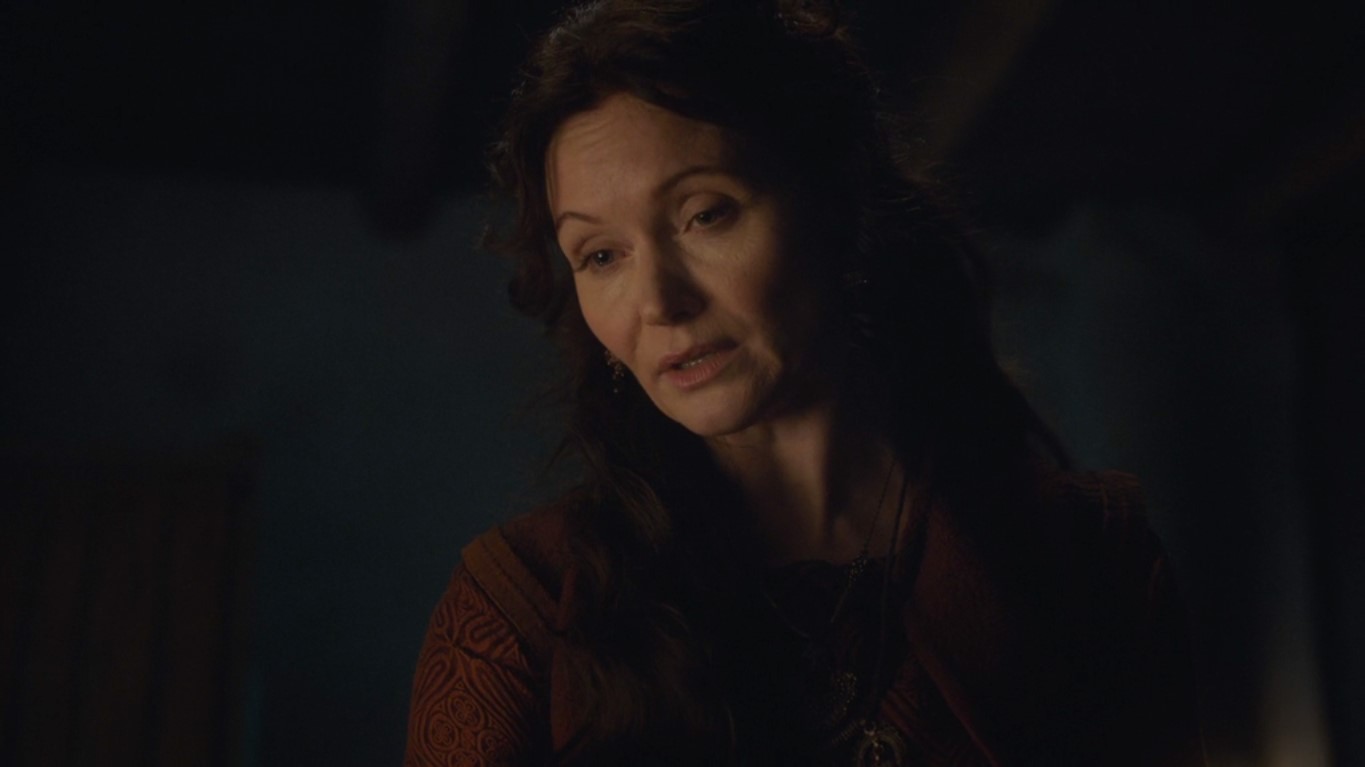
She wasn't a queen. She didn't lead an army, and she definitely didn't have any dragons. Yet, the character of Lady Crane Game of Thrones fans remember so vividly managed to do something almost nobody else in Westeros or Essos could: she humanized a cold-blooded assassin.
Remember the play in Braavos? That garish, fart-joke-filled production of "The Bloody Hand" that retold the events of King’s Landing? It was ridiculous. But in the middle of that farce stood Lady Crane, played by the brilliant Essie Davis. She wasn't just some background extra. She was the focal point of Arya Stark’s most difficult moral crossroads. Honestly, if you look back at Season 6, Crane is the reason Arya didn't become a permanent, soul-less member of the Faceless Men.
Why Lady Crane Was the Turning Point for Arya
Arya was supposed to kill her. That was the mission. Jaqen H'ghar didn't give her a choice; it was "poison the rum or fail the test." But things got complicated because Arya actually liked her. It's rare to see Arya Stark, who by that point had become a jaded survivalist, find a genuine connection with a stranger.
Lady Crane was talented. She was also kind, which is a death sentence in the world of George R.R. Martin. When Arya snuck backstage, she didn't find a monster. She found a woman who was better than the script she was given. Crane knew the play was trash. She knew her lines were weak. She even took Arya’s advice on how to improve the performance of Cersei’s grief. Think about that for a second. An experienced actress taking artistic notes from a random "waif" off the street. It showed a lack of ego that’s basically nonexistent in the Game of Thrones universe.
When Arya knocks the glass of poisoned rum out of Crane's hand, it's the moment the "No One" facade finally cracks. Arya chose her humanity over her training. She chose Lady Crane over the Many-Faced God. And, as we know, that choice had some pretty messy consequences.
The Tragic Fate of the Best Actress in Braavos
The Waif didn't take kindly to Arya's failure. We all saw that coming. But the way Lady Crane handled the aftermath was what really cemented her as a fan favorite.
After Arya gets turned into a human pincushion by the Waif, she stumbles through the streets of Braavos. She's bleeding out. She's desperate. Where does she go? She finds the one person she showed mercy to. Lady Crane doesn't just call a doctor; she stitches Arya up herself. She offers her a home. She offers her a spot in the acting troupe. For a fleeting moment, there’s this weird, alternate-reality vibe where Arya Stark could have just been an actress in Essos.
But this is Game of Thrones.
The Waif eventually finds them. The scene where Lady Crane dies is brutal because it’s so quiet compared to the epic battles we usually see. She’s just gone. One minute she’s checking on her patient, and the next, she’s a casualty of a war she had no part in. It’s a gut punch. It’s also the final catalyst that sends Arya back to Winterfell. Without the death of Lady Crane, Arya might have lingered in Braavos. Instead, the loss of her protector forced her to finish the Waif and reclaim her identity.
Essie Davis and the Meta-Layer of the Character
Let's talk about the casting. Essie Davis was a huge get for this role. Most people know her from The Babadook or Miss Fisher's Murder Mysteries. She brought a level of gravitas to the "play within a play" that made the whole Braavos storyline work.
If the actress playing Lady Crane hadn't been that good, the audience wouldn't have cared if Arya killed her. We needed to see the "Cersei" on stage as a real person to understand why Arya was struggling. Arya hated Cersei Lannister. She wanted Cersei dead. But seeing Lady Crane portray Cersei’s pain over Joffrey’s death forced Arya to realize that even her enemies are human. It was meta-commentary at its finest. The show was basically telling us that perspective changes everything.
What Most Fans Get Wrong About the Braavos Arc
There’s a common complaint that the Braavos storyline dragged on too long. People wanted Arya to go home. They wanted her to start crossing names off her list. But if you skip the Lady Crane Game of Thrones scenes, you miss the entire psychological foundation of Arya’s endgame.
Some viewers think Arya’s recovery from those gut stabs was unrealistic. Maybe it was. A little bit of soup and some bandages shouldn't fix multiple knife wounds to the abdomen. But narratively, Lady Crane represents the "Mother" figure Arya had lost. Catelyn Stark was gone. Lady Crane was a temporary surrogate who provided the warmth and safety Arya hadn't felt since Season 1.
- She wasn't a fighter, but she was brave.
- She didn't have magic, but she had empathy.
- She wasn't a Stark, but she saved one.
The reality is that Lady Crane’s death was the moment Arya realized she could never truly have a "normal" life. She couldn't stay with the mummers. She couldn't be a healer. The world she lived in would always hunt down and kill the people she cared about. It was the final lesson in Arya's education.
Lessons from the Life and Death of Lady Crane
If you're a writer or a storyteller, Lady Crane is a masterclass in how to make a short-lived character matter. She appeared in only three episodes. Three. And yet, her impact on one of the show's lead protagonists was permanent.
She reminds us that mercy has a cost. In the world of the Faceless Men, the cost of mercy is usually someone else's life. Arya saved Crane, so the Waif killed Crane. It’s a dark, cyclical balance. But for Arya, the trade-off was worth it because it allowed her to find herself again. She stopped being "No One" and became Arya Stark of Winterfell.
If you're revisiting the series, pay close attention to the dialogue between Lady Crane and Arya in the dressing room. It’s some of the best writing in the later seasons. It’s quiet, it’s intimate, and it’s completely devoid of the "shock value" that the show eventually became known for.
Next Steps for Fans and Analysts
To truly appreciate the nuance of this arc, you should re-watch Season 6, Episodes 5, 6, and 8. Look specifically at the "play" scenes. Notice how Lady Crane’s performance changes after she talks to Arya. She moves from a caricature of Cersei to a grieving mother.
If you're looking into the lore, research the "Mummers" of the Free Cities. The show only scratches the surface of how these troupes operate. In the books (A Song of Ice and Fire), the "Gate" theater is a real place in Braavos, and the internal politics of the acting guilds are much more complex.
Finally, consider the thematic link between Lady Crane and the Waif. They represent the two paths for Arya: empathy and creation versus coldness and destruction. By choosing to save the actress, Arya chose the path that eventually led her to save Westeros from the Night King. Lady Crane might have died in a small room in Braavos, but her legacy was the survival of the North.
Check out the behind-the-scenes features on the Season 6 Blu-ray to see Essie Davis discuss how she approached the duality of playing an actress playing a queen. It’s a fascinating look at the craft. Don't just dismiss the Braavos scenes as a detour; they are the heart of Arya's transformation.