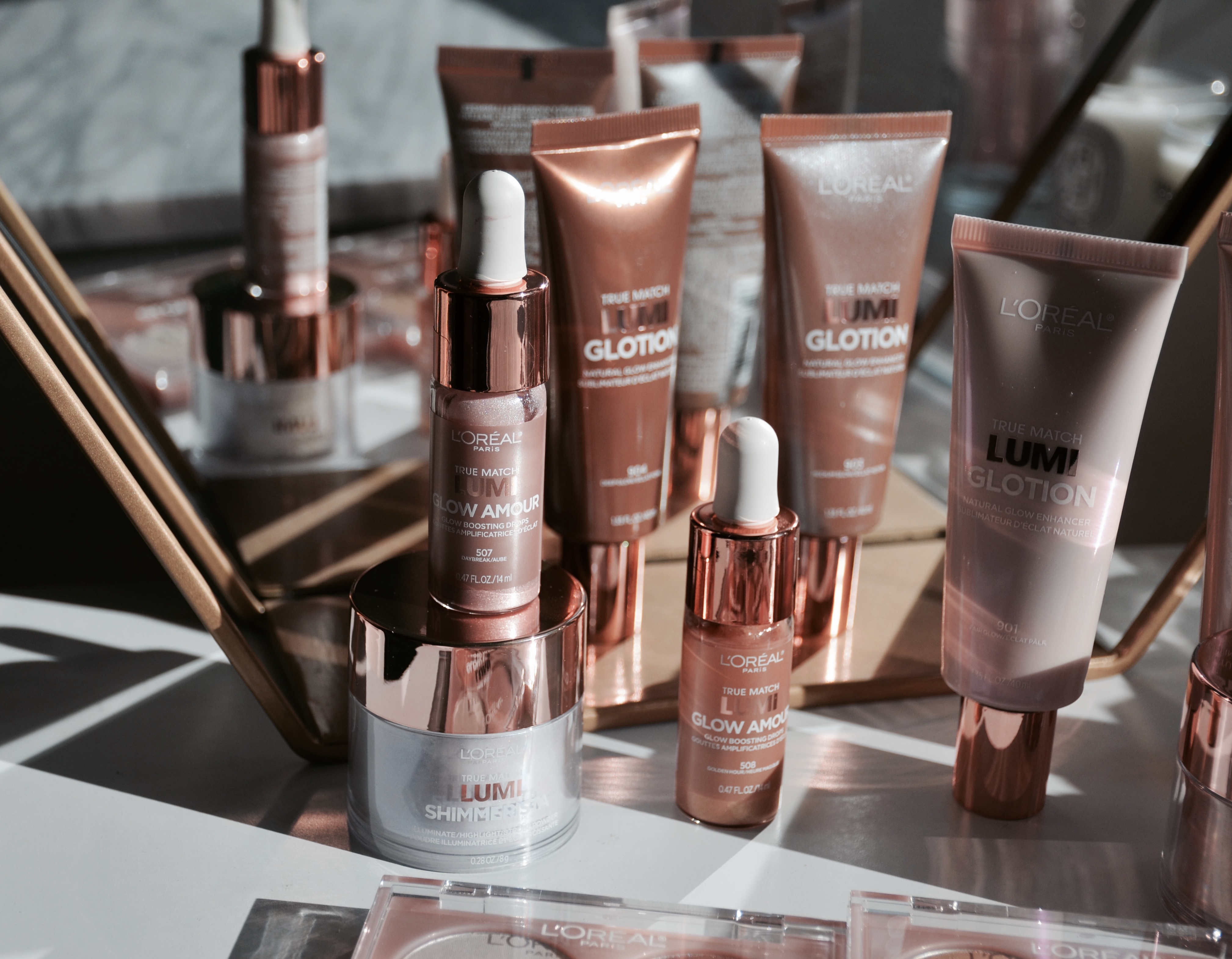
You've seen it everywhere. Seriously, if you’ve spent more than five minutes on TikTok or Instagram in the last three years, you have seen that distinct squeeze tube. The L'Oréal Paris True Match Lumi Glotion is one of those rare drugstore products that actually lived up to the hype, largely because it doesn’t try to be a heavy foundation. It’s basically a hybrid. Part moisturizer, part highlighter, and part "I just drank a gallon of water and slept for ten hours" in a bottle.
But here’s the thing: if you don’t know how to use Lumi Glotion correctly, you end up looking like a disco ball or, worse, just plain oily. It’s a shimmer-based product, not a glitter-based one, which is a massive distinction. Glitter sits on top. Shimmer reflects. Getting that reflection to look like skin rather than makeup is the real trick.
Honestly, most people just slap it on like a primer and hope for the best. That works for some, but if you have texture or larger pores, you might find it emphasizes the very things you’re trying to hide. We need to talk about placement, layering, and why choosing the right shade out of the five available options—Fair, Light, Medium, Deep, and Rich—is actually more important than the application technique itself.
The Secret to Picking Your Shade (It's Not Your Foundation Match)
Most people make the mistake of buying the shade that matches their skin tone perfectly. Don't do that. Well, do it if you want a subtle, lit-from-within look, but if you want the product to actually do something, you have to think about your goal.
If you want a bronzing effect, you go one or even two shades darker than your actual skin. If you are fair-skinned, the "Medium" shade acts as a liquid bronzer that shears out beautifully. If you’re looking for a traditional highlight, you go lighter. The "Fair" shade has a cooler, pearlescent undertone, while "Light" leans a bit more champagne.
According to L'Oréal’s own internal data and makeup artist partnerships (like with Sir John, who has famously used this on stars like Beyoncé), the product is designed to be sheer. This means you have a lot of wiggle room. You aren’t color-matching a concealer here. You’re choosing a "filter." Think of it as choosing a warm vs. cool lightbulb for your bathroom. Both light the room, but the vibe is totally different.
How to Use Lumi Glotion as a Radiant Primer
This is the most common method. You apply it after your SPF but before your foundation. It creates a tacky, glowing base that "grabs" your foundation and gives it a dewy finish.
- Start with a pea-sized amount. Seriously, a little goes a long way.
- Warm it up between your fingertips. This is crucial because the glycerin in the formula blends better when it's at skin temperature.
- Massage it into the high points of the face first—cheekbones, brow bones, and the bridge of the nose—then spread the excess toward the center of the face.
If you have oily skin, skip the T-zone. Just don't put it there. Put it on your cheeks and temples. If you put a luminizer on your forehead and chin when you already produce a lot of sebum, you won't look "glowy" by 2:00 PM; you’ll look like you need a shower. Use a matte primer on your nose and the center of your forehead, and save the Lumi Glotion for the periphery.
Mixing It In: The Lazy Girl’s Hack
Maybe you don't want a multi-step routine. I get it. Some mornings you have approximately four minutes to look human.
Take your favorite medium-to-full coverage foundation and mix a drop of Lumi Glotion directly into it on the back of your hand. This shears out the foundation, making it look more like a tinted moisturizer. It’s the easiest way to make a "heavy" winter foundation work for the summer months. It adds a level of luminosity that makes the pigment look like it's coming from your pores rather than sitting on top of them.
Using It as a Targeted Highlighter
You don't have to put this all over your face. In fact, many professional makeup artists prefer using it as a "topper." Once your makeup is totally done—powder and all—you can take a tiny bit of the "Light" or "Fair" shade and tap it onto the very tops of your cheekbones.
Wait. Did I just say put a liquid on top of powder? Yes.
Because the formula is so lightweight and doesn't contain heavy oils that break down pigment, it actually sits quite well on top of set makeup if you tap it. Do not rub. If you rub, you’ll lift your foundation and reveal the redness underneath. Just tap it with your ring finger until it melts.
The Viral "Back of the Hand" Trick
One specific technique that gained massive traction on social media involves using the Lumi Glotion in the "Deep" or "Rich" shades for a faux-contour. Instead of using a muddy contour stick, you use the glow of the darker Glotion to create shadow and warmth simultaneously.
Apply it in a "3" shape: starting at the temple, curving under the cheekbone, and then coming back down under the jawline. Because it's a sheer tint, it’s much harder to mess up than a traditional bronzer. You won’t get those harsh, unblended lines that make you look like you have dirt on your face. It just looks like you spent a weekend in Cabo.
What Most People Get Wrong About the Ingredients
Let's look at what's actually in this stuff. It’s not just "shimmer water."
- Glycerin: This is a humectant. It pulls moisture into the skin. This is why the product feels "wet" when you first apply it.
- Butyrospermum Parkii Butter (Shea Butter): This provides a bit of emolliency, which is why it works so well for dry skin.
- Mica and Titanium Dioxide: These are the minerals responsible for the "glow."
The presence of shea butter means that if you are extremely acne-prone, you should patch-test this first. While it’s generally considered non-comedogenic for most, everyone’s skin reacts differently to buttery emollients. If you find you're breaking out in tiny whiteheads after using it, your skin might be reacting to the shea butter or the specific types of silicones used to give it that "slip."
Comparing It to the Competition
People often compare Lumi Glotion to the Charlotte Tilbury Flawless Filter or the Elf Halo Glow Liquid Filter.
The difference? Coverage.
Flawless Filter and Halo Glow have a distinct "tint" and more pigment. They act more like a sheer foundation. Lumi Glotion is much more of a "glaze." It has less pigment and more reflection. If you have a lot of redness or acne scarring you want to cover, the Elf or Charlotte Tilbury options might serve you better as a standalone product. If you already like your skin and just want it to look "expensive," Lumi Glotion is the winner. It’s less about hiding and more about enhancing.
Body Glow: Don't Stop at the Neck
One of the best ways to use this product—especially the darker shades—is on your collarbones and the tops of your shoulders.
If you’re wearing an off-the-shoulder top or a sundress, mix a healthy squeeze of the "Medium" or "Deep" shade with your regular body lotion. It blurs out skin imperfections on the chest and gives your limbs a polished, editorial look. It doesn't have a strong scent, which is a huge plus because it won't clash with your perfume. Plus, it dries down fairly quickly, so you aren't leaving greasy streaks on your clothes, though you should still give it five minutes to "set" before putting on a white silk shirt.
Is It Worth the Hype in 2026?
Fashion is cyclical, but "glowy skin" seems to be a permanent fixture now. We've moved away from the heavy, matte, "Instagram face" of 2016 and toward a more skin-first approach.
The Lumi Glotion remains a staple because it's versatile. You can wear it under makeup, over makeup, or—on your best skin days—completely alone with just a bit of concealer. It’s a low-effort, high-reward product. It doesn't require a master's degree in blending to look good.
Actionable Steps for the Best Results
To get the most out of your Lumi Glotion, follow this specific workflow:
- Exfoliate first: Highlighters of any kind will cling to dry patches. If you haven't exfoliated in a week, the Glotion will just highlight the flakes. Use a gentle chemical exfoliant (like lactic acid) the night before.
- Damp Sponge vs. Fingers: For an all-over glow, use your fingers. The warmth helps the product melt. For a targeted highlight, use a damp beauty sponge to "stipple" the product on so you don't disturb your foundation.
- The "Sandwich" Technique: If you want a glow that lasts 12 hours, try the sandwich. Lumi Glotion first, then a light layer of foundation, then a tiny bit of powder highlighter only on the very highest point of the cheekbone. This layers the textures and ensures the glow doesn't fade by lunchtime.
- Check Your Lighting: Always check your face in natural light (like a car window) before heading out. What looks like a "subtle glow" in a dim bathroom can look like a "silver streak" in the sun. If you overdid it, just take a clean, slightly damp sponge and bounce it over the area to soak up the excess.
Keep the tube stored with the cap facing up. The formula is somewhat liquidy, and if you leave it upside down in a hot makeup bag, you're going to have a sparkly mess waiting for you the next time you open it. Use it sparingly, experiment with the shades, and remember that with luminizers, the goal is always to look hydrated, not metallic.