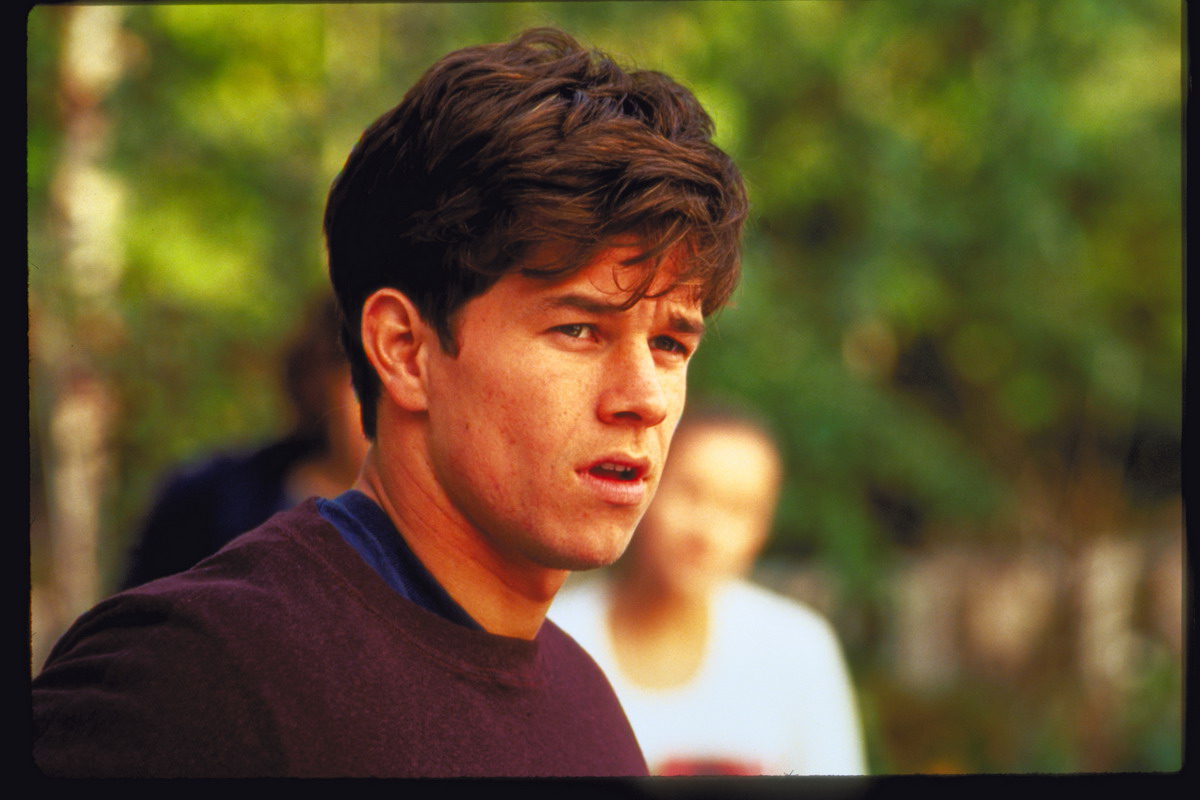
Honestly, if you grew up in the 90s, you probably can't hear The Sundays' cover of "Wild Horses" without feeling a very specific type of unease. It’s that rollercoaster scene. You know the one. It cemented 1996's Fear as a permanent fixture in the "obsessed boyfriend" Hall of Fame.
But looking back now, the Mark Wahlberg movie Fear is a weirdly fascinating time capsule. It wasn't just another teen flick. It was the moment a former underwear model proved he could actually be terrifying. Before he was an Oscar nominee or a global action star, Mark Wahlberg was David McCall—a guy who seemed like the perfect "bad boy" until he started carving names into his own chest.
The Casting That Almost Didn't Happen
Here is a fun bit of trivia: David McCall was almost Leonardo DiCaprio. Fresh off What's Eating Gilbert Grape, Leo was the first choice. He passed on it, but he did something that changed Wahlberg's career forever. He told director James Foley to look at his friend Mark.
They had just done The Basketball Diaries together. Foley was skeptical, but after Wahlberg’s audition, he reportedly said he’d walk away from the movie if Mark didn't get the part. He saw that raw, unpredictable energy. It’s that specific "Southie" grit that makes David feel more like a real threat and less like a scripted villain.
Reese Witherspoon was only 19 when they filmed this. She played Nicole Walker with a mix of rebellion and total vulnerability that makes the second half of the movie so hard to watch. It’s well-known now that they were actually dating during production, which probably explains why that initial chemistry feels so intense.
Is Fear Just a "Fatal Attraction" for Teens?
That’s basically how producer Brian Grazer pitched it. It follows the formula to a T.
- The innocent girl (Nicole).
- The overprotective dad (William Petersen).
- The charming stranger with no past.
- The inevitable spiral into madness.
William Petersen is great here as Steven Walker. He’s the "CSI" guy, but in Fear, he’s a dad who is honestly just as intense as the villain. His "dad instinct" is dialed up to eleven. He sees through David’s polite act immediately, which creates this high-stakes testosterone battle before the first drop of blood even hits the floor.
The movie is set in Seattle, which was the epicenter of cool in the mid-90s. Even though they only spent three days filming in Washington before moving to Vancouver to save money, it still has that rainy, grunge-era aesthetic. The Walker house—that high-tech fortress on the water—was actually located on Howe Sound in British Columbia. Sadly, for any superfans wanting to visit, the house was demolished years ago, though the pool area reportedly remains.
That Infamous "Let Me In" Line
There is a scene near the end where David is trying to get into the Walker house. He screams, "Let me in the f***ing house!"
That wasn't in the script. Mark Wahlberg ad-libbed it. Director James Foley originally cut it because he thought it was too much, but the producers insisted it go back in. Good call. It’s the most quoted line in the movie. It captures the moment David stops pretending to be a human being and becomes a pure force of nature.
Mark Wahlberg hasn't really played a "pure" villain since. He’s played jerks, anti-heroes, and tough guys, but David McCall is a straight-up sociopath. He’s a "grown-up Chucky," as Wahlberg himself once put it in an old interview.
Why It Still Works (and Why It’s Kinda Ridiculous)
Critics hated it when it came out. It has a 46% on Rotten Tomatoes. They called it "overblown" and "illogical." They aren't wrong. Some of the stuff David’s friends do—like the full-scale home invasion—is completely wild. Who has friends that are willing to commit multiple felonies just because you had a bad breakup?
But the movie became a sleeper hit anyway. It made $20 million on a $6 million budget. Why? Because it taps into two very real, very primal fears.
- For teenagers: The fear that the person you love is actually a monster.
- For parents: The fear that you can't protect your child from their own choices.
Alyssa Milano plays the "bad influence" best friend, Margo, and she’s basically the personification of every parent’s nightmare. She’s the one who pushes Nicole to go to the rave, to lie to her dad, and to trust David. It’s a classic morality play wrapped in a slick, 90s thriller package.
Actionable Insights for Your Next Rewatch
If you’re planning to revisit the Mark Wahlberg movie Fear, keep an eye out for these specific details that make the movie a cult classic:
- The Soundtrack: Pay attention to how the music shifts. It starts with dreamy 90s alt-pop and descends into aggressive, distorted tracks as David loses his mind. The use of Bush’s "Glycerine" and The Sundays is peak era-accurate.
- The Foreshadowing: Watch David’s hands. Early in the movie, there are subtle hints of his violent nature through his body language and how he reacts when he’s not the center of attention.
- The "Dad" Dynamic: Notice how William Petersen’s character mirrors David’s obsession in some ways. The movie subtly suggests that Nicole is caught between two men who both want to control her, just in different ways.
- The Ad-libs: Look for the moments where Wahlberg seems to be genuinely scaring the other actors. His performance is very physical, and much of that wasn't choreographed.
Ultimately, Fear succeeded because it didn't try to be high art. It’s a loud, sweaty, slightly trashy thriller that knows exactly what it is. It launched two massive careers and gave us a villain that people still talk about thirty years later. That’s more than most "critically acclaimed" movies can say.