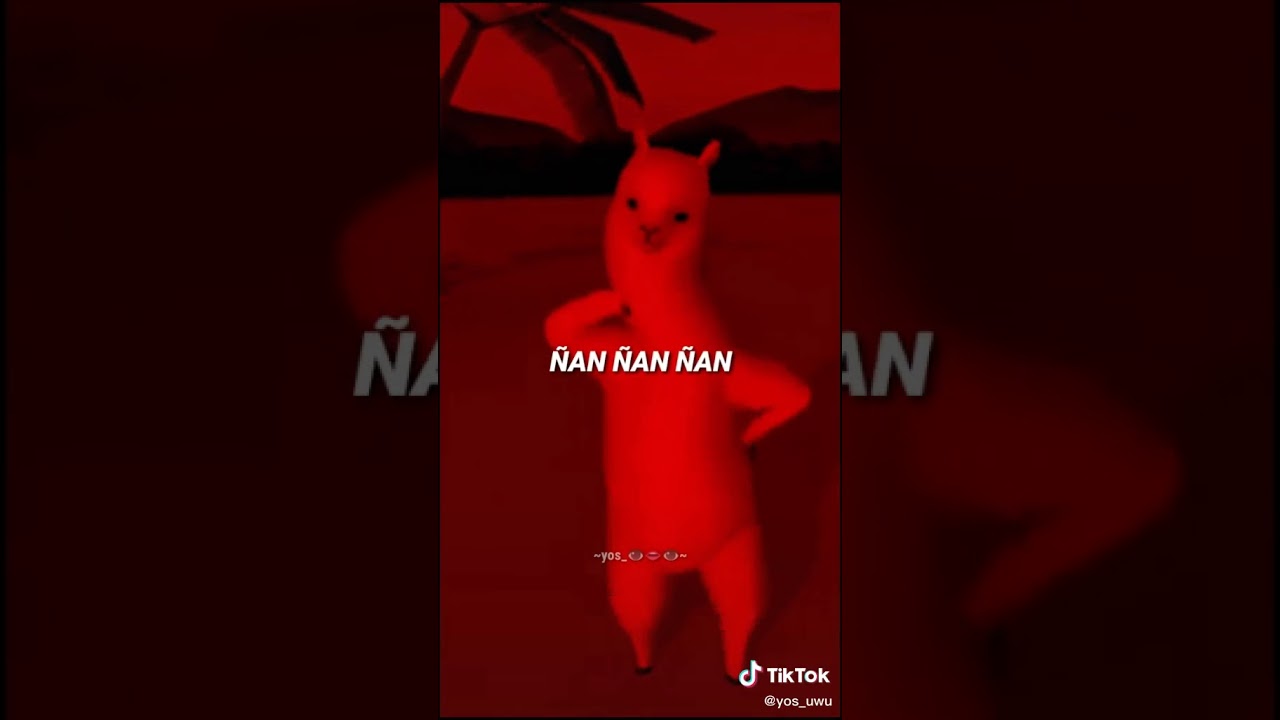
You remember the llama. It was 2020, everyone was stuck inside, and suddenly, a low-polygon dancing llama appeared on every TikTok feed, singing a high-pitched, repetitive jingle that sounded like "Mi Pan Zu Zu Zu." It was inescapable. It was annoying. Honestly, it was kind of hypnotic. But if you actually stop to think about where that song came from, the story is way weirder than just a random viral meme. Most people thought it was a song about bread. They were wrong.
It’s actually a Russian cereal commercial.
Seriously. The "Mi Pan Zu Zu Zu" audio isn't about bread (pan) at all. It’s a pitch-shifted, sped-up version of a jingle for Miel Pops, a honey-flavored cereal sold by Kellogg’s in Russia and parts of Europe. The real lyrics are "Miel Pops, zhuzhuzhu, Miel Pops, s'est trop bon," which refers to the buzzing sound of bees. Yet, thanks to a series of chaotic internet accidents, millions of people spent months singing about honey-flavored cereal loops while thinking they were praising a loaf of sourdough.
The Viral Architecture of a Nonsense Meme
Viral hits like this don't just happen because a song is "catchy." It’s about the friction between what we see and what we hear. When TikTok user @chernaya.princessa first posted the clip of the white, rotating llama, it created a surrealist masterpiece. The animation itself was actually "borrowed" from an older video by a creator named Kunshikitty. It’s a classic example of "digital folklore"—the way content is stripped of its original context, remixed, and reborn as something entirely different.
The human brain loves patterns. It also loves filling in the gaps when it doesn't understand a language. Since the Russian "zhuzhuzhu" sounds remarkably like "zu zu zu," and "miel" can be misheard as "mi," Spanish-speaking users (and then everyone else) filled in the blanks with "pan." This linguistic fluke turned a corporate jingle into a global anthem for bread lovers. It’s fascinating how quickly a brand's intellectual property can be hijacked and transformed into a cultural artifact that the brand itself didn't even authorize.
Why Our Brains Get Stuck on Loops
There is a psychological reason you couldn't get this out of your head. It’s called an "earworm," or more scientifically, "Involuntary Musical Imagery" (INMI). Research from Goldsmiths, University of London, suggests that songs with simple, upbeat melodies and repetitive intervals—like a cereal jingle—are the most likely to get stuck in the auditory cortex.
"Mi Pan Zu Zu Zu" followed the "earworm formula" perfectly:
- A fast tempo.
- A melodic shape that rises and falls like a nursery rhyme.
- Unusual intervals that catch the ear's attention.
When you speed up the original Miel Pops song, the pitch shifts into a frequency that mimics "baby talk" or "motherese." This frequency naturally triggers an emotional response in humans. We are hardwired to pay attention to it. So, while you thought you were just watching a funny llama, your brain was actually being hijacked by a high-frequency acoustic loop designed to sell cereal to Russian toddlers.
The "Bread" Misconception and the Power of Misheard Lyrics
Let's talk about the "pan" of it all. In Spanish, "pan" means bread. Because the meme took off heavily in Latin American and Spanish-speaking TikTok circles first, the "Mi Pan" interpretation became the dominant reality. People started filming themselves making toast, dancing in bakeries, or holding giant baguettes to the rhythm of the llama.
It’s a phenomenon called a "mondegreen." This happens when your brain replaces a word you don't know with a similar-sounding word you do know. We've seen it before with songs like "O Fortuna," where people hear "O four tuna," or in Taylor Swift's "Blank Space" where fans heard "Starbucks lovers" instead of "long list of lovers." In the case of Mi Pan Zu Zu Zu, the mondegreen was so powerful it actually changed the meaning of the song for an entire planet. Kellogg’s basically got millions of dollars in free advertising, even if no one actually knew which product was being advertised.
The Life Cycle of a 2020 Fever Dream
Memes in the 2020s have a very specific shelf life. They arrive with explosive force, dominate every corner of the web for three weeks, and then vanish into the "cringe" category almost overnight. "Mi Pan Zu Zu Zu" stayed around longer than most because it was modular. You could put that audio over anything. A cat dancing? Works. A car crash? Somehow also works.
But there’s a darker side to these viral loops. The original creator of the llama animation, Kunshikitty, didn't initially get the credit for the visual that drove the meme. This happens constantly in the creator economy. A small artist makes something weird, a bigger account adds a song to it, and the original artist is left in the dust. Eventually, the internet "corrected" itself and the credit was linked back, but it highlights the messy ethics of TikTok trends.
What This Tells Us About the Future of Music
If you're a musician today, you're likely looking at "Mi Pan Zu Zu Zu" with a mix of horror and envy. We are entering an era where songs are no longer written to be listened to in their entirety. They are written to be "memed."
Labels are now actively looking for 15-second clips that can function as "audio stickers." The Miel Pops jingle wasn't even a song, and yet it charted in the minds of more people than most Top 40 hits that year. It proves that context is dead. It doesn't matter what the lyrics are. It doesn't matter who the artist is. All that matters is the "vibe" and the ease with which a user can replicate the content.
Actionable Insights for the Chronically Online
If you're trying to understand the next big trend or even create one, don't look for quality. Look for "remixability." The reason the llama won wasn't because it was good art; it was because it was an open canvas.
- Audit the Audio: Next time you hear a viral sound, use an app like Shazam or check the original sound tag on TikTok. You’ll often find it’s a slowed-down version of an 80s Japanese pop song or a sped-up Russian commercial. Knowing the source helps you stay ahead of the trend cycle.
- Respect the Source: If you're a creator, always dig for the original animator or artist. In the age of AI and easy reposting, "digital provenance" is the only thing keeping the creative economy alive.
- Lean Into the Absurd: The "Mi Pan" phenomenon proved that the internet is tired of polished, professional content. It wants the weird. It wants the low-res llama. It wants the stuff that makes absolutely no sense.
The "Mi Pan Zu Zu Zu" era might be over, but the mechanics of its success are now the blueprint for how information moves in 2026. Everything is a remix. Everything is a misunderstanding. And everything is, apparently, a cereal commercial if you wait long enough.
Check your favorite "original" sounds on social media today. See how many are actually pitched-shifted advertisements. You might be surprised at how much of your "organic" feed is actually a chorus of bees trying to sell you honey loops from fifteen years ago.