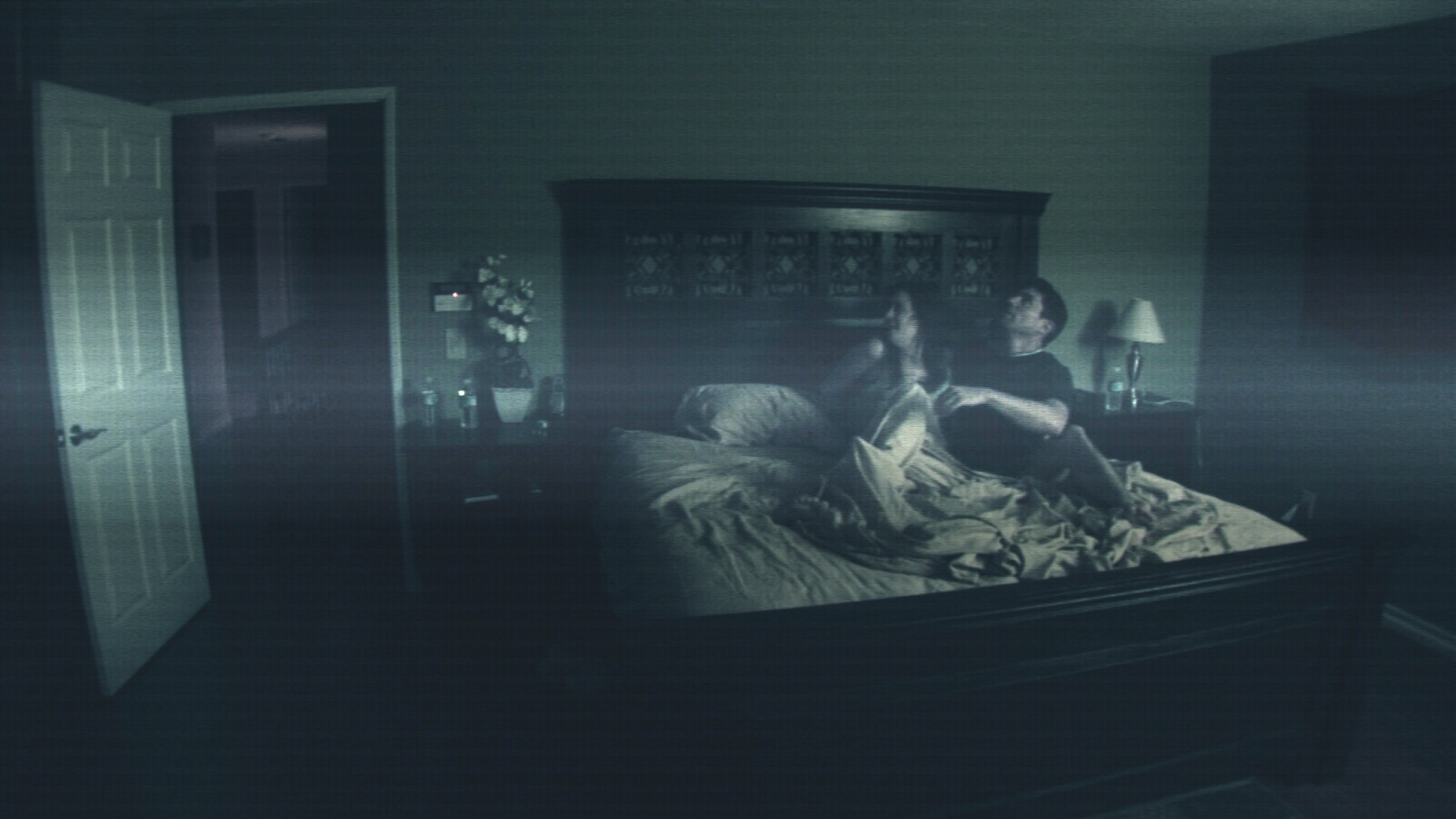
He’s the guy you love to hate. Honestly, if you’ve watched Paranormal Activity recently, you probably spent half the runtime shouting at your screen. Micah Sloat isn’t just a character; he’s a mood, and that mood is "arrogant boyfriend who thinks he’s smarter than a literal demon."
Let’s be real. Micah in Paranormal Activity is the poster child for why you should listen to your partner—especially when they tell you a malevolent entity has been stalking them since childhood. Instead of being the hero, he basically acts as a catalyst for the entire tragedy. He didn't just fail to save Katie; he paved the way for her possession.
The "Day Trader" Energy That Ruined Everything
Micah is a 25-year-old day trader. That’s a specific kind of vibe, right? He’s got some money, a nice house in San Diego, and a lot of confidence in his own "logic." When Katie tells him about the ghost, he doesn't call a priest or a medium. No, he buys a high-end camera.
He wants to "solve" it.
The problem is that Micah treats a demonic haunting like a technical glitch in his trading software. He thinks if he can just record it, he can control it. This hubris is exactly what the demon feeds on. The psychic, Dr. Fredrichs, explicitly warns them: do not communicate with it. What does Micah do? He brings home a Ouija board.
It’s almost impressive how much he ignores every single red flag.
Why his behavior feels so toxic now
Watching this back in 2026, the domestic dynamics are glaring. Micah gaslights Katie constantly. He mocks her fear. He uses semantics to get his way—like when he "borrows" a Ouija board because he promised not to "buy" one. That’s classic douchebag behavior.
He prioritizes "cool footage" over her safety. There’s a scene where Katie is screaming in terror, and Micah’s first instinct is to grab the camera before running to help her. Think about that. His girlfriend is in mortal danger, and he’s worried about the framing of the shot.
The Ouija Board and the Point of No Return
If there is one moment where Micah sealed his fate, it was the Ouija board incident.
Katie was terrified. She begged him. She pleaded. She set a hard boundary. Micah crossed it because he thought he knew better. While they were out, the camera caught the pointer moving on its own before the board spontaneously combusted.
This wasn't just a "scary moment." It was an invitation. By attempting to communicate, Micah gave the entity a foothold. He turned a haunting into an active invitation for possession.
The powder on the floor
Remember the baby powder? Micah sprinkles it in the hallway to catch footprints. It’s a clever idea on paper, but in practice, it just proves how out of his depth he is. He finds non-human tracks leading into the attic.
And what does he find there? A burnt photograph of a young Katie that was supposed to have been destroyed in a fire years ago.
Instead of leaving the house right then—which any sane person would do—Micah stays. He treats it like a puzzle. He thinks he’s the "big man of the house" who can protect his territory. But you can't punch a demon in the face, no matter how many protein shakes you drink.
The Death of Micah Sloat: A Breakdown
By Night 21, the situation is unsalvageable. Katie is no longer Katie; she’s a vessel. She spends two hours just standing over Micah while he sleeps, staring at him with a blank, terrifying expression.
When she finally goes downstairs and screams, Micah does the one "brave" thing he does in the entire movie: he runs to her.
It’s his final mistake.
The sounds we hear from the bedroom are gut-wrenching. Thuds. Screams. Then, silence. Suddenly, Micah’s body is hurled with incredible force directly at the camera. He’s dead. His neck is likely snapped, or he’s been mauled. Katie (or whatever is inside her) crawls into the room, covered in blood, and smiles at the lens before lunging.
The Alternate Endings
Interestingly, the version most of us saw in theaters wasn't the only way Micah could have gone out.
- The Police Ending: In the original festival cut, Katie kills Micah downstairs, then sits by the bed for days. When the police arrive, she "wakes up" from her trance, but the cops panic and shoot her.
- The Suicide Ending: There’s another version where Katie kills Micah, returns to the bedroom, and slits her own throat in front of the camera.
The theatrical ending—where she tosses his body at us—is arguably the most effective because it shows the demon's utter contempt for him. He wanted to watch through the camera? Fine. The demon gave him one last "close-up."
Was Micah Actually Evil?
Some fans argue that Micah isn't a "bad guy" but just a victim of his own skepticism. Even the actor, Micah Sloat (who uses his real name for the character), has defended the role in interviews. He suggests that Micah deeply loved Katie but simply couldn't comprehend something he couldn't see or touch.
It's a tragic disconnect.
He thought he was protecting her by "staying and fighting." In reality, he was trapping her in a house with a predator. His refusal to get professional help (the demonologist was always "out of town" or "unavailable" by the time Micah finally agreed to call) is a classic example of too little, too late.
Lessons from the Micah Playbook
If you ever find yourself in a found-footage horror movie, don't be a Micah. Here is the reality of the situation:
- Listen to the "Crazy" One: If your partner says a demon is after them, believe them the first time.
- Put the Camera Down: Documenting your own demise is a great way to end up as a police evidence file.
- Boundaries Matter: If someone says "don't use a Ouija board," just don't do it. There are literally thousands of other hobbies.
- Leave Early: The moment you see non-human footprints in baby powder, you move to a hotel. You don't go into the attic.
Micah in Paranormal Activity serves as a cautionary tale about toxic masculinity and the dangers of intellectual arrogance. He wanted to be the hero of his own movie, but he ended up being the victim of his own ego.
To understand why the franchise exploded after this, you should look into how the demon "Tobi" specifically targets these personality flaws in the sequels. You can start by comparing Micah's behavior to the fathers in the later films—it's a recurring theme that men in this universe almost always make things worse by trying to "fix" them.