You're driving in a taxi through the humid, neon-lit streets of Bangkok or Jakarta, and it happens. That clean, melancholic piano riff kicks in. Then comes the voice—smooth, earnest, and undeniably Danish. "After some time, I’ve finally made up my mind..." Honestly, if you grew up in Asia during the 90s, Michael Learns to Rock 25 Minutes isn't just a song. It’s a core memory. It’s the soundtrack to every heartbreak, every high school breakup, and every karaoke session that went late into the night.
But here is the weird thing. If you go to London or New York and ask someone about MLTR, they’ll probably look at you like you’ve got two heads. The band occupies this bizarre "reverse Mandela effect" space. They are massive global superstars in one half of the world and virtually non-existent in the other.
The 25 Minutes Story: What’s Actually Happening in the Lyrics?
Let's be real. The lyrics to Michael Learns to Rock 25 Minutes are basically a three-minute soap opera. Jascha Richter, the band’s frontman and primary songwriter, has a knack for writing "small films" in song form.
The plot is simple but brutal: A guy realizes he’s a jerk. He realizes he actually loves the girl he left behind. He rushes back to find her, heart on his sleeve, ready to apologize and win her back. He arrives at the church, probably sweating, definitely anxious. He sees her. She’s in a white dress. She looks happy. And the boy in the back? He’s the one she’s marrying.
The gut-punch line—"I’m sorry, boy, you’ve come too late / She’s been gone for twenty-five minutes"—is what makes the song iconic. It’s that specific number. Not an hour. Not "just now." Twenty-five minutes. It’s just enough time to feel like the universe is personally mocking your timing.
Why does this song hit so hard?
Kåre Wanscher, the band’s drummer, once pointed out that the song works because everyone can picture that scene. It’s universal. We’ve all been too late for something. Maybe not a wedding, but we’ve all felt that "what if" sting.
Richter didn't overcomplicate it. The English is clear, the metaphors aren't buried under layers of pretension, and the melody is a total earworm. It’s "English as a second language" pop done perfectly—accessible enough for anyone to sing along to, even if they aren't fluent.
The Secret History of the "Colours" Era
Released in February 1994 as the third single from their second album Colours, the song wasn't an immediate global smash. At least, not in the way a Taylor Swift song is today. It grew.
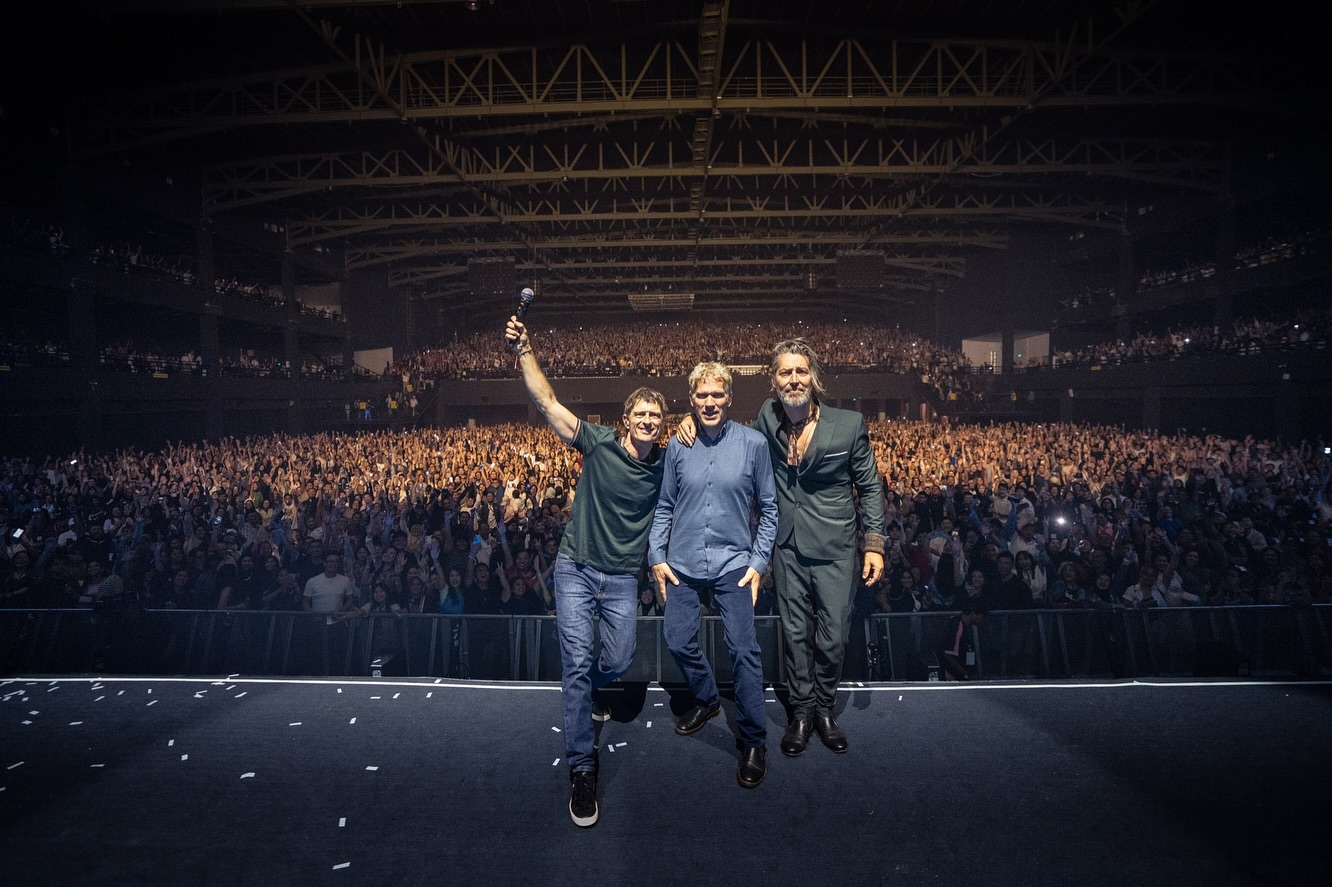
By the time MLTR hit the road for their first Asian tour, they were playing to 12,000 people in Bangkok. They were winning "Best Performing Act of the Year" at the SEA Grammy Awards in Singapore specifically for Michael Learns to Rock 25 Minutes.
Colours went on to sell over 1.1 million copies. For a band from Aarhus, Denmark, that’s insane. They were out-selling big-name UK and US bands in markets like the Philippines, Vietnam, and Indonesia.
Production Quirks
- Producer: Oli Poulsen worked with the band to create that signature "Scandinavian glow."
- Mixing: Tony Peluso (who famously played the guitar solo on The Carpenters' "Goodbye to Love") handled the mix, giving it that polished, soft-rock sheen.
- The Vibe: It sits somewhere between a power ballad and a soft-rock anthem.
The Mystery of the Asian Obsession
Why did Asia embrace this song so much more than the West? Some critics argue it’s because the melodies are "sweet" and the lyrics are "polite."
In the 90s, Western rock was getting gritty. Grunge was everywhere. Nirvana and Pearl Jam were screaming about angst. Meanwhile, MLTR was singing about being sorry and wanting to love someone. That sincerity resonated deeply in cultures that value romanticism and melody over raw aggression.
There’s also a theory that the simplicity of the English made it the perfect bridge. You don't need a dictionary to understand "I'm searching everywhere to find her again." It’s direct. It’s honest.
Why 25 Minutes Still Matters in 2026
You might think a song from 1994 would be a relic by now. Nope. As of January 2026, MLTR is still touring. They just finished their "Take Us To Your Heart" tour across Southeast Asia, and guess which song gets the loudest scream?
The music video on YouTube has racked up hundreds of millions of views across various uploads. It has become a generational hand-off. Parents who listened to it on cassette in the 90s are now playing it for their kids on Spotify.
The song has also survived the "cringe" filter. While some people call the lyrics "corny," there’s a massive wave of nostalgia that protects it. In a world of over-produced hyperpop and AI-generated tracks, a real band playing a real story about a guy being 25 minutes too late feels... refreshing.
Actionable Takeaways for MLTR Fans
If you're looking to dive back into the world of Michael Learns to Rock 25 Minutes, here is how to do it right:
1. Listen to the 2014 Remaster
The band released a 25th-anniversary collection called 25: The Complete Singles. The remaster of "25 Minutes" cleans up the low end and makes those 90s synths sound much crisper on modern headphones.
2. Watch the Live Versions
Check out their recent live performances from the 2024 and 2025 tours. Seeing a stadium full of people in Jakarta sing the chorus back to the band is a surreal experience that explains the song's power better than any essay ever could.
3. Explore the "Colours" Deep Cuts
Don't just stop at "25 Minutes." The album Colours has gems like "Sleeping Child" and "Out of the Blue" that carry the same melancholic DNA.
4. Check Out "A Life To Remember"
If you want to see where they are now, their 2024 single "A Life To Remember" is a self-reflective look back at their journey. It’s nostalgic, a bit sad, but ultimately a thank-you to the fans who kept them alive for three decades.
Basically, the song isn't going anywhere. It’s one of those rare tracks that has transcended being "just a hit" to become a cultural landmark for millions of people. Whether you're 25 minutes late or right on time, that piano riff is waiting for you.