You’re standing on the Verrazzano-Narrows Bridge. The wind is whipping off the Upper New York Bay. Frank Sinatra’s "New York, New York" is blaring so loud you can feel it in your teeth. This is it. But for thousands of runners every November, the real battle isn't the climb up the bridge—it's the three hours they spent shivering in a Fort Wadsworth parking lot because they didn't understand how nyc marathon wave start times actually work.
It's a logistical beast. Honestly, it's a miracle it works at all.
New York Road Runners (NYRR) manages over 50,000 starters. To keep the streets of Brooklyn from turning into a human horizontal mosh pit, they split the field into five distinct waves. If you show up thinking you’ll just "hop in" when you feel ready, you’re in for a rude awakening. Your start time is dictated by the pace you submitted months ago, and it determines everything: your transportation out of Manhattan, your "village" color, and exactly how many bagels you’ll need to eat while waiting for the cannon to fire.
The 2024-2025 Wave Reality
Let’s get the hard numbers out of the way. While the professional wheelchair division and handcycles kick things off as early as 8:00 AM, the masses don't start until later.
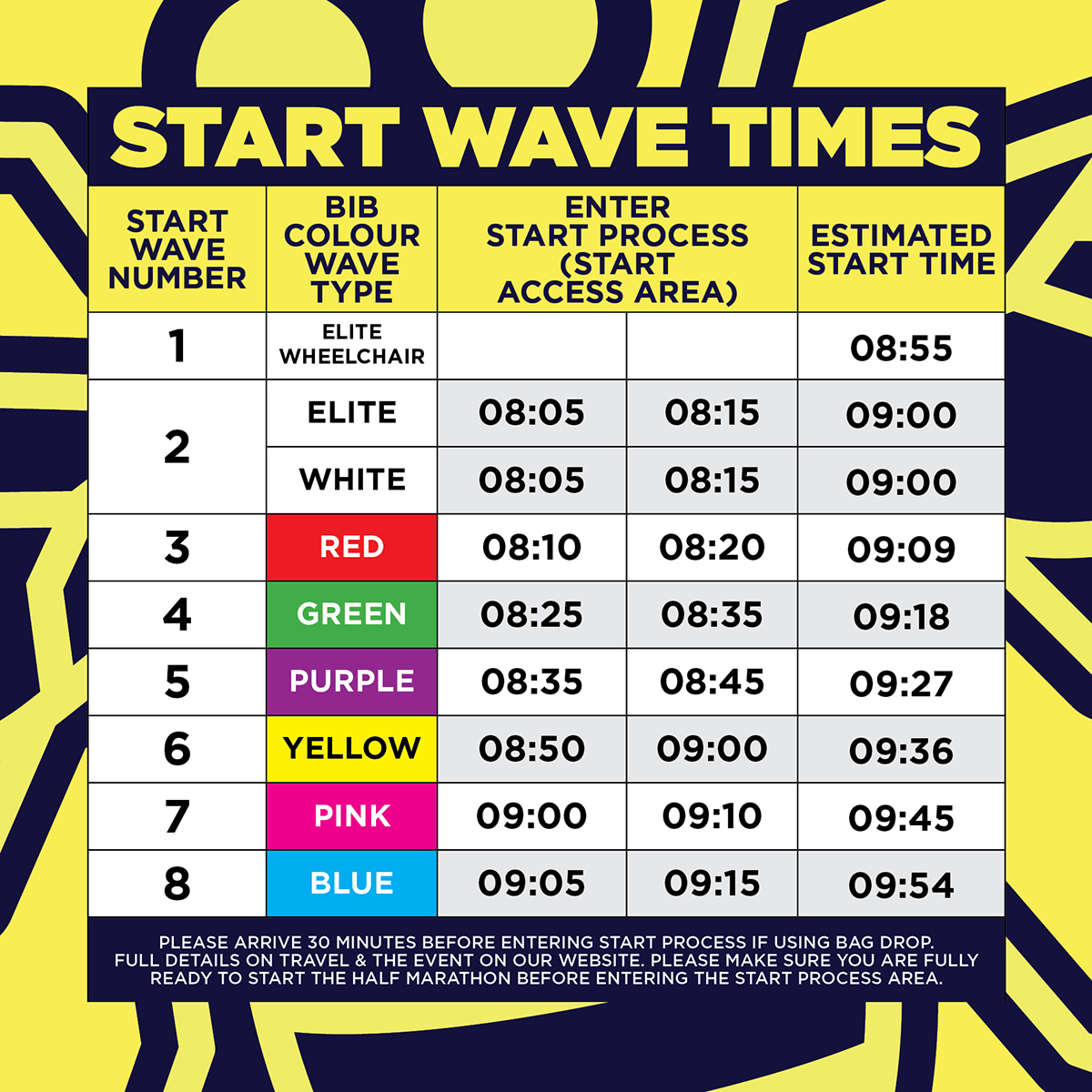
Wave 1 usually sees the first wave of "average" (though very fast) humans cross the line around 9:10 AM. Then it’s a staggered rollout. Wave 2 at 9:45. Wave 3 at 10:20. Wave 4 at 10:55. Finally, Wave 5—the "party wave"—sets off at 11:30 AM.
Keep in mind, these times shift slightly year to year based on security protocols or broadcast requirements. If you're in Wave 5, you aren't finishing until the sun is basically going down. That’s a long day. You've gotta plan your nutrition for a lunch-time start, which is a totally different vibe than a 7:00 AM local 5k.
Why Your Color Matters More Than Your Number
When you get your bib, you’ll see a color: Blue, Orange, or Pink. This isn't just for aesthetics.
Blue and Orange runners start on the upper level of the Verrazzano. Pink (formerly Green) starts on the lower level. If you have a fear of heights or, conversely, a fear of being "peed on" from the deck above (a legendary, if slightly exaggerated, marathon myth), your wave assignment matters.
The courses stay separate for the first few miles. They merge eventually, but the perspective you get of the city skyline during those first three miles is entirely dependent on that initial color assignment.
"The lower level is iconic because you feel the bridge vibrating," says local run coach Marcus King. "But the upper level gives you that 'God view' of the harbor. You can't choose it, but you have to respect the logistics of your specific color's flow into the staging area."
If you try to jump into an earlier wave, the sensors will catch you. Your time might not be recorded, or worse, you get disqualified. However, NYRR generally allows you to move back to a later wave if you want to run with a friend. You just can’t move forward.
The Transportation Trap
Here is where people mess up. Your nyc marathon wave start times dictate your "Loading Time" for the ferry or the bus.
If you have a 9:10 AM start, you’re likely looking at a 5:30 AM or 6:00 AM ferry out of Whitehall Terminal. That sounds insane. It is. You will spend hours in the Start Village.
- The Staten Island Ferry: The most popular choice. It’s free, it’s iconic, but once you get off, you still have to take a shuttle bus to the village.
- The Midtown Bus: Usually leaves from the New York Public Library area. It takes you straight to the village. It’s easier but fills up fast during the registration process.
- The "Local" Option: If you’re staying in Staten Island, you’re a genius. But most aren't.
If you miss your assigned transportation window, you risk missing your wave. NYRR is strict. They have to be. They are moving a mid-sized city's worth of people onto a military base and then onto a bridge.
Surviving the "Wait" at Fort Wadsworth
Let's be real: the Start Village is a test of patience.
Depending on your wave, you might be sitting on the ground for three to four hours. Veterans bring "throwaway clothes"—old hoodies and sweatpants from Goodwill that they toss into donation bins right before the start.
You’ll see people with full-blown air mattresses. Some bring yoga mats. Others just sit on cardboard. Whatever you do, do not stand the whole time. Save your legs. You have 26.2 miles of pavement coming up; don't spend your energy standing in line for a porta-potti or wandering around looking at the sponsors.
The "village" is split by color. Blue stays with Blue. Pink stays with Pink. They have their own coffee, water, and Gatorade stations. It’s a weirdly quiet, nervous energy. Thousands of people chewing on plain bagels in silence.
Pacing and the Late Start
If you’re in Wave 4 or 5, your strategy changes.
The heat might be higher by the time you hit First Avenue in Manhattan (Mile 16). The crowds in Brooklyn might have already been drinking for three hours, making them louder but maybe a bit more chaotic.
The biggest psychological hurdle for the later nyc marathon wave start times is the "Sweep." If you’re in the last wave, you have the shadow of the 15-minute-per-mile pace bus behind you. New York officially "reopens" the streets on a rolling basis. If you fall behind that pace, you might be moved to the sidewalk.
It’s not meant to be scary, but it’s a reality for the back-of-the-pack warriors.
Nuance: The "New York" Effect
The bridge is a mile long. The first half-mile is straight up. The second half-mile is straight down.
Because of the wave starts, you might feel like you’re flying. Don't. Your GPS will almost certainly glitch on the bridge. The heavy steel and the sheer volume of other watches trying to find a signal will make your pace look like you’re running a 2-minute mile or a 20-minute mile. Ignore it.
Trust the wave. Trust the flow. The nyc marathon wave start times are designed to give you space to breathe once you get off the bridge and into the neighborhoods.
Actionable Steps for Your Race Morning
- Check your Dashboard: Log into your NYRR account three weeks before the race. Your wave and start time will be there. Don't wait for a "final" email that might get buried in spam.
- Verify Transportation: If you missed the deadline to pick your ferry time, you'll be assigned a "leftover" slot. This could mean a 4:30 AM ferry for a 10:30 AM start. If that happens, pack an extra layer and maybe a book.
- Nutrition Math: Eat your "pre-race" meal 3 hours before your actual start, not when you wake up. If you're Wave 4 (10:55 AM), you should be eating a substantial snack around 7:30 or 8:00 AM in the village.
- The "Pink" Strategy: If you're on the lower level (Pink), stay in the middle of the road. It keeps you away from the bridge supports and gives you a clearer line of sight as you exit into Brooklyn.
- Throwaway Layers: Go to a thrift store now. Get a massive oversized robe or a heavy fleece. You want to stay warm until the very last second. Cold muscles use more glycogen. Keep them warm to save fuel.
- Phone Battery: Don't spend four hours in the village scrolling TikTok. You'll need that battery for your music in the "quiet" zones (like the Queensboro Bridge) or to find your family at the Family Reunion area in Central Park.
The waves are the heartbeat of the race. They regulate the pressure of the crowd. Respect the time on your bib, plan for the long wait, and remember that once that cannon goes off, the logistics don't matter anymore. Only the road does.