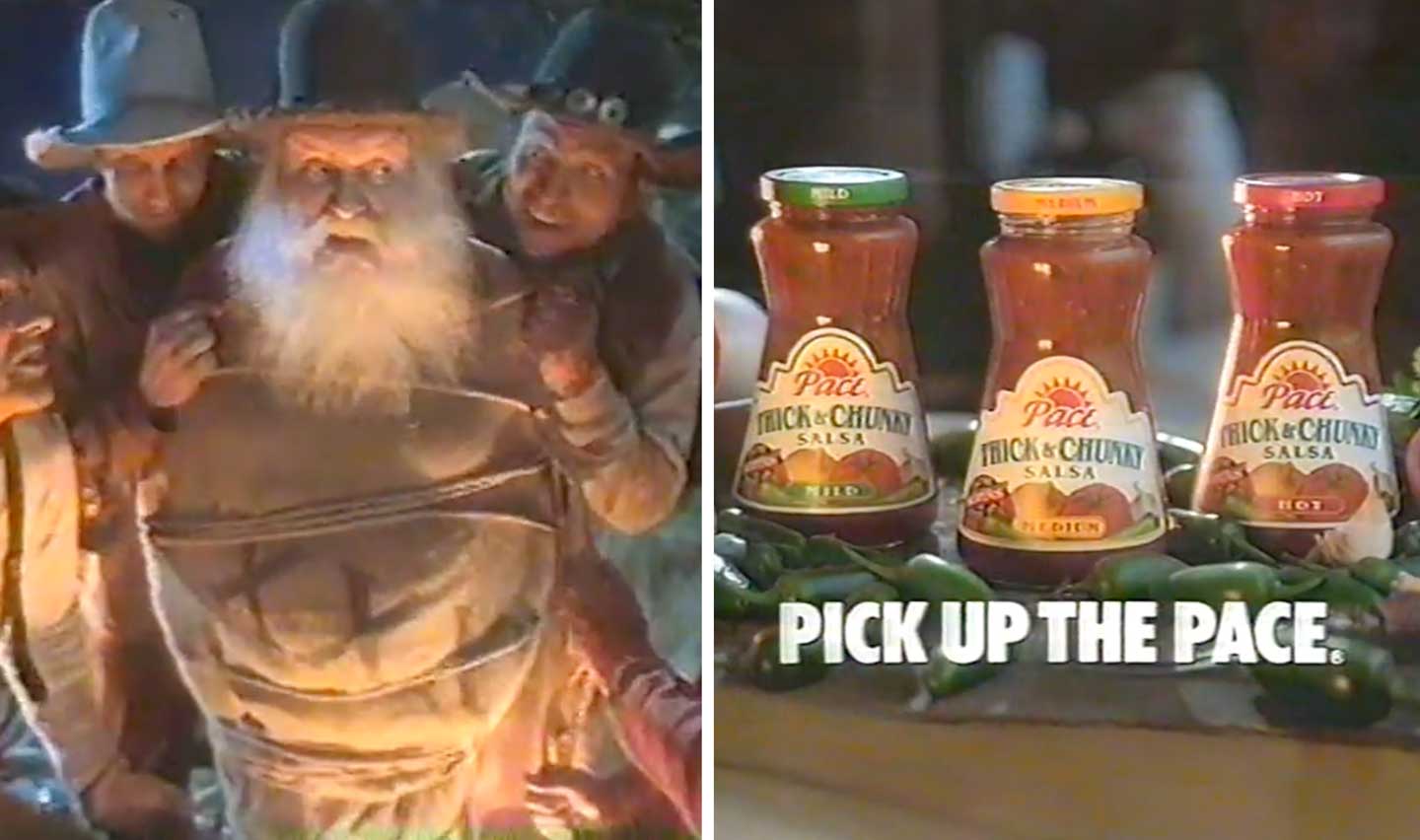
You know the line. Even if you weren't born when it first aired, you’ve heard some version of it. A group of rugged cowboys sits around a flickering campfire. They’re hungry. One of them reaches for the salsa, takes a bite, and his face contorts like he’s just swallowed a lemon dipped in kerosene. He flips the jar around, squinting at the label in the firelight. Then comes the shout that launched a thousand playground taunts: "This stuff’s made in New York City!"
The collective gasp from the other cowboys is legendary. "New York City?!" they holler in unison. And then, the punchline that would probably get a marketing executive fired in ten minutes today: "Get a rope."
It’s weirdly aggressive for a condiment ad, right? But back in the late 1980s and early 90s, the Pace Picante New York City campaign wasn't just a commercial; it was a cultural reset for how we thought about "authentic" food. It basically invented the idea that if your salsa didn't have a Texas pedigree, it was basically just spicy ketchup made by people who wouldn't know a jalapeño from a Granny Smith apple.
Why "New York City" Became the Ultimate Insult
Honestly, before these ads, most people in the Midwest or the Northeast didn't really think about where their salsa came from. It was just a red goop you bought in the "ethnic" aisle. But Pace Foods, founded by David Pace in 1947 in San Antonio, had a massive chip on its shoulder. They were the real deal. They used fresh vegetables. They were "Made in San Antonio."
When the campaign started, the target wasn't actually New York. Believe it or not, the very first version of the ad used New Jersey. Yeah, New Jersey. But the writers realized "New York City" had a better comedic rhythm. It sounded more... distant. To a cowboy in the middle of a Texas ranch, NYC might as well have been Mars.
The ads worked because they tapped into a very specific American anxiety: the fear of being "phony." By positioning Pace as the grit-and-dirt alternative to the "slick" city version, they turned a plastic jar of sauce into a badge of regional pride.
The Man Behind the "Get a Rope" Line
The guy who delivered that iconic line wasn't just some random extra. His name was Raynor Scheine. You’ve probably seen him a dozen times and didn't realize it. He’s a veteran character actor who played the expert witness in My Cousin Vinny (the one talking about the tire tracks) and appeared in Fried Green Tomatoes.
He brought this perfect blend of "kindly old man" and "ready to start a riot" to the role. In real life, he's actually a super nice guy. There are stories of him popping up at craft breweries in Virginia today, still recognized by fans who want him to scream "New York City!" one more time.
Was There Actually a "New York" Salsa?
This is the part that gets people. Was there some rival brand in Manhattan that Pace was trying to crush? Not really. At the time, salsa hadn't yet overtaken ketchup as America’s top condiment (that happened in 1991, partly because of these ads). Most "salsa" in the Northeast was produced by big corporate food conglomerates.
The "New York City" brand in the commercial was a stand-in for anything mass-produced, watery, and lacking "the kick." It was a straw man. Pace was fighting a ghost to prove they were the kings of the pepper trail.
The Dark Side of the "Get a Rope" Catchphrase
We have to talk about it. In 2026, looking back at a group of white cowboys shouting "Get a rope" because a cook brought the wrong sauce feels... heavy. Even in the 90s, there was a bit of an edge to it. The "rope" was for a lynching—that was the joke. A dark, Western-trope joke, but a lynching nonetheless.
Pace eventually had to pivot. They realized that threatening the cook with capital punishment over a mild picante sauce might be a bit much for the family dinner hour.
Later iterations of the campaign softened the blow. Instead of ropes, the cowboys just looked disappointed. Or they’d show a "City Cowboy" who spent more time blow-drying his horse’s mane than roping cattle. They leaned into the "City vs. Country" trope rather than the "Texas Justice" vibe.
Why the Ad Still Ranks in Our Brains
Why do we remember this specifically? It’s the Power of Contrast.
- Audio: The high-pitched "New York City?!" contrasted with the deep, gravelly Texas drawls.
- Visuals: The orange glow of the campfire against the dark, mysterious "East Coast" origins of the mystery jar.
- Simplicity: It was a 30-second masterclass in brand positioning.
Pace didn't tell you about their pH levels or their shipping logistics. They told you they were from San Antonio and the other guys were from a place where people wear suits and don't know what a jalapeño is.
The Evolution: From San Antonio to Paris, Texas
A lot of people think Pace is still made in that original San Antonio plant. It isn't. In 1995, the Campbell Soup Company bought Pace for a staggering $1.115 billion. That’s a lot of salsa money. Eventually, production moved to Paris, Texas.
Ironically, the company that owns them—Campbell's—is headquartered in Camden, New Jersey. If the cowboys from the 1989 commercial found out their beloved Pace was owned by a company from the Northeast, they might actually need that rope for themselves.
But here’s the thing: Pace still follows the "David Pace" rules. They still use specific seeds for their jalapeños. They still aim for that "thick and chunky" texture that set them apart from the "watery" NYC stuff of the 80s.
Practical Takeaways from the Pace Legacy
If you're looking for that "authentic" experience the commercials promised, you don't actually have to go to Texas, though it helps.
- Check the Label: Look for "Picante" vs. "Salsa." Picante is usually smoother with finely chopped veggies; Salsa is the chunky stuff.
- Heat Levels: Pace Medium is the industry standard for a reason. It has enough kick to let you know it's there without ruining your palate for the rest of the meal.
- The "Cooky" Test: If you're hosting a BBQ, don't buy the store brand that looks like red water. Your friends might not actually get a rope, but they’ll definitely judge you.
The Pace Picante New York City saga is a reminder of a time when commercials were allowed to be a little weird, a little mean, and incredibly memorable. It defined an era of advertising where "where it's made" mattered just as much as "how it tastes."
Next time you’re in the chip aisle, grab a jar and look at the back. It’ll say Texas. And somewhere, an old cowboy is nodding in approval.
Pro Tip: If you want to dive deeper into this bit of Americana, search for the "Pace Picante Horse Grooming" ad from the early 2000s. It’s the spiritual successor to the NYC campaign and shows just how much the brand leaned into the "City Slicker" trope to stay relevant.
Actionable Next Steps:
- Audit your pantry: Check where your favorite condiments are actually produced; you might be surprised to find your "authentic" hot sauce comes from a suburban industrial park in Ohio.
- Watch the original: Find the 1993 "New York City" spot on YouTube to see Raynor Scheine’s masterclass in comedic timing.
- Try the recipe: Use Pace as a base for a "Texas-style" brisket glaze—it's what David Pace himself used to recommend for people who wanted more than just a dip.