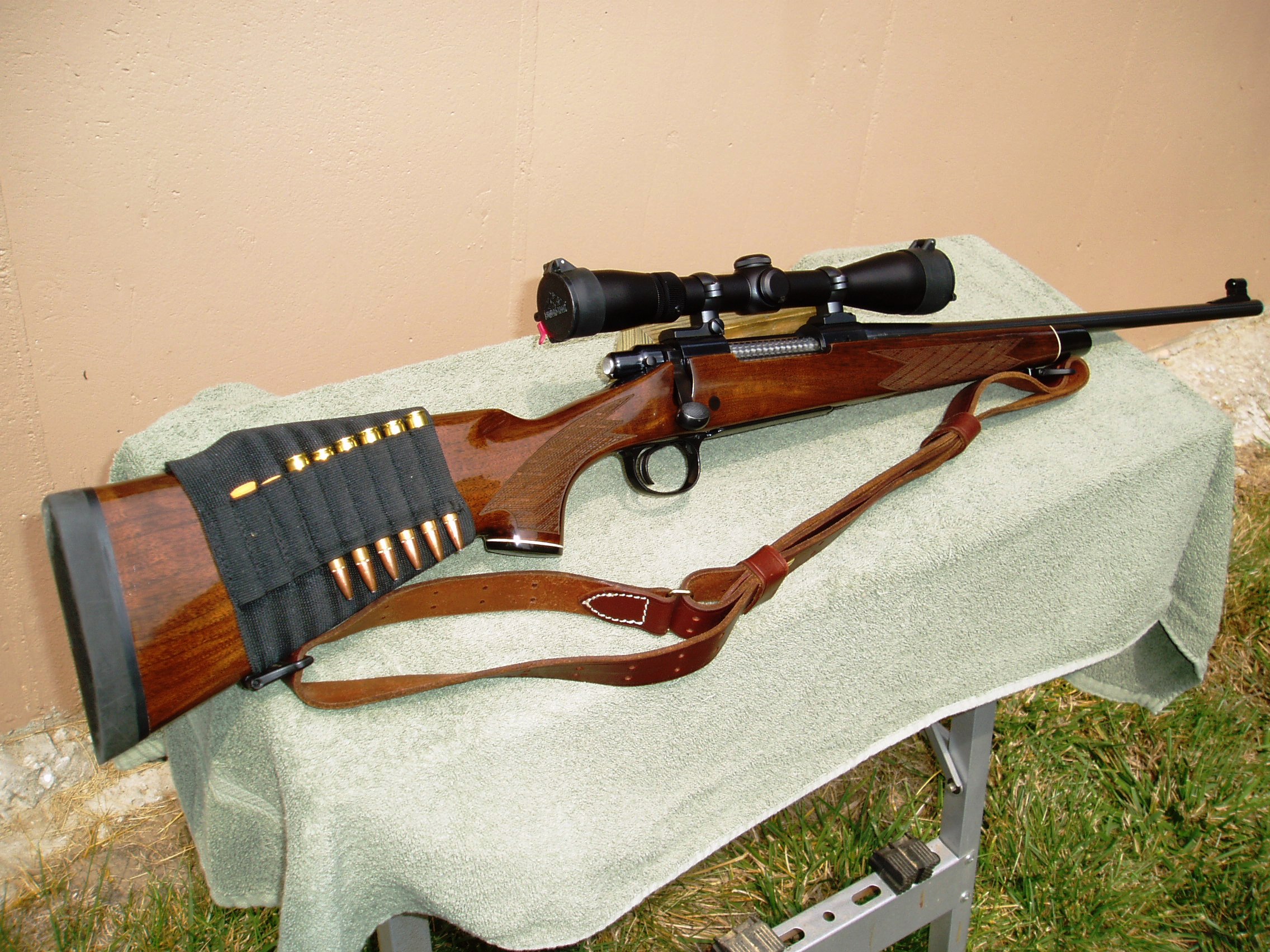
You’ve probably seen one leaning against a truck or tucked into a gun rack in just about every hunting camp from the Sierras to the Pyrenees. It’s a silhouette that is hard to mistake. When we talk about a rifle Remington de repetición, we aren't just talking about a piece of hardware; we are talking about the backbone of modern bolt-action history. Honestly, it’s kinda wild how one design basically set the template for what a reliable firearm should feel like.
Most people hear "Remington" and their mind jumps straight to the Model 700. That makes sense. It’s the winningest bolt-action in history. But the story is deeper than just one model. It’s about a transition from single-shot precision to the "repeater" era, where having more than one round ready to go changed how humans hunted and fought.
The Bolt-Action Soul: What Makes a Remington a "Repetición"
Basically, a "rifle de repetición" is just a fancy way of saying you don't have to reload a new cartridge by hand into the chamber after every shot. You’ve got a magazine. You’ve got a bolt. You cycle it, and the machine does the work.
The Remington 700 is the king here. Launched in 1962, it was designed to be cheaper to produce than its predecessor, the Model 721, but it ended up being more accurate. Why? It's the "three rings of steel." This isn't just marketing fluff. The bolt face surrounds the cartridge head, the barrel surrounds the bolt, and the receiver surrounds the barrel. It’s a tank.
If you’ve ever felt the "clink-clink" of a 700 action, you know it’s smooth. Some say it's too simple. Others argue that simplicity is exactly why it’s the base for almost every high-end sniper rifle in the U.S. military (think M24 and M40).
But let’s get real for a second. Remington has had a rough few years. Bankruptcy, ownership changes, and quality control whispers have made some shooters nervous. However, the legacy of the rifle Remington de repetición survives because the design is inherently robust. You can't easily kill a design that survived the transition from 20th-century craftsmanship to 21st-century CNC machining.
The Model 7600: The Pump-Action Oddball
Now, here is where things get interesting. Not every "repeater" is a bolt-action.
In places like the thick woods of Pennsylvania or the dense scrub of northern Spain, the Model 7600 is a legend. It’s a pump-action rifle. You read that right. It cycles just like a Remington 870 shotgun. While the rest of the world was obsessing over bolt-actions, a niche group of hunters realized that for a fast second shot on a moving boar or deer, nothing beats a pump.
It’s fast. Sorta lightning fast, actually.
The 7600 uses a detachable box magazine, which was a big deal back in the day. It’s a rifle Remington de repetición that defies the "slow bolt" stereotype. If you’re tracking game in heavy cover where you might only get a half-second window, the 7600 is the tool. It doesn't have the same long-range "sub-MOA" reputation as the 700, but at 50 yards in the rain? I’d take it every time.
Why Accuracy Isn't Just Luck
There’s a lot of mythos around the "out of the box" accuracy of these rifles.
- The Recoil Lug: In a Remington, the recoil lug is a separate piece of steel sandwiched between the barrel and the receiver. Some people hate this because it’s not "integral," but it actually allows for very precise headspacing.
- The Trigger: The X-Mark Pro trigger was controversial for a while. It’s adjustable, sure, but many purists immediately swap it for a Timney or a TriggerTech.
- The Lock Time: This is the time it takes from the moment the sear releases the firing pin to the moment it hits the primer. Remington 700s have incredibly fast lock times. This means less time for you to wobble and pull the shot off-target.
Accuracy is a physics game. A rifle Remington de repetición succeeds because it minimizes the variables. When you bolt that action into a solid stock, there isn't much that can move.
Real World Usage: From Competition to the Dinner Table
The versatility is what’s truly staggering. You can find a Remington chambered in everything from the tiny .223 Remington (great for varmints and target practice) to the shoulder-bruising .300 Remington Ultra Mag.
If you go to a long-range precision match today, you’ll see plenty of custom rigs. Look closer. A huge chunk of them are built on "Remington 700 pattern" actions. It’s become the industry standard. It’s like the small-block Chevy of the gun world. Parts are everywhere. You want a new trigger? Easy. A carbon fiber barrel? Ten companies make one that fits. A chassis that makes it look like something out of a sci-fi movie? Take your pick.
This ecosystem is why the rifle Remington de repetición stays relevant. Even if you don't like the factory stock or the factory finish, the bones are so good that you can build exactly what you want.
The Misconception of "Old" Tech
Some people think bolt-actions are dinosaurs. With the rise of semi-autos like the AR-10, why bother with a manual bolt?
Honestly, it’s about the connection. And the weight. A bolt-action is lighter. It’s more reliable in extreme cold or mud. There’s no gas system to get fouled up. When you cycle a rifle Remington de repetición, you are the motor. You control the speed, the ejection, and the feed. There’s a mechanical honesty there that you just don't get with a semi-auto.
Maintenance and Longevity: Keeping the Machine Humming
If you own one, don't baby it too much, but don't ignore it either. The biggest enemy of the Remington is rust under the wood line. If you’ve been hunting in the rain, you have to take the action out of the stock. It’s just two screws. Dry it off. Light coat of oil.
Also, watch the bolt lugs. A tiny dab of grease on the back of the lugs will keep the action from galling and keep that "glass-smooth" feeling alive for decades. I’ve seen Model 700s from the 60s that still cycle like they were made yesterday because the owner spent thirty seconds on maintenance once a year.
Actionable Steps for the Aspiring Owner
If you are looking to get into the world of Remington repeaters, don't just buy the first thing you see.
- Check the Serial Numbers: If you are buying used, look up the manufacture date. There are specific "golden eras" for Remington quality (pre-2007 is often cited by collectors).
- Inspect the Crown: The "crown" is the very end of the barrel where the bullet exits. Even a tiny scratch here can ruin your accuracy. If it’s damaged, a gunsmith can fix it, but use it as a bargaining chip on the price.
- Trigger Check: Always ask if the trigger is original or if it was part of the various recalls over the years. Safety first, no exceptions.
- Scope Mounts: Remington 700s use a specific hole pattern. Make sure you get the right "Long Action" or "Short Action" bases. They are not interchangeable.
- Start with the .308: If you're undecided on caliber, the .308 Winchester is the sweet spot. It’s easy to find, has manageable recoil, and will take down almost any North American or European game.
The rifle Remington de repetición isn't just a tool for the job. It's a legacy of American engineering that, despite corporate ups and downs, remains the benchmark for what a repeating rifle should be. Whether you're a competitive shooter or someone who just wants to put meat in the freezer, understanding how these machines work is the first step toward mastering them.
Take it to the range. Learn the reset of the trigger. Feel how the cartridge slides from the magazine into the chamber. Once you get it, you'll understand why this design hasn't really changed much in over sixty years. It didn't need to. It worked then, and it works now.
To get the most out of your rifle, spend time "dry firing" (with snap caps) to get used to the trigger pull without the flinch of the recoil. This is the fastest way to shrink your groups. Once you're comfortable, move to a benchrest and find which grain of bullet your specific barrel prefers. Every rifle has a "favorite" brand of ammo; your job is to find it through trial and error. This process isn't just about shooting—it's about becoming a better marksman by understanding the unique personality of your firearm.