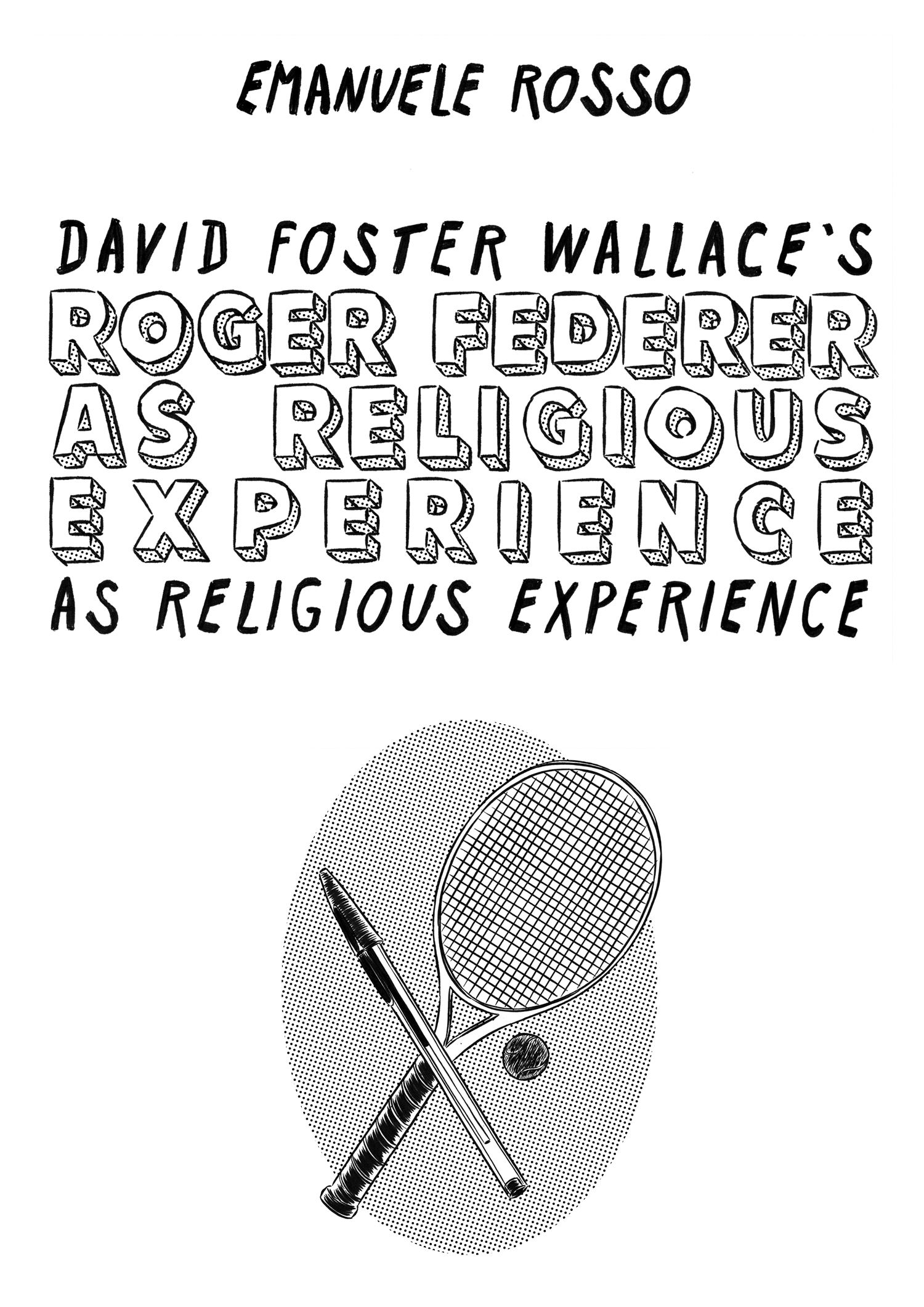
Almost anyone who loves tennis has had a Federer Moment. You know the one. It’s that split second where the jaw drops, the eyes bulge, and you make a sound that’s half-gasp, half-grunt—the kind of noise that makes your spouse run in from the next room to see if you’re choking on a grape.
But you aren't choking. You're just watching a man in a white headband do something that shouldn't be physically possible.
Back in 2006, the late David Foster Wallace wrote an essay for the New York Times titled "Federer as Religious Experience." It wasn't just sports writing; it was a sort of theological treatise on what happens when human beauty reaches its absolute limit. Wallace argued that watching Roger play was a way of reconciling ourselves with the fact that we have bodies.
Honestly, he was right.
The Kinetic Beauty of the 2006 Wimbledon Final
To understand roger federer as religious experience, you have to look at the 2006 Wimbledon final against Rafael Nadal. This was the peak of the "King vs. Regicide" dynamic. On one side, you had Nadal: a brawny, sleeveless warrior who looked like he was trying to beat the ball into submission. He was all dirt, sweat, and heavy topspin.
Then there was Roger.
Federer didn't seem to be playing the same sport. While Nadal was a "cleaver," Federer was a "scalpel." He moved with a kind of "kinetic beauty" that felt less like athletic exertion and more like a choreographed dance.
There is this specific point Wallace describes where Nadal hits a winner that should have ended the rally. It’s a screaming cross-court shot. Federer, somehow already there, faints a slice and then whips a forehand winner down the line while moving backward. It’s what Wallace called a "Matrix" moment. The laws of physics seemingly took a coffee break for five seconds.
Why TV Tennis is Like "Video Porn"
Wallace had this wild analogy: he said watching tennis on TV is to live tennis what video porn is to the "felt reality of human love."
It sounds extreme, but it's basically true. On a flat screen, you lose the sense of speed. You don't see the "great liquid whip" of the Federer forehand in three dimensions. You don't hear the specific pop of the ball hitting the sweet spot of his Wilson Pro Staff—a sound that was always crisper, cleaner, and more "expensive" than anyone else's.
In person, Federer’s game wasn't just effective. It was "both flesh and not." He looked like a creature made of light, especially in the all-white gear Wimbledon requires.
The Technical Wizardry Behind the "Maestro"
We talk about the "religious" side, but let's get into the weeds of how he actually did it. It wasn't just magic. It was a specific set of technical choices that defied the modern "power-baseline" trend.
- The Grip: Most modern players use a Semi-Western or Western grip to generate massive topspin. Federer stuck with a classic Eastern forehand grip. It allowed him to take the ball early and "flatten" it out, hitting winners from positions where others were just trying to survive.
- The Footwork: Experts often say Federer "floats." He had this soccer-player agility (he was a prodigy as a kid) that allowed him to make hundreds of tiny "adjustment steps" per second. He was rarely out of position. He didn't slide like Djokovic or sprint like Nadal; he just... appeared where the ball was going to be.
- The One-Handed Backhand: In an era of two-fisted baseline bashers, Roger's one-hander was a throwback. It gave him more reach and a slice that stayed so low it practically crawled across the grass.
The 2006 Stats: A Year of Pure Dominance
To back up the "religious" claims with cold, hard numbers, look at 2006. It remains one of the greatest single seasons in sports history.
Federer reached the final of every single tournament he played that year, except one. He won 12 titles, including three Grand Slams. His match record was a staggering 92–5. That’s not just "being good at tennis." That’s a total monopoly on excellence.
| Statistic | 2006 Value |
|---|---|
| Match Record | 92–5 |
| Titles Won | 12 |
| Grand Slams | 3 (Wimbledon, US Open, Australian Open) |
| Consecutive Weeks at No. 1 | Part of his record 237-week streak |
Dealing With the Body: The Human Side of the Legend
The "religious experience" of Federer wasn't just about his winning. It was about how he aged.
Wallace died in 2008, so he never saw the "Old Federer." He didn't see the 2017 Australian Open comeback, where a 35-year-old Roger, coming off knee surgery, beat Nadal in a five-set thriller. That was perhaps the most "spiritual" moment of all because it shouldn't have happened.
Watching an aging athlete fight against the "withering" of the body—while still maintaining that balletic grace—is a different kind of religious experience. It’s about resilience. It’s about the fact that even a "god" of the court eventually has to deal with a mortal knee.
What Most People Get Wrong About Federer
People think he was just "born with it." Like he woke up one day and could hit a 120 mph serve with no effort.
That's total nonsense.
The "religious experience" was actually the result of obsessive, grinding work. As a junior, Roger had a terrible temper. He used to throw rackets and cry. He had to learn that icy, calm demeanor. He had to train his body to move that way.
The "effortlessness" was the ultimate illusion. It was the result of so much effort that the effort itself became invisible.
Why Roger Federer as Religious Experience Still Matters Today
Even though Roger has retired—ending his career in a tear-filled doubles match with Nadal at the 2022 Laver Cup—the idea of roger federer as religious experience persists. Why? Because we live in an era of "data-driven" sports. We have "Expected Goals" in soccer and "Launch Angles" in baseball.
Federer was a reminder that sport is also an art form.
He didn't play to maximize a spreadsheet. He played to express something. When you watch old clips of him today, you aren't just looking at a guy trying to win a point. You're looking at someone attempting to achieve a kind of perfection that doesn't exist in the real world.
Actionable Insights for Tennis Fans and Players
If you want to capture even a fraction of that "Federer feeling" in your own life or game, here’s what the experts suggest:
- Focus on the "Small Steps": Federer's grace came from his feet, not just his hands. If you play, work on your adjustment steps. Efficiency is the key to longevity.
- Learn the "Liquid Whip": This is about relaxation. Roger held his racket like he was holding a small bird—tight enough so it wouldn't fly away, but loose enough so he wouldn't crush it. Most amateurs grip the racket way too hard.
- Appreciate the Process over the Outcome: Roger famously said he "loved the game" more than the winning. That’s how he played until he was 41.
- Watch the "Both Flesh and Not" Era: Go back and watch the 2006 Wimbledon or the 2005 US Open. Watch how he moves between shots, not just the shots themselves.
Roger Federer wasn't just a tennis player. He was a proof of concept for what the human body can do when it stops fighting itself and starts flowing. Whether you’re a die-hard fan or someone who doesn't know a "deuce" from a "love," the "Federer Moment" remains a universal peak in the history of human movement.
To really get the full picture, you should track down a high-quality replay of the 2006 Wimbledon final. Don't just watch the score; watch the footwork. Watch the way he resets his hair after a point. Watch the "V-shaped gap" in his racket throat before he serves. It’s in those tiny, human details that the religious experience actually lives.