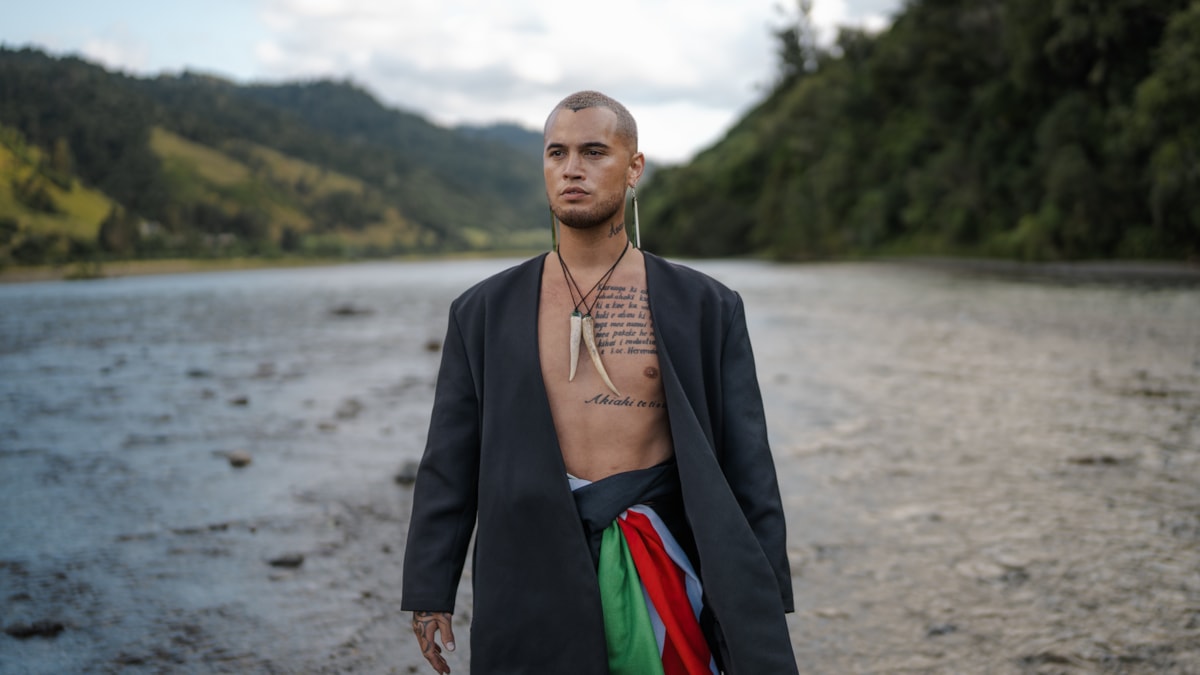
You probably remember the 2009 version of Stan Walker. He was that kid with the massive voice and the slightly nervous grin who took out Australian Idol. Back then, the industry tried to box him in. They wanted the R&B pop star, the "safe" commercial bet. But if you look at Stan Walker New Zealand today, in early 2026, he is unrecognizable from that reality TV mold. He’s become a cultural pillar, a survivor, and honestly, one of the most unapologetic voices for indigenous sovereignty in the Pacific.
His journey hasn't been a straight line. It’s been messy. It’s been painful. And lately, it’s been incredibly powerful.
The Fight for Survival (Literally)
Most people know Stan had a health scare, but the depth of it is still hard to wrap your head around. Because of a rare genetic mutation called CDH1—often dubbed the "Walker gene" by locals now—Stan had to have his entire stomach removed in 2017. Imagine that. You’re a world-class singer and you suddenly have no stomach.
The recovery was brutal. He dropped 20kg. He had a collapsed lung. There were moments, documented in his raw film Stan, where he wasn't sure if the voice—the one thing that felt like his purpose—would ever come back with the same resonance.
But it did. Only now, it sounds different. There’s a weight to it. When he sings today, you aren't just hearing a guy hitting high notes; you’re hearing a man who looked at a 80% cancer risk and decided he had too much left to say to let it take him. He’s been very open about using IVF to ensure his own tamariki (children) don't have to inherit that same genetic "curse." That’s a level of vulnerability you just don't see from typical "celebs."
Reclaiming the Reo
For a long time, Stan was told—quite literally—to tone down his "Māori-ness" to sell records in Australia. He’s spoken about how he felt he was "hiding" in plain sight during those early years. Those days are dead and buried.
His recent work, especially the anthem "I Am" (written for Ava DuVernay’s film Origin), is a masterclass in reclamation. It’s bilingual. It’s defiant. When he performed it at the 2025 Aotearoa Music Awards, it wasn't just a gig—it was a political statement. He stood there with Toitū Te Tiriti flags waving in the crowd, backed by kapa haka, and basically told the world that his language isn't just a "feature" on a track. It’s his lifeblood.
Why "I Am" Changed Everything
- Hollywood Connection: Ava DuVernay found him through an Instagram deep dive after seeing a cover he did of Kanye West’s "Ultralight Beam."
- The Message: It’s about "reclamation, reconciliation, and reconnection."
- The Impact: It was a serious Oscar contender and won the Mana Reo award, proving that Te Reo Māori has a massive, hungry global audience.
The Summer of 2026: The Big Tour
If you’re in New Zealand right now, you can't miss him. He’s currently mid-tour with L.A.B., hitting spots like Tauranga, Auckland’s Trusts Arena, and Christchurch. Honestly, the vibe at these shows is electric. It’s a mix of families, young kids who know him from TikTok, and older generations who respect his Tūhoe roots.
He’s performing with a "heavy prep" mentality lately. He compares it to being an All Black—vocalists have nothing to hide behind. No drumsticks, no bass guitar. Just the lungs and the soul.
What’s cool is how he’s bringing up-and-comers with him. He’s got Liam Te Wehi on the bill, a kid he found on TikTok who apparently "looks like his dad." It shows that Stan is moving into that "uncle" or mentor phase of his career. He isn't just chasing the #1 spot anymore; he’s building a legacy.
Dealing With the "Mamae"
It isn't all awards and sold-out stadiums, though. Stan is incredibly candid about the "mamae" (pain) of his upbringing. We’re talking about a childhood marked by domestic violence, poverty, and sexual abuse. He’s been a "break in the chain," as he puts it.
He grew up in a house where his head being stomped on was "normal." He’s said that himself. By speaking about it—in his book Impossible and on podcasts like Between Two Beers—he’s forced a conversation in New Zealand about intergenerational trauma that a lot of people would rather ignore.
He doesn't want pity. He wants "liberation." That’s the difference.
What Most People Get Wrong About Stan
People often think he’s just a "church singer" or a "pop guy." That’s a shallow take.
Stan Walker is a bridge. He bridges the gap between the marae and the mainstream. He bridges the gap between old-school R&B and traditional waiata. He’s even worked with his uncle, the activist Tāme Iti, blending art and protest in a way that feels incredibly modern.
His music is how he stands up. It’s his way of exercising rangatiratanga (sovereignty).
Actionable Takeaways for Fans and New Listeners
If you want to actually understand why Stan Walker New Zealand is such a big deal right now, don't just stick to his old radio hits.
- Watch the Documentary: Find Stan (or To Hell and Back). It’s raw. It shows the surgery and the fear. It’ll change how you hear his voice.
- Listen to "Te Arohanui": This was his first full album in Te Reo Māori. It’s soulful, stripped back, and deeply personal.
- Check the 2026 Tour Dates: If you can get to a show this summer (Auckland Jan 31st is the big one), do it. The live energy, especially with the kapa haka elements, is something a recording can't capture.
- Read "Impossible": If you’ve ever felt like your past defines your future, his autobiography is a must-read. It’s not a "ghost-written" fluff piece; it’s a gut-punch of a story.
Stan Walker has moved past the need for "Idol" validation. He’s found his "why." In a world of manufactured pop stars, he’s the real deal—scars, stomach-less, and stronger for it.
To keep up with his latest releases or snag tour tickets, head over to his official social channels or the Unity Management Group site, as his 2026 schedule is filling up fast with both local and international dates.