For over a decade, the Rocky Mountains were more than just a mountain range; they were a giant, high-stakes game board for thousands of people obsessed with a poem. You’ve probably heard the basics: an eccentric art dealer named Forrest Fenn hides a bronze chest filled with gold, jewels, and artifacts worth over a million bucks, then writes a cryptic 24-line poem to lead the way. People quit their jobs. Some spent their life savings. Tragically, five people died trying to find it.
So, was Fenn’s treasure ever found, or was the whole thing a giant hoax that went to the grave with him?
The short answer is yes. It was found. But the way it went down was messy, controversial, and honestly, a little bit heartbreaking for the community of "searchers" who had built their entire lives around the chase. It wasn't found by a grizzled mountain man or a professional treasure hunter. It was found by a medical student who just happened to be more obsessed—and maybe a little more methodical—than everyone else.
The Moment the Chase Ended
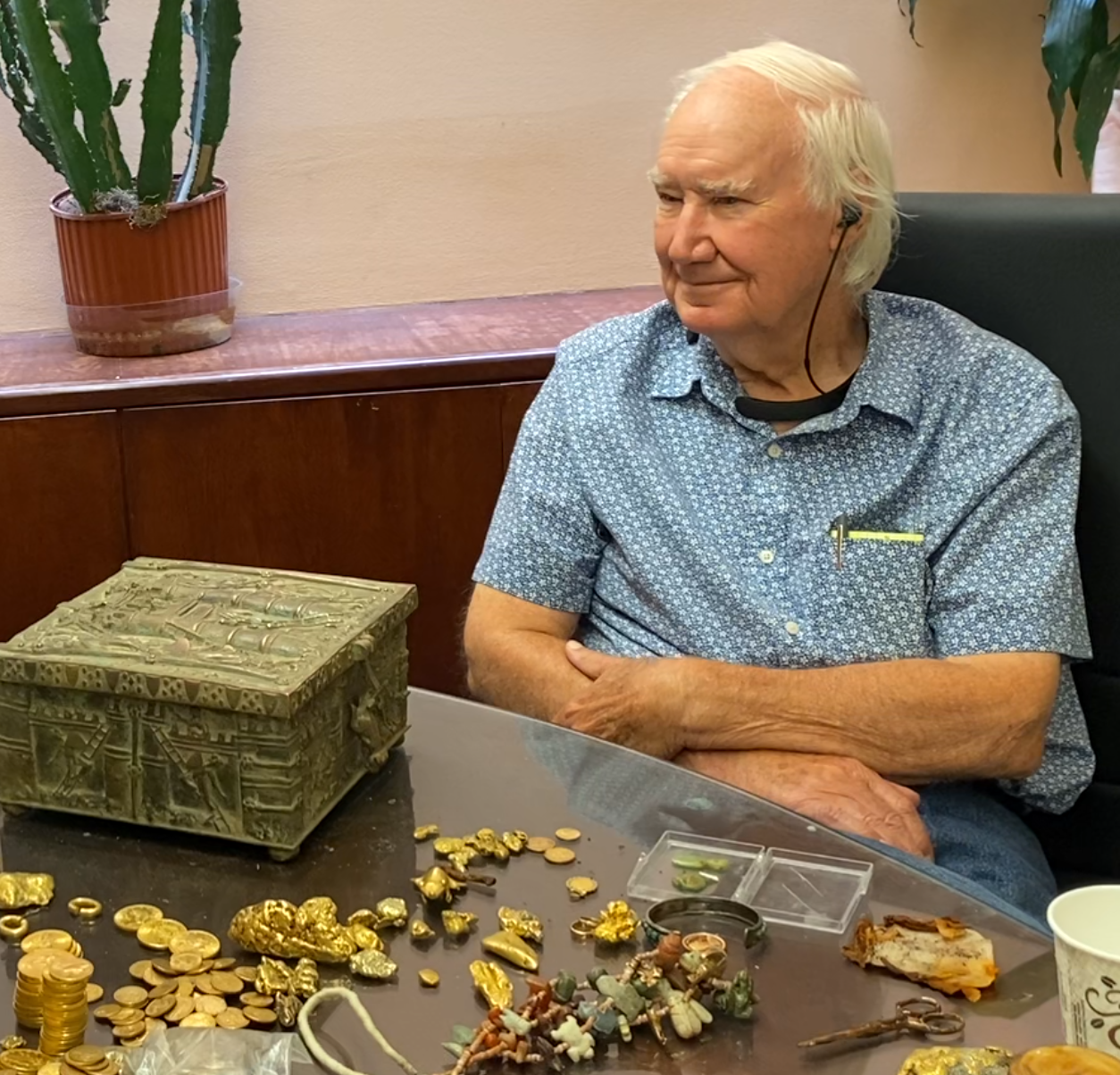
In June 2020, while the world was locked down and distracted, Forrest Fenn made a quiet announcement on his website. He said the treasure had been found "under a canopy of stars" in the lush, forested vegetation of the Rocky Mountains where he had hidden it more than a decade prior. He didn't name the finder. He didn't say where it was. He just posted a few photos of a very old, very tired-looking Fenn sitting next to a chest that looked like it had been through the ringer.
It felt like a gut punch to the community.
People were skeptical. "Show us the spot," they demanded. For months, the internet was a cesspool of conspiracy theories. Some thought Fenn had taken the treasure back because he was nearing the end of his life. Others claimed the finder was a fake. But the truth came out because of a lawsuit. A lawyer from Chicago named Barbara Andersen sued "the unknown finder," claiming her emails had been hacked and her solve was stolen.
This lawsuit forced the finder’s hand. He couldn't stay anonymous anymore.
In December 2020, Jack Stuef, a 32-year-old medical student from Michigan, came forward. He didn't want the fame. He definitely didn't want the lawsuits. But he was the guy. He had spent two years obsessing over Fenn’s words, and he eventually narrowed the search area down to a specific spot in Wyoming.
How Jack Stuef Actually Solved the Poem
Most people were looking for "blaze" marks on trees or specific rock formations that looked like owls or bells. Stuef took a different approach. He realized that Fenn was an old man who wanted to be buried with this chest. That meant the spot had to be special to Fenn, but also accessible enough for an 80-year-old man to make two trips from his car in one afternoon.
Stuef didn't just look for a "blaze." He looked for a place that fit Fenn’s psychology.
He eventually pinpointed a location in Yellowstone National Park. This was a huge revelation because Fenn had always hinted that the treasure was in the Rockies, but he never explicitly confirmed it was in a National Park—mostly because of the legal nightmare that creates regarding ownership of found "abandoned property."
The Wyoming Connection
When we talk about whether Fenn's treasure was ever found, the location is the biggest piece of the puzzle. Stuef found it in Wyoming. Specifically, in a nook of the woods in Yellowstone. He spent 25 days searching that specific area before he finally stumbled upon it. It wasn't tucked under a massive, obvious landmark. It was partially buried, covered by pine needles and forest debris. It looked like a piece of trash or a rock until he got close.
Inside? It was exactly what Fenn promised.
- Hundreds of gold coins (Eagle and Double Eagle coins).
- Gold nuggets the size of hen's eggs.
- Pre-Columbian gold figures.
- Rubies, diamonds, and emeralds.
- A 17th-century Spanish ring found with a metal detector.
It was a literal king's ransom. But for Stuef, finding it was only the beginning of a whole new kind of stress. He had to figure out how to get it out of the park without being caught by rangers, and then he had to store it in a safe deposit box at a vault in Santa Fe.
The Drama Didn't Die with the Discovery
You’d think a found treasure would be the end of the story. Nope.
Forrest Fenn died in September 2020, just a few months after the chest was recovered. He was 90 years old. He lived just long enough to know his "legacy" was safe. But the lawsuits kept coming. Besides Barbara Andersen, other searchers claimed they had "divine rights" to the treasure or that Stuef had somehow cheated.
There’s also the legal gray area of Yellowstone. Technically, if you find something in a National Park, it belongs to the government. Stuef and the Fenn family worked out a deal to keep the location a secret to prevent the area from being destroyed by tourists and diggers. To this day, the exact GPS coordinates haven't been released to the public, though some intrepid "solve-hunters" believe they’ve narrowed it down to a spot near the Madison River.
Why People Still Think It Was a Hoax
Despite the photos, the court filings, and the eventually-sold gold, some people refuse to believe Fenn's treasure was ever found in the way he described. They think it's too convenient.
One theory is that Fenn realized he was dying and didn't want the legal liability of someone dying on the mountain after he was gone. So, he "found" a finder. This theory suggests Jack Stuef was a plant. However, if you read Stuef’s long-form essays about the search, his level of detail and his genuine frustration with the process make him seem very real. He sounds like a guy who got lucky after being incredibly unlucky for a long time.
Then there's the "it was never there" crowd. They argue Fenn just wanted to create a legend. But the auction of the treasure proves the items existed. In 2022, the "Fenn Treasure" was sold at Heritage Auctions for over $1.3 million. The chest itself, empty, sold for $26,250. People paid massive premiums for these items because they wanted a piece of the myth.
The Reality of the "Solve"
The poem was the key.
Begin it where warm waters halt And take it in the canyon down, Not far, but too far to walk. Put in below the home of Brown. For years, people thought "the home of Brown" was a trout stream or a specific cabin. Stuef hasn't revealed his exact interpretation of every line, but he hinted that the "warm waters" weren't a physical place like a hot spring, but a more metaphorical or geological boundary. This is what made the search so hard. Fenn was a writer and an artist; he used words like colors on a palette, not like a GPS coordinate.
Common Misconceptions About the Search
- It was in New Mexico: A lot of people focused on Santa Fe because that's where Fenn lived. But he always said it was north of Santa Fe.
- It was underwater: The poem mentions water, but the chest was found on dry land, albeit in a damp environment.
- You needed a shovel: Fenn said you didn't need to dig, and he was mostly right. It was sitting on the surface, just obscured by time and nature.
What This Means for Future Treasure Hunters
The Fenn chase changed the way people look at "armchair treasure hunts." It showed that these things can be real, but they can also be dangerous. The fact that people died for a bronze box is a sobering reminder that nature doesn't care about your "solve."
The treasure is gone. The gold has been sold and dispersed among private collectors. But the mystery of the "exact spot" remains the last piece of the puzzle. Stuef has stated he will never reveal the location because he doesn't want the site to become a "tourist death trap" or a desecrated piece of land.
Moving Forward: The Legacy of the Chase
If you're looking for your own adventure, the Fenn story offers some pretty solid lessons. It wasn't about being the strongest hiker; it was about being the best researcher.
- Trust the psychology of the creator. Fenn wasn't a surveyor; he was an old man who loved the outdoors. The spot had to be a place he could reach comfortably.
- Ignore the noise. Thousands of people were screaming their theories on forums like Reddit and Harry's Chart. The guy who won was the guy who kept his mouth shut and worked the problem privately.
- Legal protection is everything. If you ever find something significant, don't post it on Instagram immediately. Call a lawyer. Stuef’s life became a series of legal battles the moment he went public.
The story of the Forrest Fenn treasure is officially closed, but for those who spent years in the woods, the mountains will always feel a little bit more "golden" than they did before.
Actionable Next Steps
If you're still fascinated by the hunt and want to dive deeper into the actual mechanics of how it was solved, your best bet is to read Jack Stuef's medium posts where he explains his motivations and his experiences with Forrest Fenn. You should also look up the Heritage Auctions archives from 2022 to see the high-resolution photos of the individual artifacts; it gives a much clearer picture of what was actually inside that chest than the grainy photos from 2020. Finally, if you're planning a trip to Yellowstone, remember that the Madison River area is widely considered the most likely "home" of the treasure's former hiding spot, but keep your search to the trails—the treasure is definitely, 100% gone.