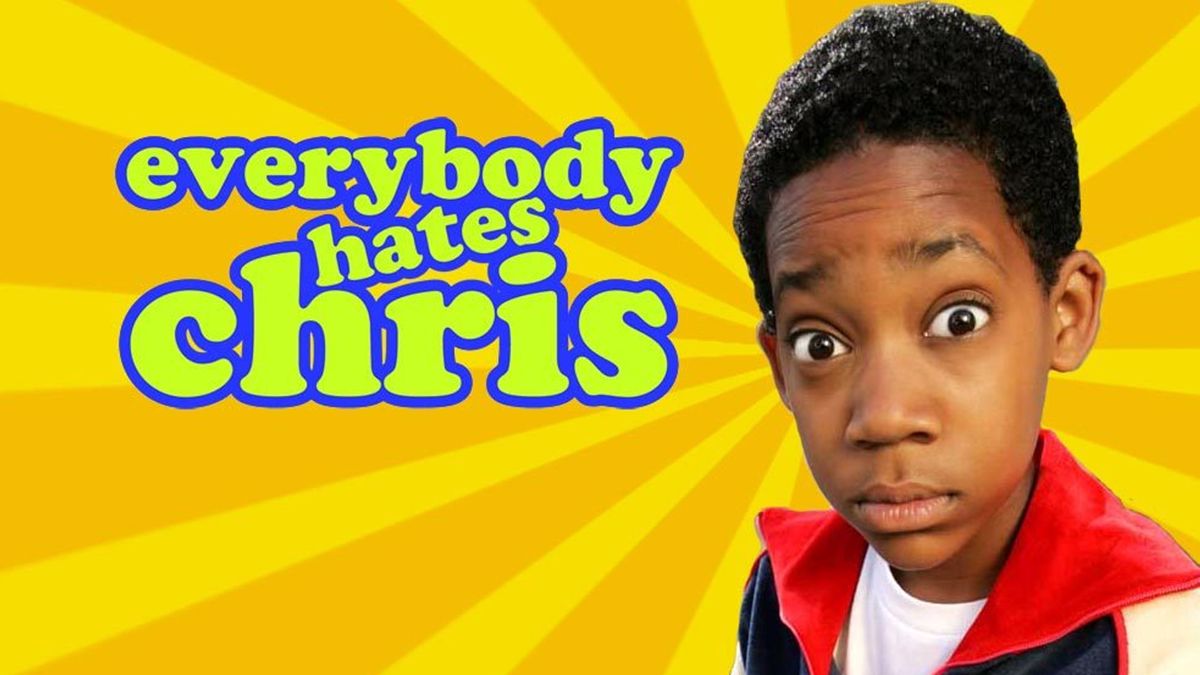
If you were sitting on your couch in May 2009, watching the last episode of Everybody Hates Chris, you probably felt a weird mix of hunger and anxiety. One minute, the Rock family is sitting in a booth at a diner, waiting for Chris’s GED results. The next? Blackout. Total silence. If you thought your cable went out, you weren’t alone. Thousands of people across the country were frantically checking their boxes or screaming at the TV.
It was a bold move. Honestly, it was a gutsy move for a sitcom that spent four seasons being a relatively straightforward, albeit hilarious, look at a kid growing up in Bed-Stuy. But that ending wasn't just a random creative whim. It was a massive, layers-deep tribute to one of the most famous finales in television history, and it signaled the end of an era for Chris Rock’s fictionalized childhood.
What Actually Happens in "Everybody Hates the G.E.D."
The finale, titled "Everybody Hates the G.E.D.," centers on a pivotal moment. Chris is tired of high school. He's over the bullying, the teachers, and the general grind of being the only black kid at Tattaglia. He decides to drop out and take the G.E.D. If he passes, he's done. If he fails, he has to repeat the tenth grade. It’s high stakes for a teenager who just wants to start his life.
Julius, played by the legendary Terry Crews, isn't thrilled but eventually comes around. Rochelle, as usual, is just trying to keep the family from imploding while worrying about her "baby." The whole episode builds toward this dinner at a local parlor. Chris arrives first. He sits down. He puts a coin in the jukebox.
Then comes the music.
"Livin' on a Prayer" by Bon Jovi starts blaring. This is the first big clue. For anyone who had watched the series finale of The Sopranos just two years earlier, the parallels were screamingly obvious. But for kids or casual viewers who didn't follow prestige HBO dramas, it just felt... intense.
One by one, the family trickles in. Drew is there. Tonya arrives. Rochelle walks in. The tension is thick enough to cut with a steak knife. A guy in a leather jacket—credited as "The Guy"—walks past the table and looks suspiciously at Chris. He heads toward the bathroom. It is a beat-for-beat recreation of the scene where Tony Soprano waits for his family while a potential hitman looms in the background.
Finally, Julius walks in carrying a large envelope. This is it. The G.E.D. results. He sits down, looks at Chris, and opens the mail. Just as we’re about to see the grade, the screen cuts to black.
The Sopranos Connection: More Than Just a Parody
You can't talk about the last episode of Everybody Hates Chris without talking about Tony Soprano. Ali LeRoi, the show's co-creator alongside Chris Rock, wanted to pay homage to David Chase’s controversial ending. But it wasn't just for a laugh.
In The Sopranos, the cut to black suggested that life goes on—or it doesn't. It left Tony's fate in a state of "Schrödinger's Mobster." In Everybody Hates Chris, the stakes were different, yet oddly similar. Passing that test was life or death for Chris’s future.
The "Guy in the Leather Jacket" in the diner was played by a member of the show's crew, much like the "Members Only" guy in The Sopranos. Even the camera angles were identical. The way the bell rings every time the door opens. The way Rochelle enters the frame. It was a masterclass in parody that managed to feel incredibly stressful.
But why did they do it?
Chris Rock has mentioned in interviews that by the time they reached the end of season four, the real-life timeline was catching up. In real life, Chris Rock’s father, Christopher Julius Rock II, passed away in 1988 following ulcer surgery. If the show had continued into a fifth season, it would have had to deal with the death of the show's most beloved character.
The producers didn't want to go there. They didn't want the show to become a tragedy. By ending it right as Chris enters adulthood—symbolized by the G.E.D.—they preserved the family dynamic that fans loved.
Did Chris Actually Pass the G.E.D.?
This is the question that drove people crazy for years. If you look closely at the very last shot before the blackout, there’s a hint. It’s not on the paper, though. It’s on the back of Julius’s truck.
Throughout the series, Julius is obsessed with money. Specifically, how much things cost when they are being wasted. In the final scene, as Julius walks into the restaurant, the camera lingers on the number "735" on the back of his truck.
Fans have speculated for over a decade that 735 was Chris's score. On a G.E.D. exam at that time, a 735 would have been a passing grade—a very good one, actually. It’s a subtle "Easter Egg" that suggests Chris made it out. He succeeded. He was going to be okay.
Why the Show Had to End There
Sitcoms about childhood have a shelf life. You can only be a "kid" for so long before the voice cracks and the actor starts looking like a grown man trying to fit into a middle-school desk. Tyler James Williams was growing up fast.
More importantly, the last episode of Everybody Hates Chris served as the perfect bridge to the real Chris Rock's career. We know how the story ends in real life. He becomes one of the greatest comedians of all time. We don't need to see him struggling in comedy clubs in the late 80s to know he makes it.
The ending was about the family. It was about Rochelle's pride, Julius's hard work, and the siblings' weird, competitive love. By ending on that high-tension note in the diner, the show froze them in time as the unit we knew them to be.
The Legacy of the Finale
Honestly, most sitcoms end with a wedding or a move to a new city. They're predictable. This wasn't. It was weird. It was frustrating. It was brilliant.
It also highlighted the show's unique position in the TV landscape. It was a "period piece" sitcom that dealt with race, class, and parenting in a way that felt authentic but never preachy. Ending with a high-brow reference to a gritty HBO drama was the show's way of saying, "We're more than just a family comedy."
Some viewers hated it. They felt robbed of a "real" ending. But in the age of streaming, the finale has aged like fine wine. New fans discovering the show on platforms like Hulu or Peacock often find the ending to be the most memorable part of the entire run. It invites discussion. It forces you to think about what happens next.
Breaking Down the "Blackout" Details
Let's look at the specifics of those final seconds.
- The Music: "Livin' on a Prayer" wasn't just a random song. It's an anthem about working-class struggle. "Tommy used to work on the docks..." It fits Julius's life perfectly.
- The Tension: The way the camera cuts between Chris looking at the door and the people entering is classic suspense editing. It makes a mundane diner feel like a minefield.
- The Credits: Unlike other episodes, the credits for the finale scrolled over a black screen in total silence. No theme song. No jokes. It forced the viewer to sit with that "What just happened?" feeling.
The sheer audacity of a UPN/CW sitcom mimicking the most talked-about ending in television history cannot be overstated. It was a flex.
What Most People Get Wrong About the Ending
A common misconception is that the show was canceled abruptly and they didn't have time to write a real ending. That's not true. While the show's future was uncertain, the creators purposefully chose this conclusion. They knew the "real life" story was getting too dark to keep the sitcom tone.
Another myth is that Chris fails the test. While we never see the results, the tone of the show was always about Chris surviving his circumstances. Failing the G.E.D. would have been a bleak ending for a character whose entire journey was about finding a way out of a bad situation.
The blackout wasn't a "we give up" moment. It was a "his life is just beginning" moment.
Actionable Insights for Fans and Rewatchers
If you're planning on revisiting the series or showing it to someone for the first time, here is how to get the most out of that final experience:
- Watch The Sopranos finale scene first. Seriously. Go to YouTube and watch the final five minutes of the HBO show. Then watch the Everybody Hates Chris finale. You will catch ten times more references.
- Look for the number 735. It appears more than once. It's the key to the "happy ending" people think they didn't get.
- Pay attention to the lyrics. The song choice in this episode is much more deliberate than in previous ones. It’s a commentary on the family’s economic status.
- Check out the animated reboot. If you're still craving more, keep an eye out for Everybody Still Hates Chris. It picks up in a way that respects the original but allows for more of Chris Rock's signature storytelling style.
The last episode of Everybody Hates Chris remains a landmark in 2000s television. It refused to play by the rules. It gave us a mystery instead of a montage. And 17 years later, we’re still talking about it. That’s the mark of a truly great finale. It didn't just end the story; it made the story immortal.