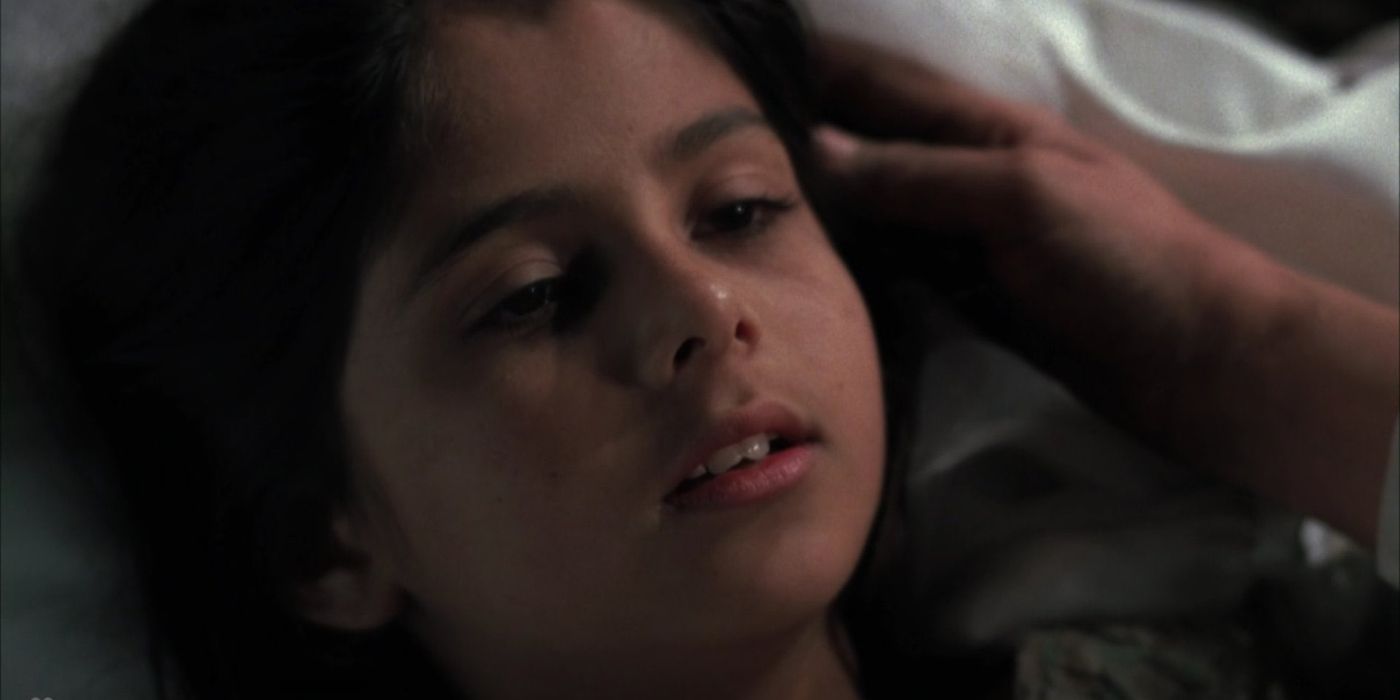
You know those episodes of Law & Order: Special Victims Unit that just stick to your ribs? The ones where the credits roll, and you're just sitting there in the dark staring at the screen? For a lot of long-time viewers, the Law and Order SVU Maria Recinos episode—better known by its official title, "Painless"—is exactly that. It isn't just a procedural hour of television. Honestly, it’s one of those rare moments where the show stopped being about a "case of the week" and started being about the impossible ethics of suffering.
It aired way back in 2004 during Season 5. Yeah, the Christopher Meloni and Mariska Hargitay "golden era." But what makes this specific story about Maria Recinos so gut-wrenching isn't a typical "whodunit" mystery. We knew who did it. The question was why, and whether the law even had a right to interfere.
Who Was Maria Recinos?
Maria Recinos wasn't a criminal. She was a woman trapped in a nightmare. In the episode, she’s portrayed by actress Maria Cellario, who puts in a performance that is, frankly, devastating. Maria was suffering from late-stage terminal cancer. She was in agony. Constant, unyielding, bone-deep pain that no amount of morphine could touch.
The detectives get called in because Maria’s daughter, Rita, is found dead. At first, you think it’s another tragic homicide. Then the layers start peeling back. You find out that Maria didn't want to live anymore, and Rita—out of a misplaced, desperate sense of love—tried to help her mother die. But things went sideways. Rita ended up dead instead, and Maria was left alive, still in pain, and now grieving the daughter who tried to "save" her from her suffering. It’s heavy. It’s really heavy.
Stabler and Benson are usually the moral compass of the show, right? Usually, it's "find the bad guy, lock them up." But in the Law and Order SVU Maria Recinos episode, the lines get blurred. Stabler, with his rigid Catholic background, has a very specific view on the sanctity of life. Benson, as always, leans into the empathy of the situation. They aren't just fighting a perp; they’re fighting their own beliefs.
The Role of Dr. Edwin Reidinger
You can't talk about Maria Recinos without talking about the "Dr. Death" figure in this episode, Dr. Edwin Reidinger. He was played by the legendary Zeljko Ivanek. He’s the one who provided the "suicide machine."
The show was clearly drawing parallels to Jack Kevorkian, who was a massive news fixture at the time. Reidinger wasn't a mustache-twirling villain. He genuinely believed he was providing a service of mercy. This puts the DA’s office—specifically Casey Novak—in a bind. How do you prosecute a man for "murder" when the "victim" was begging for the end?
Why the SVU Maria Recinos Episode Hit Different
Most SVU episodes focus on the lack of consent. Rape, assault, abuse—these are crimes where someone’s will is violated. But "Painless" flipped the script. It was about a woman whose only wish was to exercise her will over her own body.
The legal system in the Law & Order universe is a machine. It doesn't handle nuance well. When Maria is on the stand, it's hard to watch. She’s frail. she’s exhausted. She basically tells the court that by keeping her alive, they are the ones committing the crime. It’s a powerful argument that actually made a lot of viewers question their own stance on physician-assisted suicide.
- The Emotional Toll: It wasn't just Maria. It was the ripple effect. Her husband was caught between wanting his wife to stay and wanting her peace.
- The Technicality: The episode spent a lot of time on the mechanics of the "suicide machine" and the legal definitions of manslaughter versus assisted suicide.
- The Acting: Maria Cellario’s portrayal of physical pain was so visceral that you almost feel a sense of relief for the character when the episode concludes, even though the ending is anything but happy.
The Verdict and the Legacy
In the end, the jury struggled. We struggled. The episode doesn't give you a neat little bow. It leaves you feeling messy. That’s why we’re still talking about the Law and Order SVU Maria Recinos episode decades later. It wasn't just entertainment; it was a mirror.
It forced a prime-time audience to look at the reality of the Right to Die movement. While other shows might have made it a political debate, SVU made it personal. They put a face—Maria’s face—on the statistics.
How to Revisit the Episode Today
If you’re looking to re-watch this specific arc, here are a few things to keep in mind to get the most out of the experience:
- Context Matters: Remember that this aired in 2004. The legal landscape for assisted suicide was much different (and much more restrictive) than it is in many states today.
- Watch the Subtext: Pay close attention to Elliot Stabler’s reactions. His personal struggle with the case foreshadows a lot of his character development regarding his faith and his role as a "protector."
- Check the Season: This is Season 5, Episode 22. It’s titled "Painless." You can find it on Peacock or any major streaming service that carries the SVU back catalog.
The story of Maria Recinos serves as a reminder that sometimes the "Special Victims" aren't victims of a person, but victims of a system that hasn't caught up to the complexities of human suffering. It’s a masterclass in writing and a standout moment in the show's long history. If you're doing an SVU marathon, this one is non-negotiable.
Actionable Insights for Fans and Researchers:
- Compare to Current Events: Look up the "Death with Dignity" acts passed in states like Oregon and Washington to see how Maria's fictional legal battle would play out in the modern real world.
- Performance Study: Watch Maria Cellario’s performance alongside Zeljko Ivanek’s. It’s a clinic in how to play "righteous" versus "desperate."
- Script Analysis: If you're a writer, analyze how the episode balances the procedural elements (the death of the daughter) with the philosophical elements (the mother's terminal illness) without losing the pace.