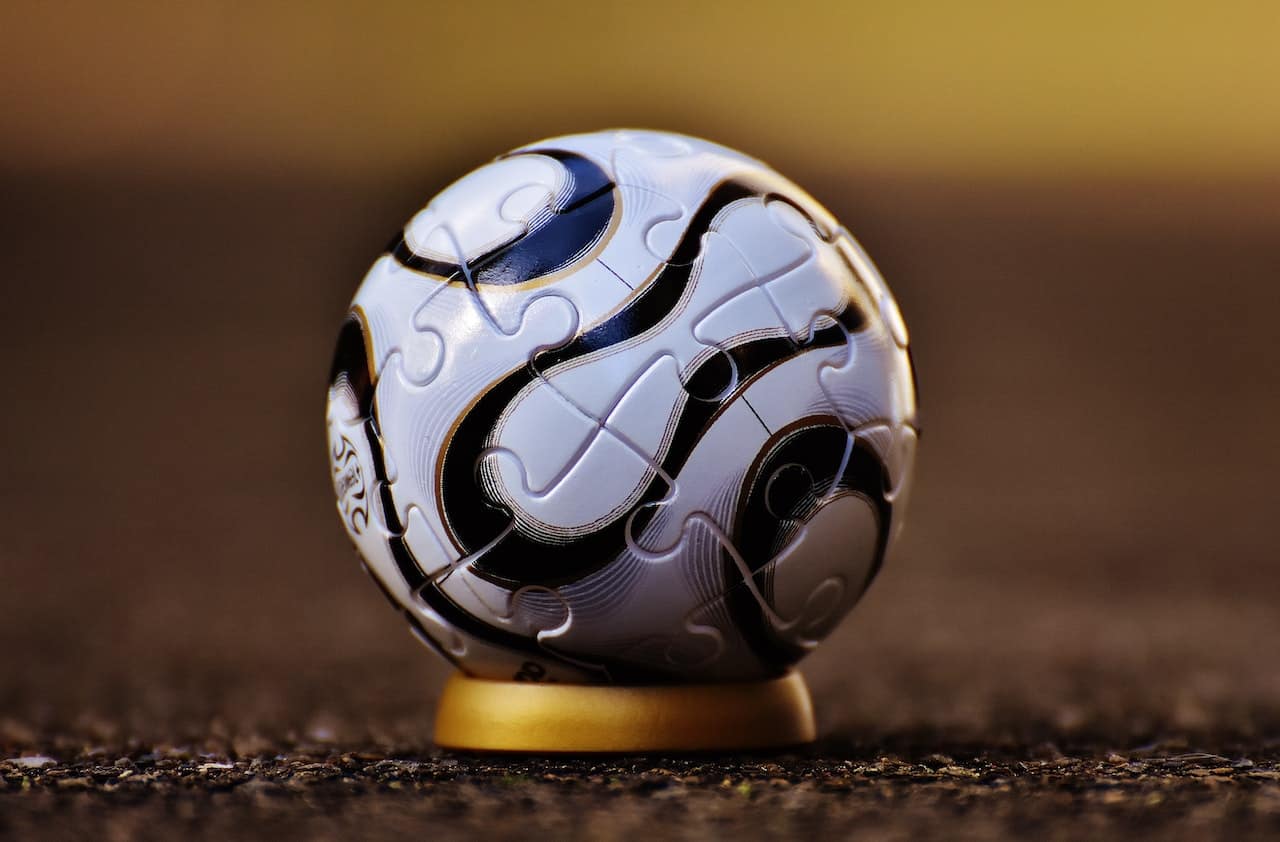
You’d think a soccer ball is just a sphere of synthetic leather and air. For most of us, it’s a $30 purchase at a big-box store or maybe a $160 splurge for the "Official Match Ball" used in the Champions League. But then there’s the Shimansky. This thing isn't for kicking. Honestly, if you tried to volley this, you’d probably shatter your metatarsals and void a small fortune in insurance. We are talking about the most expensive soccer ball in existence, a glittering orb that costs more than a fleet of luxury Ferraris.
It was created by South African jeweler Yair Shimansky. He didn't make it because the world needed a better-performing sports equipment. He made it to celebrate the 2010 FIFA World Cup. At the time, all eyes were on South Africa, and Shimansky wanted a piece of that spotlight.
The price tag? A cool $2.5 million.
That isn't a typo. Two and a half million dollars for a ball that will never touch a blade of grass.
What Makes a Ball Worth Millions?
When we look at the most expensive soccer ball, we aren't talking about aerodynamics or bladder retention. We’re talking about raw materials. Specifically, diamonds. The Shimansky ball is encrusted with 3,500 carats of African diamonds. It took a team of master craftsmen three months to layout and set the stones.
It weighs about 4.8 pounds.
Think about that for a second. A standard FIFA-approved ball weighs between 410 and 450 grams (about one pound). This diamond monstrosity is nearly five times heavier. It’s a paperweight for a billionaire, or maybe a very dangerous doorstop. It features 6,620 white diamonds and 2,640 black diamonds. The black diamonds were used to recreate those iconic pentagonal patches we all associate with the classic Telstar design.
It’s basically a masterpiece of jewelry that happens to be shaped like a ball.
But why do this? It was a marketing masterstroke. Shimansky displayed it in his Cape Town and Johannesburg showrooms during the tournament. It drew in high-net-worth tourists who were in town for the matches. It wasn't about sport; it was about prestige. It was about saying, "We have the best diamonds in the world, and we can put them on anything."
The Runners-Up: When Luxury Brands Get Bored
The Shimansky ball is the undisputed king, but the world of high-end soccer gear has other weird entries. Louis Vuitton, for example, has dipped its toes into this world. Back in 1998, they released a limited-edition ball for the World Cup in France. It wasn't covered in jewels, but it featured their signature monogrammed leather. Today, those sell for thousands on the secondary market.
Then there’s the Hermes ball. It’s made of "Swift" calfskin. It costs around $13,000.
People actually buy these.
I mean, imagine showing up to a Sunday league game with a $13,000 blue leather ball from a French fashion house. You’d get laughed off the pitch. Or tackled immediately. The irony is that these high-end leather balls actually play worse than a $40 Adidas ball. Modern soccer balls are thermally bonded and made of polyurethane. Leather absorbs water. It gets heavy. It loses its shape. So, the most expensive soccer ball options from luxury brands are actually inferior pieces of equipment.
They are status symbols, pure and simple.
The "Match Used" Market
If we move away from jewelry and fashion, the value of a soccer ball shifts to history. This is where things get interesting for real fans. A ball used in a historic match can easily fetch six figures.
Take the "Hand of God" ball. This is the actual ball Diego Maradona used to score his infamous goal against England in 1986. For decades, it was owned by Ali Bin Nasser, the Tunisian referee who missed the handball. In 2022, it went up for auction at Graham Budd Auctions in London.
It sold for roughly $2.4 million (£2 million).
That puts it right up there with the Shimansky diamond ball in terms of value, but for completely different reasons. One is valuable because of what it’s made of; the other is valuable because of what it did. One is a trophy, the other is a relic. If you’re a purist, the Maradona ball is the "real" most expensive ball because its value is derived from the sport itself.
Why Do These Items Even Exist?
It’s easy to get cynical about a $2.5 million diamond ball. It feels like the pinnacle of "doing too much." However, there is a legitimate business case for these items.
- Brand Awareness: Shimansky’s name was mentioned in global news outlets during the biggest sporting event on earth. You can’t buy that kind of PR for $2.5 million.
- Investment: High-end sports memorabilia is currently outperforming the S&P 500 in some sectors. Rare, one-of-a-kind items like the "Hand of God" ball are seen as "alternative assets" by the ultra-wealthy.
- Artistic Expression: At some point, the ball stops being a ball and becomes a sculpture.
We see this in other sports, too. There are diamond-encrusted baseballs and gold-plated golf clubs. It’s a way for the luxury industry to intersect with the massive, tribal passion of sports fans.
The Practical Side: The Most Expensive Ball You Can Actually Kick
Let’s get back to reality. If you aren't a billionaire jeweler or a high-end auction hunter, what is the most expensive soccer ball you can actually use?
Typically, it’s the FIFA World Cup Pro ball. For the 2022 tournament, it was the Adidas Al Rihla. For 2026, we’ll see new iterations. These usually retail for $160 to $170.
Why so much? Research and development.
Companies like Adidas and Nike spend millions on wind tunnel testing. They want to ensure the ball doesn't "knuckle" or "wobble" unpredictably (unless it’s the Jabulani from 2010, which everyone hated because it moved like a frisbee). The $160 price tag covers:
- Speedshell skin: Textured polyurethane to improve grip.
- CTR-Core: A specialized bladder designed for shape retention and air pressure consistency.
- Thermal Bonding: No stitches. Stitches let in water. Thermal bonding keeps the ball the same weight, even in a downpour.
Compared to $2.5 million, $160 sounds like a bargain. But for the average kid in a park, it’s still a luxury.
Buying Guide for High-End Balls
If you’re looking to invest in a high-value soccer ball, whether for display or play, you need to know what you’re looking at. Don't just buy the first "limited edition" thing you see on eBay.
First, check for the "FIFA Quality Pro" stamp. This is the gold standard. It means the ball has passed seven rigorous tests: weight, circumference, sphericity, loss of pressure, water absorption, rebound, and balance. If a ball is expensive but doesn't have this, you’re paying for the brand name, not the performance.
Second, if you’re looking at it as an investment, look for "Match Used" or "Signed" items with a COA (Certificate of Authenticity). PSA/DNA or JSA are the big names here. A ball signed by Messi or Ronaldo is the most expensive soccer ball most of us will ever encounter in person. A ball signed by the 1966 England World Cup squad? That’s a retirement fund.
Third, beware of "Replica" vs. "Official Match Ball" (OMB). Retailers often hide this in the fine print. A "Replica" ball looks identical to the World Cup ball but is machine-stitched and made of cheaper materials. It’s usually $30. The OMB is the $160 version.
The Reality of the Market
The market for these items is weirdly stable. While the Shimansky ball remains the outlier, the trend of luxury fashion houses making sports equipment is growing. Prada has a soccer ball. Versace has one. They are basically "lifestyle accessories" for people who want their home gym or office to look a certain way.
Is it ridiculous? Maybe.
But soccer is the "Beautiful Game," and apparently, some people think that beauty is best expressed through thousands of carats of diamonds or designer leather.
Actionable Insights for Collectors and Enthusiasts:
- Avoid "Jeweled" Gimmicks: Unless you are a jewelry collector, diamond-encrusted balls have very poor resale liquidity compared to historic memorabilia.
- Focus on Provenance: If buying a historic ball, the paperwork is more valuable than the ball itself. Without a paper trail (provenance), the "Hand of God" ball is just an old, deflated piece of leather.
- Play with the Pros: If you want the best experience, buy a "FIFA Quality Pro" ball. It won't cost you $2 million, but it will make your Sunday league shots feel slightly more professional.
- Storage Matters: If you buy a high-end leather ball (like the Hermes), do not store it in a garage. Leather needs temperature control and low humidity, or it will crack and lose its value.
The most expensive soccer ball isn't about the game anymore. It’s about the intersection of sports, wealth, and history. Whether it's a diamond-covered sphere or a muddy ball from a 1980s stadium, these items remind us that soccer is more than just a sport—it’s a global obsession that some people are willing to pay millions to own a piece of.