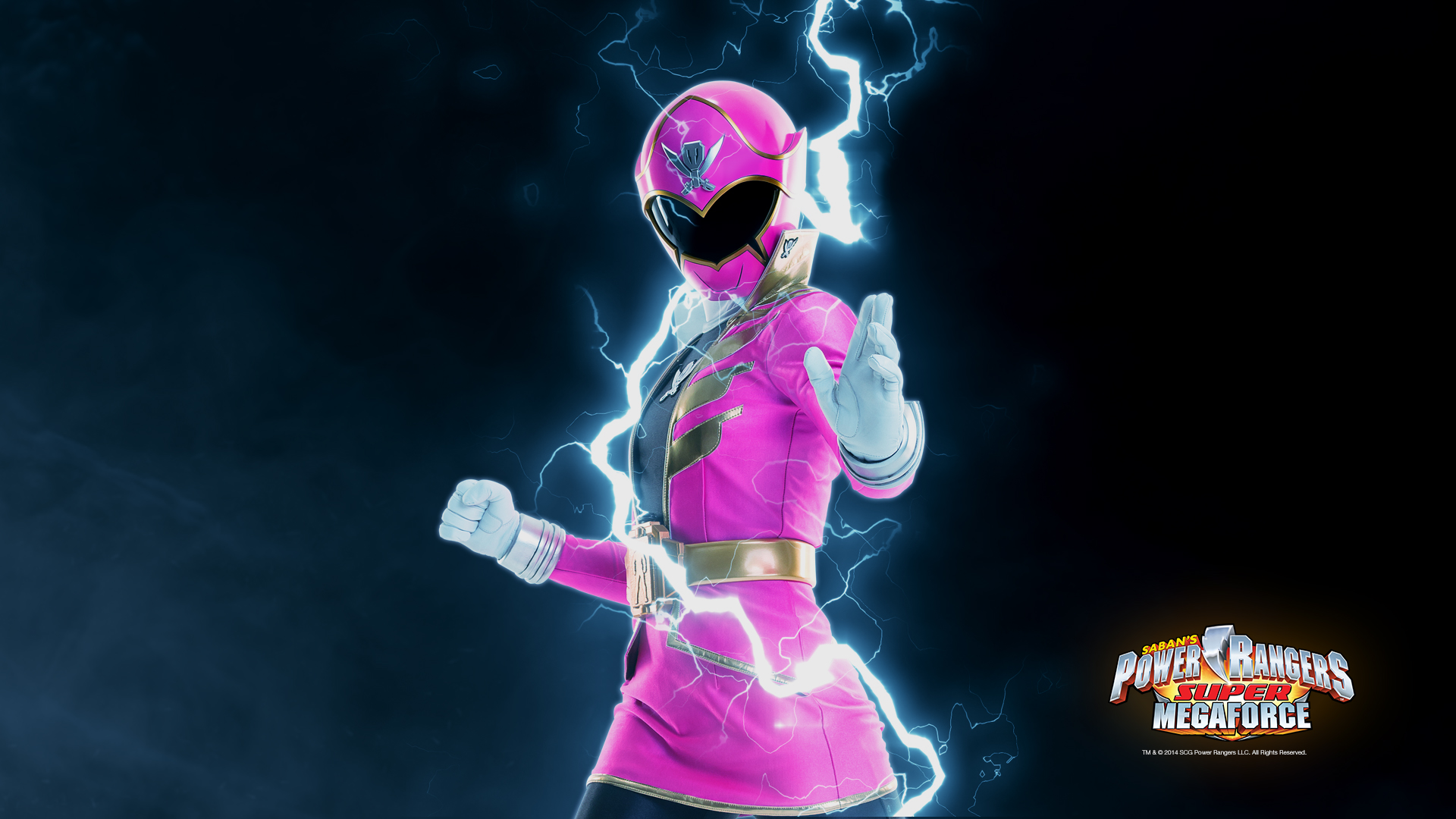
If you grew up in the suburbs during the mid-90s, your playground hierarchy was basically determined by who got to be the Pink Ranger. It wasn’t just a role. It was a lifestyle. You had the Pterodactyl power coin, the gymnastics-heavy fighting style, and that iconic skirted suit that launched a billion-dollar toy empire. Honestly, the pink power ranger 90s phenomenon was a weird, lightning-in-a-bottle moment where a low-budget Japanese import became the absolute center of the cultural universe for kids everywhere.
Amy Jo Johnson didn't just play a character; she defined a demographic. Before Mighty Morphin Power Rangers debuted in August 1993, female superheroes in mainstream kids' TV were often relegated to "the girl one" who stayed back at base. Kimberly Hart changed that. She was a Valley Girl, sure, but she could kick a Putty Patroller’s head off while doing a back handspring. People forget how revolutionary that felt to a seven-year-old in 1994.
The Kimberly Hart Effect and the Birth of a 90s Icon
Let's be real: Amy Jo Johnson’s Kimberly was the heart of the show. While Jason was the stoic leader and Tommy was the cool loner, Kimberly provided the emotional stakes. When she was in trouble, the audience actually felt it. This wasn't accidental. Johnson was a trained gymnast, which allowed the production to use her in ways they couldn't with the other female cast members. They didn't have to hide her behind a stunt double for every single frame.
The pink power ranger 90s look was everywhere. You couldn't walk into a Toys "R" Us without seeing the pink-packaged action figures, the "flip-head" dolls, and the ubiquitous Halloween costumes with the cheap plastic masks that smelled like chemicals. But the appeal went deeper than just toys. Kimberly was relatable. She dealt with her parents' divorce—a big deal for 90s kids' TV—and she had a personality that wasn't just "I like pink." She was sarcastic, vulnerable, and genuinely tough.
Why the Skirt Mattered (and Why It Didn't)
There's always been this debate among superfans about the skirt on the Pink Ranger's suit. In the original Japanese footage from Kyoryu Sentai Zyuranger, the Pterorange (the Pink Ranger's counterpart) had a skirt to denote femininity, whereas the Yellow Ranger did not because that character was actually a man in the Japanese version. This is why the 90s Pink Ranger has a skirt and the Yellow Ranger doesn't—a weird quirk of localization that most of us never questioned as kids. We just thought Trini was a tomboy and Kimberly was "the girly one."
But here’s the thing: Kimberly’s femininity wasn't a weakness. In fact, she often used her "feminine" skills—like her balance and agility from gymnastics—to outmaneuver monsters that the guys couldn't touch. It was a specific kind of 90s girl power that predated the Spice Girls. It told girls they could be "pretty in pink" and still be the one to save the day with a Power Bow.
The Drama Behind the Scenes of the Pink Power Ranger 90s Era
It wasn't all sparks and spandex. Life on the set of Mighty Morphin Power Rangers was notoriously grueling. We’re talking 12-to-15-hour days, non-union pay, and stunts that would make a modern safety coordinator faint.
Amy Jo Johnson has been pretty open in recent years—especially on her YouTube channel and in various interviews—about how little the cast was actually paid during the height of "Power Ranger Mania." While the show was raking in billions for Saban Entertainment, the actors were making roughly $600 a week. No residuals. No royalties. Just the paycheck and the fame.
"We were literally the most famous people in the world for a minute, and I was still worried about paying rent," Johnson has noted in various retrospective panels.
Then there was the physical toll. The suits were hot. The helmets were hard to breathe in. During the filming of the 1995 movie, the cast had to wear heavy, high-tech suits that weighed upwards of 40 pounds. It was a far cry from the spandex they wore on TV. Yet, despite the sweat and the low pay, that 90s Pink Ranger energy remained consistent. They showed up, they did the work, and they became legends to an entire generation of millennials.
The Kat Hillard Transition
Eventually, all good things end. In 1995, Amy Jo Johnson decided it was time to move on to other projects, leading to the introduction of Katherine "Kat" Hillard, played by Catherine Sutherland.
Kat’s introduction was... intense. She started as a spy for Rita Repulsa who could turn into a literal cat. Talk about a 90s fever dream. While Kat eventually won over the fanbase, there was a massive segment of the audience that felt like Kimberly was irreplaceable. It was the first time many kids experienced "cast change grief." But Kat brought a different vibe—more mature, perhaps a bit more focused—and she carried the pink mantle through Zeo and Turbo, proving the Pink Ranger wasn't just one person, but a symbol.
The Lasting Impact on 90s Fashion and Culture
The pink power ranger 90s aesthetic didn't stay on the screen. It bled into everything. You saw it in the "scrunchie and spandex" gym culture and the rise of "athleisure" before that was even a word. Kimberly’s off-duty outfits—the high-waisted denim, the floral vests, the chokers—are basically a mood board for every Gen Z thrift shopper today.
- The Power Bow: Every kid wanted it. It was the coolest weapon because it wasn't just a sword or a blaster; it required precision.
- The Crane Zord: When the show transitioned into the Ninja saga, the Pink Ranger got the Crane. It was sleek, white, and pink, and it was usually the head of the Megazord.
- The Morpher: Holding that plastic grey box and yelling "Pterodactyl!" was a rite of passage.
The 90s was a decade of extremes. You had the grit of grunge and the neon pop of the Power Rangers. Kimberly Hart sat right in the middle. She was "wholesome" enough for parents but "cool" enough for kids. She was the gateway drug to action movies for a lot of girls who weren't interested in the hyper-masculine stuff like G.I. Joe.
What the Pink Ranger Taught Us About Leadership
While Jason and Tommy got the "Leader" and "Six Ranger" spotlight, Kimberly often led through empathy. In the episode "Beauty and the Beast," we see her internal strength. In "The Bloom of Doom," we see her deal with jealousy and insecurity—real human emotions that made the fantastical setting feel grounded.
She wasn't a perfect hero. She made mistakes. She got tired. She wanted to go to the Pan Global Games and live a normal life. That eventually became her exit strategy, and it was a surprisingly mature way to write out a character. She didn't die or get kidnapped; she chose her future. For 90s kids, that was a powerful message: even a superhero can choose a different path if it makes them happy.
The Darker Side of the Fandom
We can't talk about the Pink Ranger without acknowledging the weird pressure of being a 90s heartthrob. Amy Jo Johnson was the "crush" for millions. That's a heavy burden for a young actress. The 90s weren't exactly a time of nuanced discourse regarding female celebrities. She was often objectified, yet she managed to maintain a level of grace and professionalism that kept her career moving forward into shows like Felicity and Flashpoint.
She paved the way. Without Kimberly, would we have had the same level of investment in characters like Buffy or Sydney Bristow? Maybe. But Kimberly was the first one most of us saw. She was the prototype.
Actionable Takeaways: How to Relive the Pink Ranger Glory
If you’re feeling the itch to revisit this specific slice of 90s nostalgia, you don't need a time machine. The legacy of the Pink Ranger is more accessible now than ever.
- Watch the "Pass the Torch" Episodes: Go back and watch "A Different Shade of Pink." It’s a three-part epic that handles Kimberly’s departure and Kat’s arrival. It’s peak 90s melodrama and surprisingly well-acted for a show about people in rubber monster suits.
- Check out the Boom! Studios Comics: If you want a more adult, sophisticated take on the pink power ranger 90s era, the comics are incredible. They fill in the gaps of the show’s lore and give Kimberly a much deeper, more complex arc. Specifically, look for Mighty Morphin Power Rangers: Pink, a limited series that focuses entirely on her life after leaving the team.
- Support the Original Cast: Many of the 90s Rangers, including Amy Jo Johnson and Catherine Sutherland, are active on social media and at conventions. Johnson has also turned into an accomplished director and screenwriter. Following their current work is a great way to respect the people behind the masks.
- The Toy Market: If you're looking to collect, be prepared. Mint-condition 90s Pink Ranger toys are expensive. However, the "Lightning Collection" by Hasbro offers modern, highly articulated figures that look way better than the ones we had in 1994 for a fraction of the vintage price.
The Pink Ranger wasn't just a color. She was the proof that you could be feminine and formidable at the same time. Whether she was piloting a Pterodactyl or just hanging out at the Juice Bar, Kimberly Hart defined an era. She was the hero we didn't know we needed, and the reason why, thirty years later, we still get a little bit of a thrill when we hear that iconic guitar riff and the shout of "It's Morphin' Time!"
The impact of the 90s Pink Ranger remains a benchmark for how to build a female lead in an ensemble cast. It wasn't about being "one of the boys." It was about bringing something unique to the table that the boys couldn't—a blend of grace, emotional intelligence, and a mean high kick. That's a legacy that doesn't fade, no matter how many times the franchise reboots.