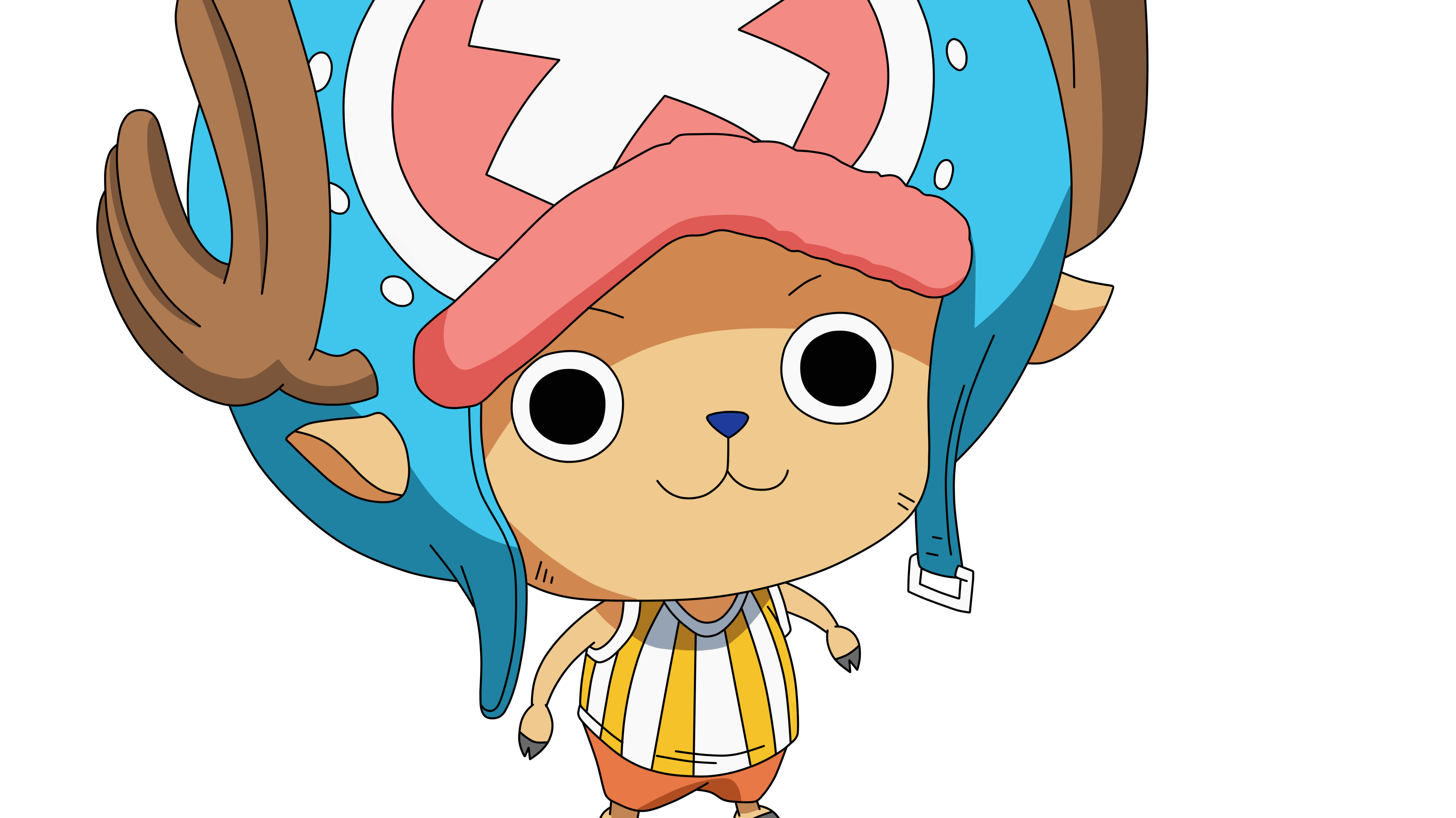
You know that feeling when a song gets stuck in your head and you can’t tell if it’s genuinely good or just aggressively catchy? That is the exact energy of the Tony Tony Chopper song. Most people who aren’t deep into the One Piece fandom probably think it’s just a random jingle for a mascot. They’re wrong. It’s a whole vibe. It captures the weird, tragic, yet oddly hopeful spirit of a reindeer who ate a Devil Fruit and became a doctor.
Chopper is the heart of the Straw Hat Pirates. He’s small. He’s fluffy. He’s also a total powerhouse when he eats a Rumble Ball. But the music associated with him—especially the iconic "Chopper Man" themes and the various character songs voiced by the legendary Ikue Otani—does something special. It bridges the gap between the show’s goofy antics and its deep, emotional core.
What is the Tony Tony Chopper Song, anyway?
When fans talk about the Tony Tony Chopper song, they’re usually referring to one of two things. First, there’s the "Dr. Tony Tony Chopper" character song. It’s bright, upbeat, and sounds like something straight out of a classic Saturday morning cartoon. Ikue Otani—the same voice behind Pikachu, by the way—brings this incredible high-pitched energy that makes it impossible not to smile.
Then you have the "Chopper Man" theme. This one is a bit more niche but arguably more fun. It comes from the "Chopper Man" omake (extra) episodes where Chopper plays a caped superhero. It’s a parody of old-school Japanese "tokusatsu" shows like Kamen Rider or Super Sentai. The lyrics are simple. They celebrate his bravery. They mention his blue nose. It’s pure, unadulterated joy.
Honestly, it’s a masterclass in character branding. Eiichiro Oda, the creator of One Piece, knew exactly what he was doing when he designed Chopper. The music just seals the deal. It tells you everything you need to know: he’s a doctor, he’s a monster (in his own head, at least), and he’s a friend.
The Ikue Otani Factor
You can’t talk about this music without talking about the voice. Ikue Otani is a titan in the industry. Her ability to pivot from a squeaky, adorable laugh to a gut-wrenching sob is why Chopper works as a character. In the songs, she utilizes a specific rhythmic cadence. It’s almost like a nursery rhyme but with a bit more "shonen" edge.
Think about the "Boku wa Doctor" (I am a Doctor) track. It’s literal. He’s singing about medicine. He’s singing about helping people. But because it’s Otani, it feels like a personal manifesto. It’s not just a song for a soundtrack; it’s a window into Chopper’s soul. He spent so much of his life being called a monster. The song is his way of reclaiming his identity.
Why the Fandom Obsesses Over These Tracks
TikTok. That’s a big part of it lately. The Tony Tony Chopper song has seen various resurgences on social media because the "cute factor" is off the charts. People use the audio for pet videos, cosplay transitions, or just to express a general sense of "tiny but mighty."
But beyond the memes, there’s a layer of nostalgia. For fans who have been following One Piece for twenty-plus years, these songs represent the "Drum Island" arc. That was a turning point for the series. It was the first time many viewers realized that One Piece wasn't just about fights—it was about trauma, found family, and the legacy we leave behind.
When you hear that upbeat melody, you’re subconsciously reminded of Dr. Hiriluk. You remember the cherry blossoms in the snow. It’s a "happy" song that carries a lot of weight. That contrast is a hallmark of Oda’s storytelling.
Comparing the Different Versions
Not all Chopper songs are created equal. You’ve got the upbeat pop tracks, but you also have the "Family" song where the whole crew joins in. Chopper’s verse in "Family" is usually the standout because it’s so distinct.
- Dr. Tony Tony Chopper: The primary character theme.
- Boku wa Doctor: Focuses on his medical skills.
- Twinkle Twinkle: A softer, more lullaby-esque track.
- Chopper Man Theme: The superhero parody.
Each one serves a different purpose in the One Piece ecosystem. The superhero theme is for laughs. The "Doctor" theme is for character development. The lullabies are for the merch-heavy, "kawaii" side of the brand.
The Evolution of Chopper’s Musical Identity
As One Piece moved into the New World (the second half of the series), Chopper’s look changed. He got a new hat. He became even more "mascot-like" in his design. Consequently, the music shifted slightly. It became more polished.
Some older fans miss the slightly more "raw" feel of the early 2000s tracks. There was a certain lo-fi charm to the original Tony Tony Chopper song recordings. They felt like they belonged in a messy, adventurous world. The newer stuff is great—don't get me wrong—but it’s definitely more "produced."
It’s an interesting reflection of how anime as a whole has changed. We went from hand-painted cells and analog recordings to digital perfection. Chopper’s music followed that exact trajectory.
Why It Sticks in Your Brain
There’s some actual science here. Or at least, musical theory. These songs use "earworm" tactics. Simple intervals. Repetitive choruses. A tempo that mimics a brisk walking pace.
Specifically, the use of the "pentatonic scale" in some of these melodies makes them feel universally familiar. It’s the same reason why folk songs and children’s rhymes work across cultures. You don’t need to speak Japanese to "get" the vibe of a Chopper song. You just feel the bounce.
Cultural Impact in Japan vs. the West
In Japan, Chopper is a literal icon. You see him on everything from water bottles to construction signs. The Tony Tony Chopper song is played in "Mugiwara Stores" (official One Piece shops) on a loop. It’s part of the ambient noise of Japanese pop culture.
In the West, it’s a bit different. We mostly encounter it through the anime or through curated playlists on Spotify and YouTube. For Western fans, the song is a "deep cut." It’s a badge of honor. If you know the lyrics to the Chopper Man theme, you’re not a casual viewer. You’re in deep.
It also serves as a gateway. A lot of people find the music through "Kawaii Core" playlists and then get curious about the show. It’s effective marketing, even if it wasn't originally intended to be a global viral hit.
The Lyrics: More Than Just Fluff
If you actually look at the translated lyrics, they’re surprisingly grounded. They talk about "reindeer with a blue nose" and "eating the Hito Hito no Mi." It’s literal storytelling.
But there are lines about "not giving up" and "curing the world’s diseases." This isn't just fluffy pop. It’s a reflection of Chopper’s dream. In the world of One Piece, a "dream" is the most powerful thing a person can have. By singing his dream, Chopper is asserting his place as a pirate.
How to Properly Experience Chopper’s Discography
If you want to dive into the world of the Tony Tony Chopper song, don't just stick to the main theme. You have to look for the "Nippon Judan! 47 Cruise CD" series. This was a massive project where One Piece characters "visited" different prefectures in Japan and sang songs inspired by those locations.
Chopper’s contribution to this series is fantastic. It’s a bit more experimental. It shows that the character (and the voice actress) has range. It’s not just "squeak squeak, I’m a doctor." It’s genuine music.
Common Misconceptions
People often think there’s only one "Chopper song." There are dozens. Between the character singles, the group numbers, and the "Chopper Man" spin-offs, there is a lot of material.
Another misconception? That these songs are only for kids. While they are definitely kid-friendly, the production quality is top-tier. These are professional musicians, composers, and one of the best voice actors in history. The arrangements are often complex, featuring live brass and percussion.
Actionable Insights for Fans and Collectors
If you're looking to integrate a bit of this energy into your life or just want to know where to find the best versions, here’s the move.
First, check out the One Piece Character Song Album: Red. It has some of the best high-fidelity versions of the early tracks. If you’re a vinyl collector, keep an eye out for the "One Piece 25th Anniversary" releases; they’ve been trickling out some character-themed sets that are gorgeous.
Second, if you’re a content creator, the "Chopper Man" instrumental is a goldmine. It’s high-energy, royalty-free in many contexts (check your local copyright laws, obviously), and instantly recognizable to anime fans.
Finally, don't ignore the live performances. Searching for "Ikue Otani live" on video platforms will show you just how much effort goes into these songs. Watching a grown woman embody a tiny reindeer doctor on stage is a testament to the power of the medium.
To truly appreciate the Tony Tony Chopper song, you have to see it as part of the larger One Piece tapestry. It’s a small, bright thread in a story that is often dark and violent. It reminds us why the crew is fighting in the first place—to protect the kind of innocence and joy that Chopper represents.
Go listen to "Boku wa Doctor." Pay attention to the bridge. Notice how the music swells when he sings about the sea. It’s not just a mascot jingle. It’s the sound of a small creature finding his place in a massive, terrifying world. And honestly? We can all relate to that.
Next Steps for the Curious
- Listen to the "Nippon Judan" tracks: Specifically the ones where Chopper "visits" Toyama and Saga. They're musically distinct from his standard themes.
- Watch the "Chopper Man" omake: It provides the visual context for the superhero theme, which makes it ten times funnier.
- Follow Ikue Otani's work: Beyond Chopper, her vocal range in various soundtracks is a masterclass in "character singing."
- Check out fan covers: Some metal and jazz covers of the Chopper themes on YouTube are surprisingly sophisticated and show how well the melodies hold up under different genres.