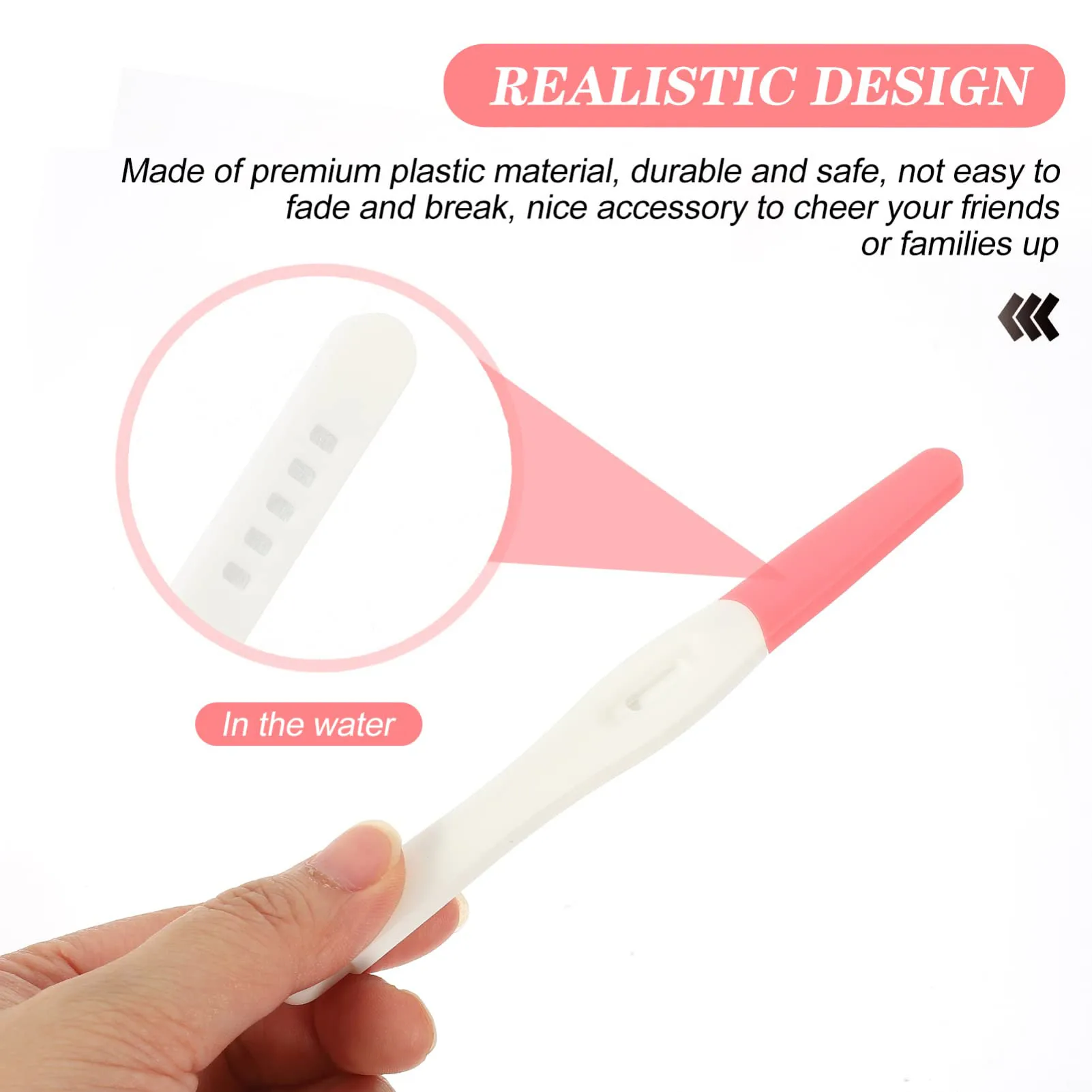
You've seen them. Maybe it was a blurry photo on a group chat or a high-def shot on your Instagram feed. A plastic stick with two unmistakable pink lines. For a split second, your heart stops. Then comes the caption: "Just kidding!" or "Gotcha!" People use pregnancy test prank pictures for all sorts of reasons—April Fools' Day, testing a partner's loyalty, or just trying to get a rise out of their parents. But honestly? It’s rarely as funny as the prankster thinks it’s going to be.
Fake news is everywhere, but fake life milestones feel different. They're personal. They're visceral.
Let's get real for a second. The internet is flooded with these images. You can find them on stock photo sites, Pinterest boards dedicated to "prank inspo," and even shady Etsy shops selling "positive" tests. But there’s a massive gap between a harmless joke and a social disaster. People often underestimate the psychological weight of those two little lines.
Why Pregnancy Test Prank Pictures Are Everywhere Now
Social media thrives on high-stakes emotion. Nothing gets engagement quite like a pregnancy announcement. It’s the ultimate "thumb-stopper." When someone posts pregnancy test prank pictures, they are essentially hacking the algorithm of human empathy. We are biologically wired to react to the news of a new life.
It's a rush. The notifications start rolling in. "Oh my god, congrats!" "Wait, really??" The prankster gets a massive hit of dopamine. But that high is usually short-lived. Once the "just kidding" post goes up, the mood shifts. Fast.
The availability of these images makes it way too easy. You don’t even need to be good at Photoshop anymore. A quick Google search for "positive pregnancy test" yields thousands of high-resolution results. Some people take it a step further by using apps that overlay "realistic" shadows or hands onto the stick to make it look like they’re actually holding it in their bathroom.
The Evolution of the Fake Positive
Back in the day, you had to draw a second line with a pink marker. It looked terrible. Now? We have digital tests that display the word "Pregnant" in a clear, LCD font. Replicating that digitally is child's play for anyone with a smartphone.
There's also a secondary market for this stuff. Believe it or not, people actually sell used, positive tests on platforms like Craigslist or specialized Facebook groups. It sounds gross because it is. But for some, the "authenticity" of a physical object is worth the price. They’ll buy a real positive test to take their own pregnancy test prank pictures, ensuring the lighting and background are perfectly unique to their own home.
The Psychology of the Prank
Why do it? Usually, it's about power or attention. In a relationship, it might be a misguided "test" to see how a partner reacts. "If he's happy, he stays. If he panics, he's not the one." This is, to put it bluntly, a terrible way to manage a relationship. It builds a foundation of distrust.
Psychologists often point out that "prank culture" is a way for people to vent hidden anxieties. But pregnancy isn't a neutral topic. For many, it's a sensitive subject involving years of struggle, loss, or intense desire. When you use pregnancy test prank pictures, you aren't just joking with your target; you're broadcasting a joke to everyone who sees it, including those dealing with infertility or miscarriage.
When the Joke Stops Being Funny
I remember a story from a few years ago—it went viral on Reddit’s "Am I The Asshole" sub. A woman used a fake test on her husband for April Fools'. He was overjoyed. He started crying. He called his parents. When she told him it was a prank, the damage was done. He didn't find it funny. His parents didn't find it funny. The marriage ended up in counseling.
This isn't an isolated incident. The emotional "rubber banding" from extreme joy to "just kidding" creates a sense of betrayal that's hard to shake.
How to Spot Fake Pregnancy Test Prank Pictures
If you're on the receiving end, your instinct is to believe it. But if something feels off, it probably is. There are technical "tells" in these photos that give them away.
- The Lighting Inconsistency: Look at the shadows on the test versus the shadows on the hand or the counter. If the test looks brighter than its surroundings, it’s probably a digital overlay.
- The Resolution Gap: Often, the "test" part of the image is slightly blurrier or more pixelated than the person's hand. This happens when a low-res stock photo is pasted onto a high-res phone photo.
- Generic Backgrounds: Is the test lying on a perfectly white, marble countertop that doesn't look like your friend's bathroom? Red flag.
- The "Two-Line" Perfection: Real pregnancy tests often have faint lines, "evaporation lines," or slightly wonky coloring. If the lines are two perfectly identical, crisp pink bars, it might be a digital edit.
Most people don't look that closely. They see the lines and react. That's what the prankster is counting on.
The Ethical Minefield
We have to talk about the "Read the Room" factor. In the last decade, there’s been a massive push from the infertility community to stop using pregnancy test prank pictures.
According to data from the CDC and organizations like RESOLVE (The National Infertility Association), about 1 in 6 people globally experience infertility. When you post a fake positive, you’re essentially mocking a reality that many people are desperately praying for. It’s not just "sensitive" people being "offended." It’s about a basic lack of empathy for a very common struggle.
The Impact on Online Communities
Go into any "TTC" (Trying To Conceive) forum on Reddit or BabyCenter. These spaces are filled with people analyzing every "squinter" (a test with a line so faint you have to squint to see it). When pregnancy test prank pictures leak into these spaces, or even just appear on the general feeds of people in these groups, it feels like a slap in the face.
It’s the casualness of the lie that hurts. For someone who has spent thousands on IVF or suffered through multiple losses, seeing someone treat a positive test as a disposable punchline is incredibly painful.
Legal and Workplace Consequences
Can you get fired for a pregnancy prank? Kinda. Maybe. If you send pregnancy test prank pictures to a boss to get out of work or to "test" their reaction to a potential maternity leave, you're entering "fraud" territory.
While pregnancy is a protected class under the Pregnancy Discrimination Act (PDA) in the U.S., that protection is based on actual pregnancy or related medical conditions. If you lie about it for a "joke," you’re likely violating company conduct policies regarding honesty and integrity. It’s a fast way to lose your professional reputation.
The Better Way to Prank
Look, pranks are fine. But the best pranks are the ones where the "victim" laughs too. Putting a plastic spider in a desk drawer? Classic. Swapping the salt and sugar? Annoying, but harmless.
Pregnancy is a life-altering medical event. It's not a prop.
If you're looking for engagement, there are better ways. Share a weird food combo. Post a "hot take" about a popular movie. Leave the pregnancy test prank pictures in the trash where they belong.
What to Do if You Already Posted One
If you've posted a prank and realized it's going south, the best move is an immediate, sincere apology. Don't delete it and pretend it didn't happen—that just makes people feel gaslit.
- Acknowledge the mistake: "I thought this would be a lighthearted joke, but I realize now it was insensitive."
- Take it down: Once the apology is made, remove the post to stop the spread.
- Reach out personally: If you sent it to a specific person (like a partner or parent), talk to them face-to-face.
Moving Forward: Genuine Connection Over Clout
The internet has turned our biggest life moments into currency. We trade "big news" for likes. But the most valuable things in life aren't for the "gram." They're the quiet, real moments.
If you’re tempted to use pregnancy test prank pictures, ask yourself what you’re actually looking for. Is it a laugh? Or is it a way to see if people still care about you? If it’s the latter, there are much healthier ways to find that out.
Actionable Insights for Digital Literacy
- Verify before reacting: If a friend who isn't usually a prankster posts something suspicious, send a private message first. "Hey, is this for real? I'm so excited if it is!"
- Reverse Image Search: If you suspect a photo is a fake, save it and run it through Google Lens or TinEye. You’ll often find the original stock photo in seconds.
- Educate, don't just berate: If you see someone post a prank, a gentle private message about why it might be hurtful is often more effective than a public call-out. Many people truly don't realize the impact on the infertility community until someone explains it to them.
- Check the date: April 1st is the danger zone. If you see a pregnancy announcement on that day, assume it's a prank until proven otherwise. It’s the safest way to protect your own emotions.
In the end, authenticity wins. The real pregnancy announcements—the ones with the messy bathrooms, the shaky hands, and the genuine tears—are the ones that actually matter. Those are the pictures worth sharing. Everything else is just noise.