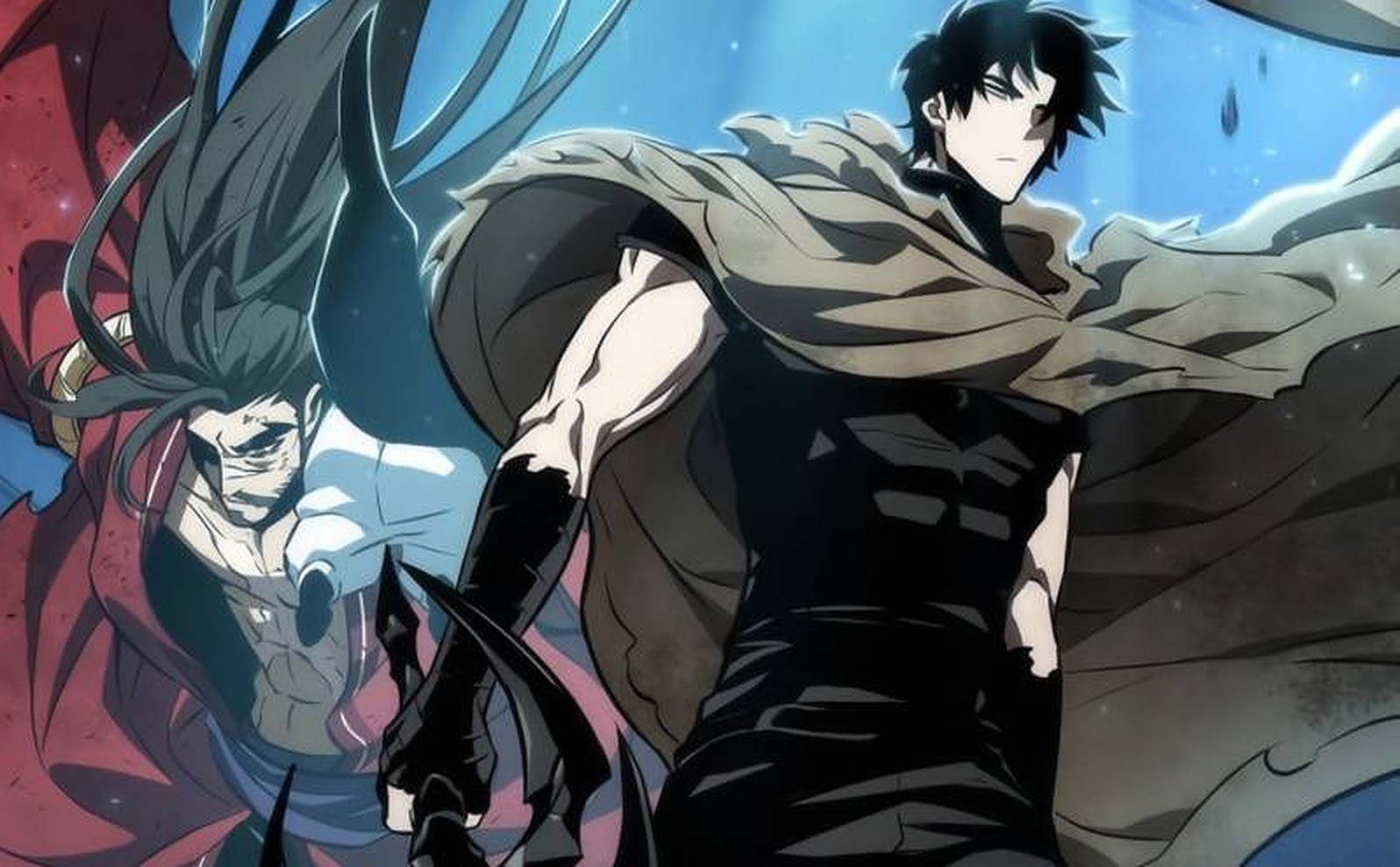
Most readers dive into The World After the Fall expecting another generic tower-climbing power fantasy. They're usually wrong. This isn't just about a guy getting stronger to kill monsters. It is a dense, often philosophical deconstruction of what happens to the human psyche when reality itself is revealed to be a lie. While many webtoons and web novels focus on the loot or the levels, the The World After the Fall characters are defined by their existential trauma and their refusal to "return" to a comfortable illusion.
Jaehwan, our protagonist, is basically the personification of spite. He’s not a hero in the traditional sense. He's a man who spent hundreds of years thrusting a spear into the void because he refused to accept a "Return Stone" that would wipe his memory and take him back to a peaceful, fake past.
Who is Jaehwan? The Man Who Refused to Go Back
Jaehwan is the core of everything. In the beginning, he’s part of a massive group of "Walkers" summoned to the Tower of Nightmares. But here's the kicker: the Tower offers everyone a way out. A Return Stone. Use it, and you go back to Earth before the apocalypse started. Almost everyone takes it. They choose the blue pill.
Jaehwan stays.
He stays for decades. Then centuries.
Because he stays, his perspective on the world shifts entirely. He develops "The World of the Unique," a power that isn't about magic or stats but about individual perception. He realizes that the "System" everyone else follows is actually a cage designed to farm human souls. This makes him incredibly difficult to like at first. He is cold. He is blunt. He is obsessed with his "Stab" technique. But honestly, if you spent hundreds of years alone in a tower where everyone you knew abandoned you for a dream, you’d probably be a bit intense too.
His growth isn't about learning to be "nice." It's about him finding other The World After the Fall characters who also refuse to be part of the system’s machinery.
The Supporting Cast: More Than Just Sidekicks
In many Shonen-style stories, the side characters exist just to cheer for the lead. Here, they represent different ways of surviving a broken universe.
Mino: The Witch of the Nightmare Tower
Mino is usually the first character people get attached to after the prologue. She’s savvy. She knows how to navigate the "Chaos" (the realm where people go after they die in the Tower). Unlike Jaehwan, who wants to destroy the system, Mino has spent her life trying to survive within it. She’s a "Non-Adapter." Her dynamic with Jaehwan is fascinating because she treats him like a lunatic—which, to be fair, he kind of is. She provides the grounded, human perspective that the story desperately needs when it starts talking about higher dimensions and soul cultivation.
Cayman: The Old Man of the Chaos
Cayman represents the tragedy of the setting. He’s an old warrior who has seen everything. He's been in Chaos for a long time. When he meets Jaehwan, he’s skeptical. Why wouldn’t he be? He has seen "Monarchs" and "Gods" treat humans like cattle for eons. Cayman serves as the mentor figure who eventually realizes he’s the one who needs to learn from the younger generation’s sheer, stubborn will.
The Monarchs and the Gods
We can't talk about The World After the Fall characters without mentioning the antagonists. They aren't just big monsters. They are often former humans or beings who have ascended by consuming others. They represent the ultimate end-point of the System: total stagnation. They have "Worlds" of their own, but their worlds are stagnant, built on the rules of the Great Lands. They are the perfect foil to Jaehwan’s "Unique World," which is constantly evolving through his refusal to follow anyone else's rules.
Why the Characters Feel "Off" Compared to Solo Leveling
Since this series is by the same studio (Redice) and author (Sing Shong) as Omniscient Reader’s Viewpoint, people often compare them. But the characters in The World After the Fall feel way more alien.
There's a reason for that.
The story is a metaphor for societal pressure. The Tower is the "path" we are told to follow—school, job, retirement. The Return Stone is the temptation to live in a nostalgic lie. Jaehwan is the person who rejects the entire structure. This makes the The World After the Fall characters feel less like "people" and more like "philosophical stances."
If you're looking for a warm, fuzzy found-family story, you’re in the wrong place. This is a story about the lonely road of being an individual in a world that wants you to be a number.
The Evolution of "The World of the Unique"
As the story progresses, the characters' powers become reflections of their internal selves. This is a brilliant narrative device. In most series, a power is just a "fireball" or "super strength." Here, Jaehwan’s "Stab" is a literal manifestation of his desire to pierce through the lies of the universe.
When he meets the Masters of the Chaos, like the Master of the Palace or the various Monarchs, their battles are essentially arguments about how one should live.
- Does one submit to the System for safety?
- Does one exploit the System for power?
- Or does one destroy the System to find the truth?
Every major character represents one of these questions. Even the "villains" have a logical reason for their existence, which makes the stakes feel much higher than just "save the world." They are fighting for the right to define what "the world" even is.
Understanding the "Cultivation" Aspect
Later in the series, the terminology shifts. We start hearing about "Awakeners" and "Adapters."
- Adapters: These are people who follow the system. They level up, they use skills provided by the tower, and they are ultimately limited by the tower's ceiling. They are the "normies" of this apocalypse.
- Awakeners: These are the rare few, like Jaehwan, who realize the system is a sham. They don't use "skills"; they use their own will to manifest effects.
This distinction is crucial for understanding why Jaehwan interacts with other characters the way he does. He has zero respect for Adapters, not because they are weak, but because they have given up their agency. He only respects those who have "awakened" to the reality of their situation.
The Loneliness of the "Only Survivor"
One thing that often gets overlooked is the psychological toll on Jaehwan. He is effectively thousands of years old by the time he leaves the tower. His perception of time is warped. When he interacts with "normal" people in the Chaos, there is a profound disconnect.
This is where the writing shines.
It doesn't gloss over his trauma. He isn't a cool, edgy protagonist because it looks good; he's edgy because he is fundamentally broken by his own persistence. The other characters serve as anchors, slowly pulling him back toward a version of humanity that isn't just about survival and stabbing.
Actionable Insights for Readers and Fans
If you're trying to keep track of everyone or just starting the series, here is how to get the most out of the character arcs:
- Pay attention to the "World" descriptions. When a character reveals their "Unique World," it tells you everything about their backstory and their trauma. It’s not just fluff; it's character development.
- Don't expect traditional romance. While there are hints of feelings between characters like Jaehwan and Mino, the story prioritizes existential themes over shipping.
- Look for the "ORV" connections. While they are separate stories, the thematic links regarding "The System" and "Stories" are very similar. If you liked Dokja from Omniscient Reader, you'll see Jaehwan as his darker, more aggressive cousin.
- Read the Novel if the Manhwa feels too fast. The Manhwa (webtoon) is gorgeous, but the internal monologues of the The World After the Fall characters are much deeper in the original web novel. It explains why Jaehwan is so obsessed with his specific spear movements.
The world of this story is bleak, but the characters provide a spark of rebellion that is rare in the genre. They aren't just trying to beat a game; they are trying to prove that their lives have meaning outside of the game's rules. That's a powerful message, even if it's wrapped in a story about a guy who really, really likes stabbing things with a spear.
To truly understand the cast, you have to look past the flashy fights. Look at what they lost to get where they are. Look at the friends who used the Return Stone and disappeared. That's where the real heart of the story lives. It’s a story about the people who stayed when everyone else ran away.