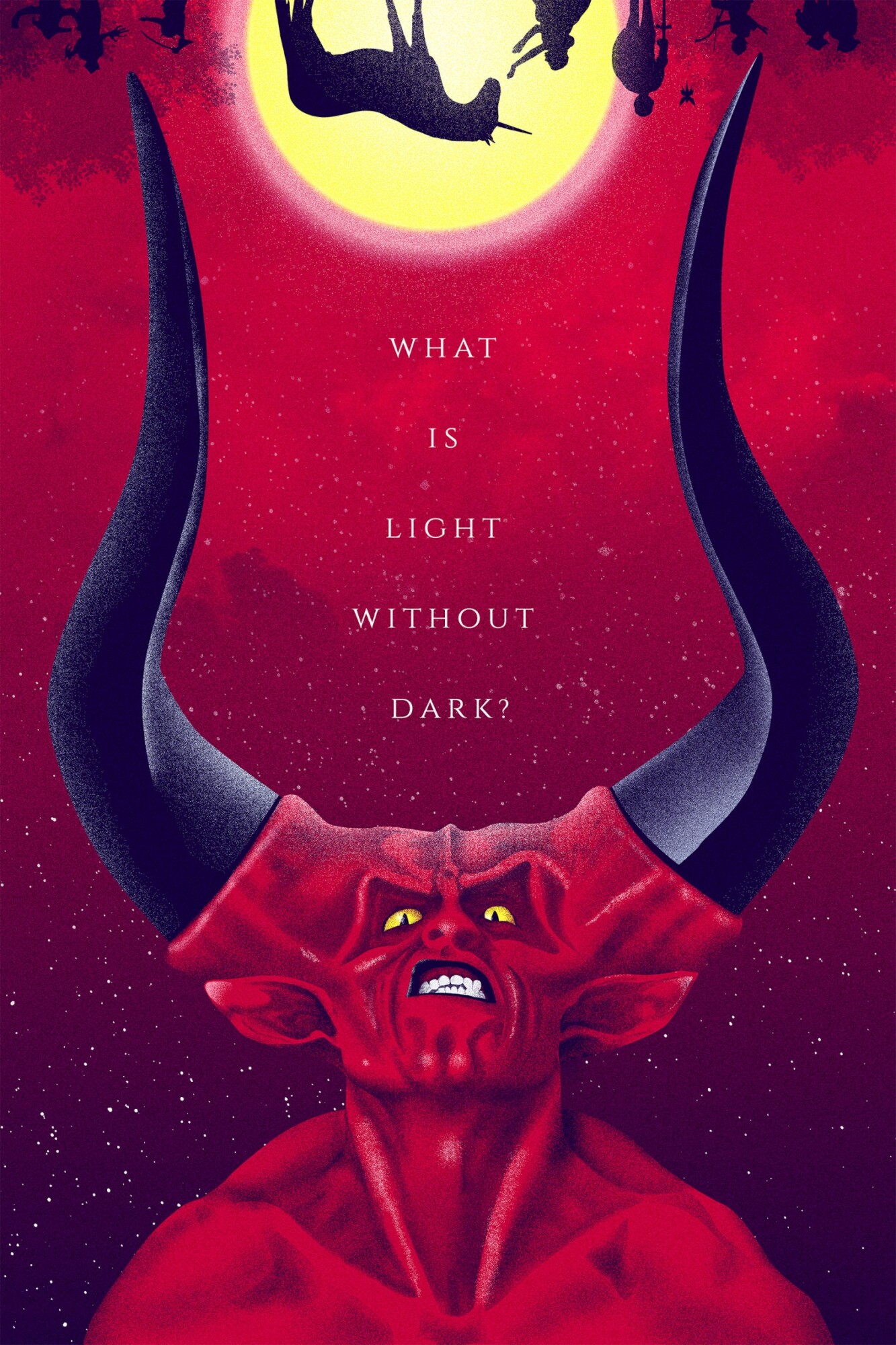
Ridley Scott is a master of atmosphere, but in 1985, he created something that surpassed even the Xenomorph in terms of pure, visceral design. The Lord of Darkness from Legend isn't just a movie villain. He is the definitive cinematic incarnation of the Devil. Honestly, if you grew up in the eighties, this guy probably occupied a significant chunk of your nightmares.
He's massive.
The horns alone look like they could tip a bus. But it isn't just the physical scale that makes him work; it’s the weird, seductive, and terrifying performance by Tim Curry that anchors the whole movie. While Legend had a troubled production—different soundtracks for different continents, a set that literally burned to the ground at Pinewood Studios—the one thing everyone agrees on is that Darkness is a masterpiece of practical effects.
The Physicality of Pure Evil
Rob Bottin. That’s the name you need to know. He’s the genius behind the effects in The Thing, and he brought that same obsessive energy to creating the Lord of Darkness from Legend.
Curry had to sit in a chair for five and a half hours every single day just to get into the suit. Can you imagine that? You’re encased in foam latex, your head is weighed down by massive fiberglass horns, and you have to act through layers of glue. Most actors would just stand there and look scary. Curry didn't do that. He used his eyes. He used that booming, theatrical voice. He turned a mountain of makeup into a character with desires, insecurities, and a very specific, twisted sense of humor.
The suit was so heavy that Curry had to spend his breaks sitting in a specialized harness or submerged in a tank of water just to take the weight off his back. It was a brutal shoot. There’s a specific shot where Darkness emerges from a mirror, and the sheer presence of the suit makes the rest of the high-fantasy set look like a toy store. It's a reminder of what we lost when Hollywood pivoted so hard toward CGI. There’s a weight to Darkness—a literal, physical gravity—that a digital render just can't replicate.
Why the Lord of Darkness from Legend Isn't Your Typical Devil
Most depictions of Satan are either red guys with pitchforks or suave men in suits. Ridley Scott went a different way. Darkness is a creature of the night, literally. He cannot stand the light. This creates a fascinating dynamic where the ultimate power in the world is also its most vulnerable inhabitant.
He’s lonely.
He wants Lily (played by a very young Mia Sara) not just because she’s pure, but because he craves a companion who can understand his world of eternal shadow. It’s sort of a "Beauty and the Beast" dynamic, but without the redemption arc. He doesn't want to be "better." He wants to pull the world down into the basement with him.
The dialogue is surprisingly poetic. When he talks about the sun, he doesn't just hate it; he finds it offensive. "The sun is the enemy," he says, essentially. He views the unicorns—the symbols of light and innocence in the film—as a biological plague that needs to be eradicated. It's an ideological war, not just a "good vs. evil" scuffle.
The Legend Versions Matter
If you’ve only seen the theatrical cut with the Tangerine Dream soundtrack, you’ve only seen half the story. The Director’s Cut, featuring the original Jerry Goldsmith score, changes the vibe of the Lord of Darkness from Legend entirely.
In the theatrical version, he feels a bit more like a slasher villain. In the Director’s Cut, with Goldsmith’s orchestral swells, he feels like a figure from a Wagnerian opera. He is grand, tragic, and utterly monstrous. The music choices shift how we perceive his power. The synth-heavy Tangerine Dream score makes the movie feel like a dark 80s fever dream, while the Goldsmith score grounds it in traditional folklore. Both have their fans, but for the purest look at the character, you’ve gotta go with the Director’s Cut.
Technical Mastery and the Pinewood Fire
Legend was filmed on the "007 Stage" at Pinewood Studios. It was one of the largest sets ever built, a massive indoor forest. And then it burned down.
The fire was a catastrophe for the production, but it somehow added to the mythos of the film. When you look at the scenes featuring the Lord of Darkness from Legend, there’s a sense of heat and soot that feels authentic because the production was literally under fire. The lighting in his lair—the deep reds, the flickering oranges—wasn't just a stylistic choice; it was a necessity to hide the seams of the massive sets and to highlight the texture of Curry’s makeup.
They used a lot of clever tricks to make him look taller. Scott used low-angle shots and forced perspective, but mostly, it was the horns. Those horns are a triumph of engineering. They had to be light enough for a human neck to support but rigid enough not to wobble like rubber when Curry moved his head. If those horns had jiggled even once, the illusion would have been shattered. They didn't. They looked like solid bone.
The Psychological Pull of the Antagonist
Why do people still buy posters of this guy? Why is he the go-to reference for "Demon" in tabletop gaming and fantasy art even forty years later?
It’s the sophistication.
Darkness isn't a mindless beast. He’s articulate. He’s seductive in a very repulsive way. He represents the part of the human psyche that prefers the dark, the quiet, and the hidden. When he tries to tempt Lily with the black gown and the jewelry, it’s a classic fairy tale trope, but it’s played with such intensity that it feels dangerous.
You’ve probably noticed that most modern villains explain their motives way too much. They have complex backstories about their parents or some societal trauma. The Lord of Darkness from Legend doesn't need that. He is a primal force. He exists because the shadow exists. There’s a simplicity to that which is actually much more terrifying than a "misunderstood" villain. He is exactly what he looks like: the end of all things.
Practical Insights for Fans and Creators
If you’re a fan of character design or filmmaking, studying the Lord of Darkness from Legend is basically a masterclass in how to use silhouette. Even if you only saw him as a black outline, you’d know exactly who he was. That’s the "Simpson’s Rule" of character design applied to high-budget horror-fantasy.
To truly appreciate the craft, here is what you should do next:
- Watch the Director's Cut: If you’ve only seen the US theatrical version, you’re missing the atmospheric depth provided by the Jerry Goldsmith score.
- Analyze the Eye Work: Watch Tim Curry’s eyes during his scenes with Mia Sara. Despite the heavy prosthetics, he conveys a massive range of emotion just through his pupils and lids.
- Look up Rob Bottin's sketches: Seeing the evolution from the initial drawings to the final suit shows how much work went into the anatomy of the character.
- Check out the 4K Restoration: The recent high-definition transfers reveal the incredible detail in the skin texture of the makeup—details that were lost on old VHS tapes and early DVDs.
The legacy of this character lives on in every horned demon you see in games like Diablo or movies like Hellboy. He set the bar so high for practical makeup that few have even tried to clear it since. He remains the gold standard for how to bring a legend to life without losing the soul of the actor beneath the mask.