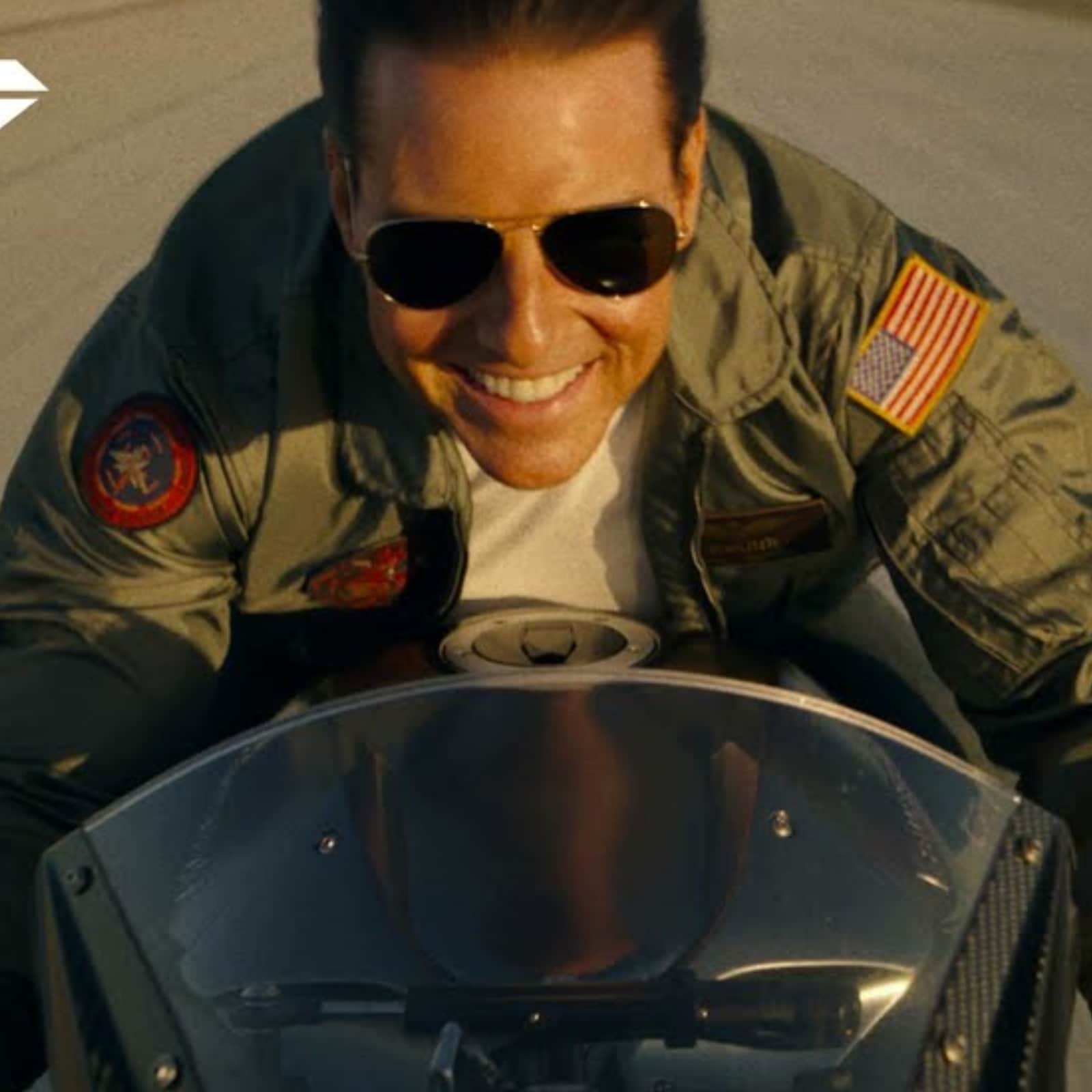
Pete Mitchell shouldn't have survived. If we’re being honest, the entire third act of Joseph Kosinski’s 2022 blockbuster is a series of "how did they pull that off" moments that stretch the laws of physics and military probability to their absolute breaking point. Yet, the top gun maverick end remains one of the most satisfying sequences in modern cinema history because it prioritizes emotional resolution over gritty realism. It wasn’t just about blowing up a nameless uranium enrichment plant in a snowy canyon. It was about a man finally finding a way to stop running from his own past.
Remember that feeling in the theater? The tension was thick. You had Maverick and Rooster—son of the fallen Goose—trapped behind enemy lines, pilotless, and forced to steal a literal museum piece to get home. It’s wild. It’s almost absurd. But it works because the film spent two hours earned that specific moment of camaraderie.
The Suicide Mission and the F-14 Gamble
The mission itself was a ticking clock. Two minutes and thirty seconds. That was the window. They had to fly through a "coffin corner" canyon, drop a laser-guided bomb into a tiny ventilation shaft—a clear nod to the Star Wars trench run—and then climb out at high G-forces without passing out. When Maverick completes the run, the movie doesn’t end. That’s the trick. The top gun maverick end actually begins when Maverick realizes Rooster is about to be shot down and sacrifices his own jet to save him.
This is the pivot.
For thirty years, Maverick lived with the guilt of Goose’s death. Seeing Rooster in the crosshairs triggered every instinct he had. When he ejects and finds himself on the ground, the movie shifts from a high-tech aerial thriller to a survival drama. Then comes the fanservice that actually makes sense: the F-14 Tomcat.
Critics sometimes argue that finding a fully fueled, mission-ready F-14 in an enemy hangar is a bit too convenient. Sure. It is. But in the world of Top Gun, the Tomcat is more than a plane. It’s a character. Seeing Maverick back in the cockpit of the jet that defined his youth—this time with Goose’s son in the RIO (Radar Intercept Officer) seat—is the visual metaphor for the entire franchise. They are literally flying through the past to get to the future.
Why the Dogfight with Fifth-Gen Fighters Matters
The showdown between the aging F-14 and the nameless "fifth-generation fighters" (modeled after the Russian Su-57) is a masterclass in tension. Technology-wise, the F-14 is a dinosaur. It’s loud, it’s heavy, and it’s outclassed in every measurable way. But the movie reinforces its core thesis: "It’s not the plane, it’s the pilot."
Maverick uses every dirty trick in the book. He uses the terrain. He uses the F-14’s unique sweep-wing geometry. Most importantly, he trusts Rooster. When they run out of flares and are seconds away from being vaporized by a missile, the arrival of Hangman—the arrogant rival who finally learned the value of wingmen—provides the final catharsis. It’s a symmetrical payoff to Iceman saving Maverick in the 1986 original.
The Emotional Resolution at the Hangar
Once the wheels touch the deck of the USS Theodore Roosevelt, the spectacle ends and the heart takes over. The top gun maverick end isn’t the explosion; it’s the hug. When Rooster says, "My dad would've done it," and Maverick replies, "That's why I did it," the cycle of trauma is officially broken.
We see Maverick back at his desert hangar. He’s working on his P-51 Mustang. Penny Benjamin pulls up in her Porsche. It’s a quiet, golden-hour ending that feels earned. There’s no setup for a sequel, no post-credits scene, no looming threat. It’s just a man who has finally found peace. He isn't the "fastest man alive" anymore; he’s just a guy with a girl and a plane.
Real-World Stakes and Filming Realism
A huge part of why this ending resonated is that it wasn't all CGI. Tom Cruise famously insisted that the actors actually fly in the F/A-18 Super Hornets. While they didn't fly the F-14 (since the Navy retired those in 2006 and the only flyable ones are in Iran), the cockpit footage of the actors enduring real G-forces adds a layer of sweat and strain that you just can't fake with a green screen.
- The G-Force Factor: Actors were pulling up to 7 or 8 Gs. That's why their faces look distorted. It's real.
- The Low Flight: The scene where Maverick proves the mission can be done in 2:15 was filmed with a real jet flying incredibly low over the desert floor.
- The Sound Design: Notice how the F-14 sounds "rattier" and more mechanical than the sleek Super Hornets? That was a deliberate choice to emphasize the danger of the final escape.
Common Misconceptions About the Ending
Some fans have floated a "Death Dream" theory. The idea is that Maverick actually died at the beginning of the movie when he crashed the Darkstar experimental jet, and the rest of the film—including the top gun maverick end—is just a hallucination as he burns up in the atmosphere.
Honestly? It's a fun theory, but it doesn't hold water when you look at the emotional arc. If Maverick is dead, Rooster’s growth doesn't matter. Iceman’s funeral doesn't matter. The movie is a celebration of life and "one last ride," not a psychological deconstruction of the afterlife. The ending is meant to be taken literally. It’s a fairy tale for aviation geeks, and that’s perfectly okay.
Another point of confusion is the identity of the "enemy." The movie never names the country. They have "fifth-gen fighters" and snowy mountains. It’s clearly meant to be a generic antagonist so the focus remains on the characters rather than geopolitics. By the time we reach the top gun maverick end, the enemy is just a faceless obstacle to Maverick and Rooster’s reconciliation.
Actionable Takeaways for Movie Buffs
If you want to truly appreciate the technical achievement of the final act, there are a few things you should do on your next rewatch.
First, pay attention to the eye lines during the F-14 dogfight. You can actually see the actors tracking the "enemy" planes, which were often real L-39 Albatros jets used as stand-ins during filming. This isn't just acting; it's situational awareness.
Second, listen to the score by Hans Zimmer and Lady Gaga. The "Hold My Hand" melody is woven throughout the final mission, but it doesn't swell into the full anthem until the very end. It’s a subtle way of signaling that the "mission" is over and the "healing" has begun.
Finally, compare the ending of the 1986 film to this one. In the original, Maverick throws Goose’s dog tags into the ocean—a sign of letting go. In the sequel, he doesn't let go of the memory; he integrates it. He becomes the mentor Goose would have wanted him to be.
To get the most out of the experience:
- Watch the "behind the scenes" footage of the flight training program the actors went through. It makes the ending feel much more dangerous.
- Look for the small details in Maverick’s hangar in the final scene; many of the props are callbacks to his entire career.
- Check out the cinematography of Claudio Miranda, who used 6K Sony Venice cameras inside the cockpits to capture the final mission’s intensity.
The top gun maverick end works because it understands that while we come for the jets, we stay for the people. It’s a rare perfect landing for a franchise that could have easily crashed on takeoff.