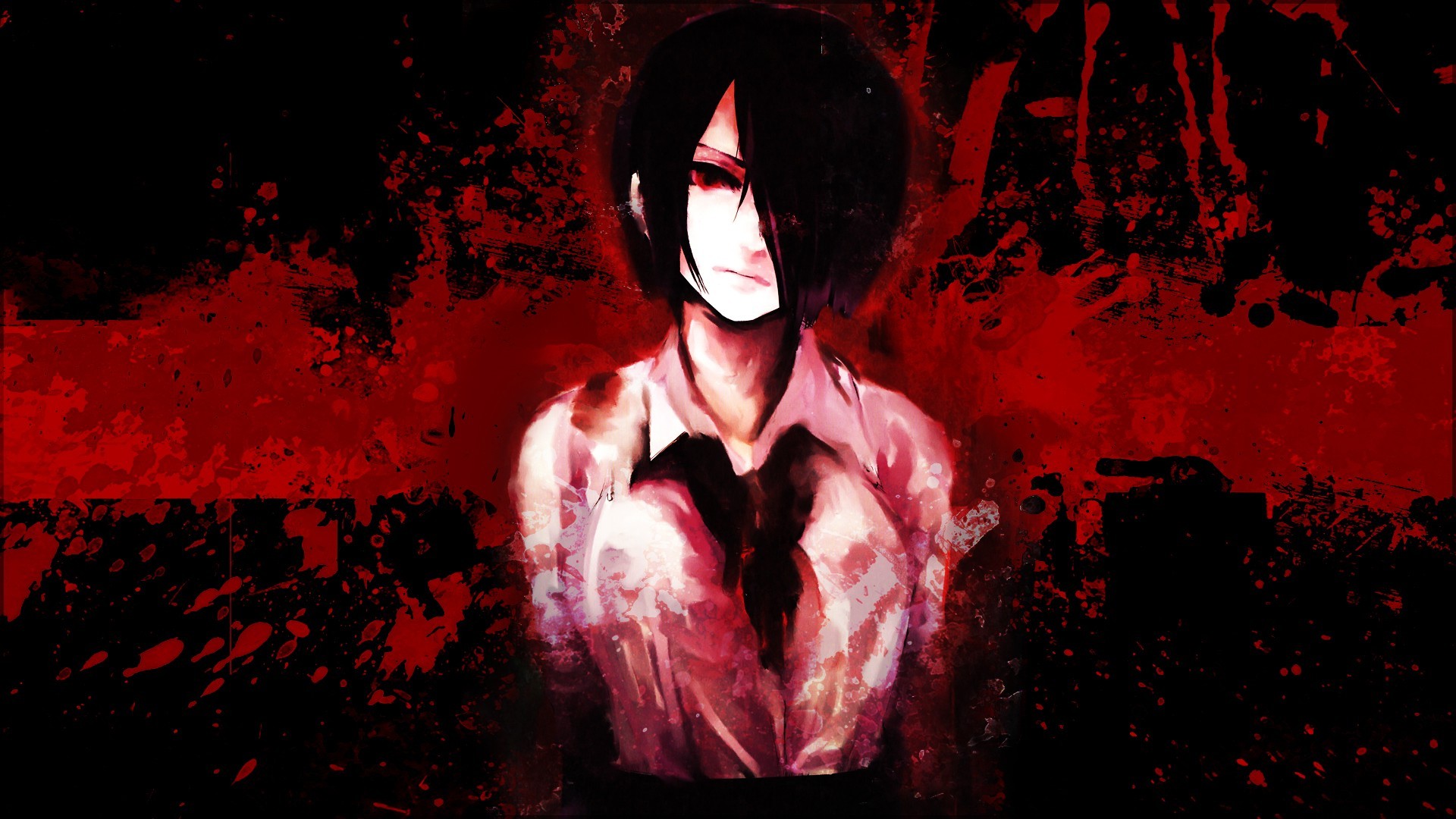
Touka Kirishima didn't start as a hero. Far from it. When we first meet her in the 20th Ward, she’s essentially a bundle of trauma wrapped in a school uniform and a prickly attitude. If you've only seen the anime, you might think she's just the "angry girl" who eventually falls for the protagonist. But honestly? That’s doing a massive disservice to one of the most complex arcs in modern seinen manga.
She is a character defined by loss, but more importantly, by her refusal to be defined by it. From the moment she forced a piece of human flesh down Ken Kaneki’s throat to "help" him accept his new reality, she established herself as a force of nature.
The Evolution of the "Rabbit" Alias
Most people remember the rabbit mask. It’s iconic. But the alias "Rabbit" wasn't just a cool code name for the CCG to put on a wanted poster. It was a manifestation of Touka’s internal rage.
Back in the early days of Tokyo Ghoul, Touka was a killing machine. She was fueled by a deep-seated hatred for the Commission of Counter Ghoul (CCG) after they essentially dismantled her family. Her father, Arata, was taken. Her brother, Ayato, ran off to join a terrorist organization because he couldn't stand her "weak" lifestyle. Touka was left holding the pieces of a life she never asked for, trying to balance high school exams with the literal need to eat people.
She wore the rabbit mask to protect her identity while hunting investigators, but it also became a shield. It allowed her to be the monster the world expected her to be so she could protect the "human" life she desperately wanted at Anteiku.
What the Anime Missed About Her Strength
There is a common misconception that Touka became "weak" in the sequel series, Tokyo Ghoul:re. People saw her trade her combat boots for a coffee apron and assumed she’d been sidelined.
That couldn't be further from the truth.
Touka’s strength shifted from the physical to the emotional. Think about it. It’s easy to lash out and kill investigators when you’re angry. It is infinitely harder to open a coffee shop called :re, stay in the same city where your friends were slaughtered, and wait for a man who doesn't even remember your name.
In the manga, her Ukaku kagune (the wing-like structure ghouls use to fight) actually evolves. Originally, she had one wing. By the end, she develops two, and they carry a lightning-like aura—a trait inherited from the Kirishima bloodline. She isn't just a waitress; she’s a powerhouse who chooses peace because she knows the cost of war.
The Complex Relationship with Kaneki and Ayato
You’ve probably seen the ship art. Touka and Kaneki are the "it" couple of the series, but their romance isn't some fairy-tale fluff. It’s messy.
Early on, Touka actually hated Kaneki. She resented him for being a "half-breed" who got to keep his human soul while she was born a "monster." She’d punch him, yell at him, and treat him like a nuisance. But as Kaneki dove deeper into the darkness of the ghoul world, Touka was the one trying to pull him back toward the light.
Then there’s Ayato. Her relationship with her brother is the real heartbeat of her backstory. While Touka tried to live alongside humans, Ayato embraced his predatory nature. Their fight in the 11th Ward—where Ayato literally ate her kagune—remains one of the most brutal moments in the series. Yet, Touka never stopped viewing herself as his protector.
- Key Realization: Touka doesn't fight for justice. She fights for people.
- The Father Parallel: She spent years resenting her father for "abandoning" them, only to realize later he was trying to protect them the only way he knew how.
- The "High Priestess": In the Tarot motifs Sui Ishida uses throughout the series, Touka is often associated with the High Priestess, representing intuition and the unconscious.
Why Her Ending in Tokyo Ghoul:re Matters
By the time we reach the finale of the series, Touka has undergone a total metamorphosis. She goes from a girl who would kill an investigator on sight to a woman who provides a home for both ghouls and humans.
The most controversial part of her story for some fans was her pregnancy. Some felt it reduced her to a "wife" trope. But if you look at the themes of Tokyo Ghoul, her having a child with Kaneki is the ultimate act of rebellion. In a world that told them they shouldn't exist, they created something new.
She survived the Dragon arc, she dug Kaneki out of the rubble with her bare hands, and she ended up leading the "United Front."
Practical Takeaways for Fans and Collectors
If you're looking to dive deeper into Touka's character or add her to your collection, keep these specifics in mind:
- Read the Manga: The anime (especially Root A) changes significant plot points. If you want to understand why Touka is so respected, the manga's art by Sui Ishida captures her nuances that the animation simply can't.
- Look for "re" Era Merch: Most collectors focus on the "Rabbit" mask version, but the :re era figures (with her blue/purple hair) often represent her more mature, powerful state.
- The Tarot Symbolism: If you're a lore nerd, track the number "2" in her official art. It’s a recurring theme that links her to the High Priestess card.
Touka Kirishima is the anchor of the Tokyo Ghoul universe. Without her, Kaneki would have lost his mind in the first ten chapters. She’s proof that you can come from a place of absolute violence and still choose to build a world where people can just sit down and have a cup of coffee.
Next Steps for Your Tokyo Ghoul Journey:
- Analyze Chapter 122 of :re: This is widely considered the turning point for Touka and Kaneki’s relationship. Pay attention to the dialogue—it's less about romance and more about two broken people finally choosing to be "whole."
- Compare the Kagune types: Study how Touka’s Ukaku style (high speed, low stamina) dictates her fighting style compared to Ayato’s more aggressive approach.
- Check out the "Tokyo Ghoul: zakki" artbooks: Ishida provides incredible commentary on his design choices for Touka, including how her hair color and style reflected her mental state throughout the years.