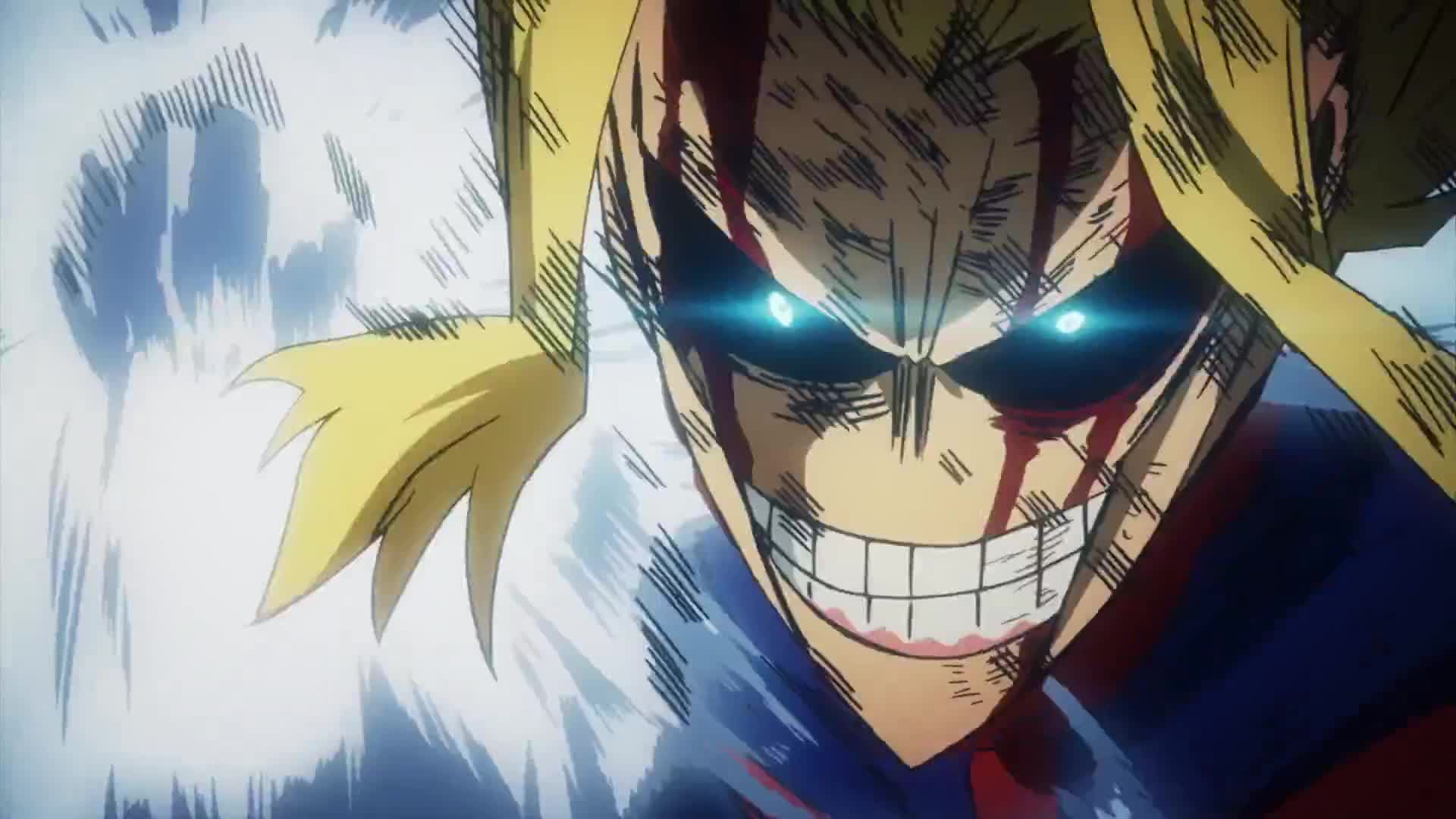
It was a Tuesday in 2018 when most of us collectively lost our minds. We saw a skeletal man with sunken eyes and a fading flame of power pour every single ounce of his remaining life force into a right hook that literally changed the weather. That was the United States of Smash. Even now, years after Kohei Horikoshi first penned that chapter in My Hero Academia, people still talk about it like it’s a religious experience. Honestly, it kind of was. It wasn't just a punch. It was the end of an era.
The fight at Kamino Ward remains the gold standard for how to retire a legendary character. You’ve seen the tropes before. The mentor dies to motivate the protagonist. The old guard steps aside for the new kid. But All Might? He didn't just step aside. He burned the house down on his way out to make sure the villain went with him.
The Raw Mechanics of the United States of Smash
Let’s get technical for a second because the physics of this move are actually insane. All Might was already past his limit. He’d used up the "embers" of One For All. Most fans forget that by the time he winds up for that final blow against All For One, he’s basically a normal guy with a really high pain tolerance.
The United States of Smash is a concentrated release of kinetic energy, but it’s the delivery that matters. He shifts the power from his right arm to his left to bait the villain, then transfers it back into a spiraling, downward punch. It’s a total desperation move. It creates a literal tornado. A crater. A vacuum.
In the manga, Horikoshi uses these incredibly thick, jagged lines to show the strain. You can almost feel the bones snapping. It’s not "clean" like his earlier moves. It’s messy. It’s violent. It’s the sound of a man refusing to lose.
Why the Name Actually Matters
All Might’s move set is a geography lesson. Texas Smash. Detroit Smash. Missouri Smash. He’s an American-themed hero in a Japanese setting, which is a whole layer of meta-commentary on the influence of Western comics on manga. But naming his final move after the entire country? That’s deliberate. It signifies the totality of his burden. He wasn't just fighting for himself or his student, Deku; he was carrying the weight of a whole society that he had personally kept stable for decades.
The Psychological Toll of the Kamino Incident
Everyone focuses on the punch, but the real weight of the United States of Smash is what happens five seconds later. The smoke clears. All Might is standing there, arm raised, but he’s in his "Small Might" form. He’s fragile. He looks like he’s about to blow away in the wind.
That’s the moment the world realized their god was human.
Think about the ripple effect. When a symbol of peace falls, crime rates don't just go up—the social contract starts to fray. We see this play out over the next hundred chapters. The villains, lead by Shigaraki, realized that if the "indestructible" Pillar could be broken, the entire Hero Society was built on a lie. It’s a terrifying realization. All Might won the battle, but in a very real way, he lost the war of perception.
Honestly, the animation by Studio Bones in this scene is what elevated it to legendary status. The music cuts out. The voice acting by Christopher Sabat (English) and Kenta Miyake (Japanese) is guttural. They didn't just record lines; they sounded like they were tearing their vocal cords. That kind of passion is why this specific "Smash" outranks every other shonen finishing move in recent history.
Misconceptions About the Power Scale
One thing that bugs me in the fandom is when people compare this move to Deku’s later feats. "Oh, Deku at 100% is stronger now." Maybe. On paper. But power in My Hero Academia isn't just about Newtons of force. It’s about "Will."
When All Might delivered the United States of Smash, he was essentially hitting All For One with the combined spirits of seven previous quirks. It was a spiritual climax as much as a physical one. You can't replicate that with just "Full Cowl" and some fancy gadgets. All For One even remarks on it—the sheer "disgusting" persistence of the heroes.
- The Ember Factor: All Might was fighting on empty.
- The Villains' Strategy: All For One didn't want to kill All Might; he wanted to expose him.
- The Result: A Pyrrhic victory that changed the series' genre from "School Life" to "War Arc."
What We Can Learn From the "Symbol of Peace"
If you’re looking for a takeaway from this whole Kamino disaster, it’s about the cost of being "The Guy." All Might spent his whole life being a singular pillar. He didn't build a foundation; he was the foundation. The United States of Smash was the final crack in that pillar.
The lesson here is about legacy. All Might’s biggest mistake wasn't losing his power; it was making himself indispensable. If you’re a leader, a creator, or even just the "reliable one" in your friend group, Kamino is a warning. You can’t hold everything up forever. Eventually, you’ll have to throw your version of that final punch, and you better hope you’ve trained someone to catch the baton when you’re done.
Moving Forward After the Smash
If you want to truly appreciate the depth of this moment, go back and re-watch the fight, but don't look at All Might. Look at the civilians in the background. Look at the terror on their faces when they see the "weak" All Might. That’s where the real story is.
To get the most out of the My Hero Academia lore surrounding this event, you should:
- Compare the Manga vs. Anime: Notice how the manga uses white space to emphasize the silence after the punch. It's eerie.
- Track the "Embers": Watch the episodes leading up to Kamino again. Notice how All Might’s "timer" gets shorter and shorter. It makes the finality of the United States of Smash feel much more earned.
- Analyze the Villain's Reaction: All For One is smiling even as he’s being pummeled into the dirt. He knew that by forcing this move, he’d already won the long game.
The United States of Smash wasn't just a cool superpower moment. It was a masterclass in character writing. It showed us that a hero is most powerful not when they are at their peak, but when they have absolutely nothing left to lose and they still choose to swing.