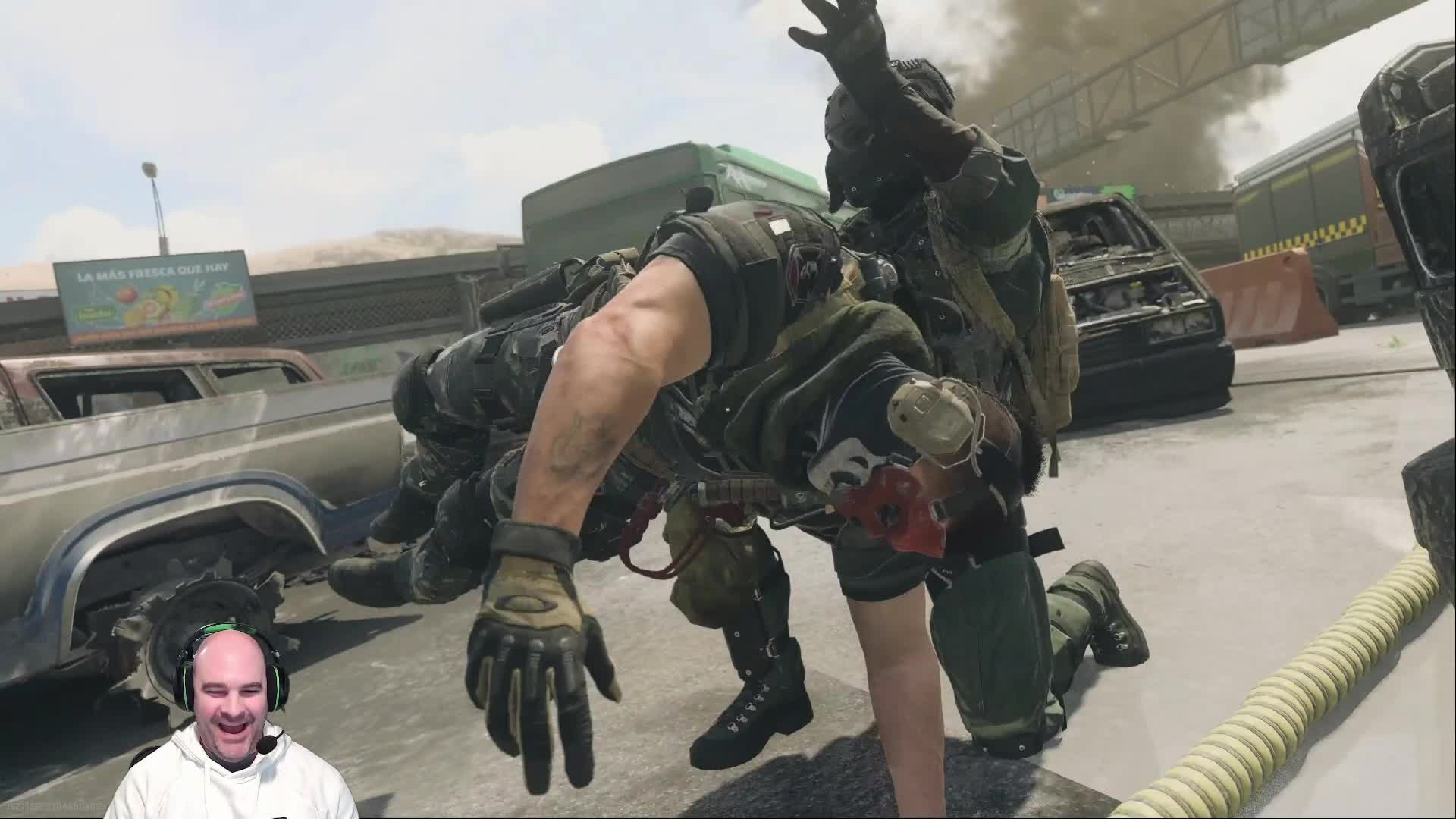
It starts with a heavy barbell and a shaky spine. Maybe it's a TikTok of a guy trying to ego-lift 500 pounds while his lumbar spine rounds like a frightened cat, or perhaps it's a professional wrestling clip where a powerbomb looks just a little too real. Somewhere in the comments, someone always types it: you're gonna snap my back bro. It’s visceral. It makes you wince.
We’ve all seen that one video. You know the one. The lifter’s knees are caving, their face is turning a shade of purple that shouldn’t exist in nature, and their back is literally screaming for mercy through the screen. That’s where the phrase lives. It’s the universal anthem of "please stop before something permanent happens."
But what started as a literal cry for help in gyms and wrestling rings has morphed into something else entirely. It's a meme. It’s a reaction. It’s a shorthand for watching someone do something so physically ill-advised that your own vertebrae start to ache just by proxy.
The Viral Roots of the Snap
The internet loves physical cringe. There is a specific brand of "fail" video that focuses entirely on the spine, and that’s the primary breeding ground for this phrase. If you look back at the early 2010s "Gym Fail" compilations on YouTube—the kind with the generic dubstep soundtracks—the comments were already filled with people predicting catastrophic disc herniations.
Specifically, the phrase you're gonna snap my back bro gained massive traction in the bodybuilding and powerlifting subcultures on platforms like Reddit's r/MuscleConfusion and various Discord servers. It’s often used ironically now. You’ll see it under a video of someone doing something perfectly safe, like a light yoga stretch, just to poke fun at the "form police" who patrol the internet looking for any excuse to lecture people on biomechanics.
However, the "bro" at the end is key. It signals a specific type of camaraderie—the kind found in sweaty basement gyms where the spotter is the only thing standing between you and a lifelong relationship with a physical therapist.
Why Our Brains React This Way
Mirror neurons are a trip. When you see someone about to take a heavy impact to their spine, your brain actually simulates a bit of that pain. This isn't just "being sensitive." It’s a biological imperative to avoid doing the stupid thing the person on your screen is doing.
When someone says you're gonna snap my back bro, they aren't just talking about the person in the video. They are reacting to the phantom pain in their own body. It’s a collective shudder.
From Gyms to Professional Wrestling
You can’t talk about back-snapping without talking about the ring. Professional wrestling is essentially a masterclass in making it look like you’re breaking someone’s spine without actually doing it. Mostly.
Think about the "Backbreaker." Or the "Torture Rack." These moves are designed to evoke the exact sentiment of you're gonna snap my back bro. The visual of a human body being bent across someone’s knee at a 90-degree angle is the ultimate "don't try this at home" advertisement.
There have been times where it wasn't a joke, though. Take the infamous 1999 incident with D'Lo Brown and Droz. A botched running powerbomb resulted in a real-life catastrophic back injury. It changed the way people viewed high-risk maneuvers. It turned a meme-able phrase into a sobering reality. The line between "that looks painful" and "that is career-ending" is incredibly thin.
The Science of "Snapping"
Let’s be real for a second: you don’t actually "snap" a back like a dry twig. That’s Hollywood talk. What actually happens is much more "squishy" and infinitely more complicated.
The human spine is a stack of bones (vertebrae) cushioned by intervertebral discs. When people say you're gonna snap my back bro, they are usually describing one of three things:
- Disc Herniation: The jelly-like center of a disc pushes out through a tear in the tougher exterior. This is the classic "slipped disc." It hurts like a nightmare and can send electric shocks down your legs.
- Spondylolysis: A stress fracture in the small thin bone that connects the upper and lower facets of the vertebrae.
- Compression Fractures: This is the closest thing to an actual "snap," usually happening when the spine is forced into a hard curve under extreme weight.
Basically, your back is a suspension bridge. If you overload one side of the cables, the whole thing sags. If you snap a cable, the bridge closes for repairs for six months.
The "Form Police" and Internet Hyperbole
There is a segment of the internet that is obsessed with "perfect form." You’ve seen them. They are the ones who will tell an Olympic gold medalist that their shins aren't vertical enough during a deadlift.
For these people, you're gonna snap my back bro is a weapon.
They use it to condescend. If a lifter has even a slight rounding of the upper back—which is actually common and sometimes necessary in elite-level strongman movements—the form police descend with their warnings of doom.
- The Reality: The human spine is remarkably resilient. It’s not made of glass.
- The Myth: Any deviation from a straight line equals instant paralysis.
The nuance here is that "ego lifting" (trying to lift more than you can handle with bad technique) is actually dangerous. But the phrase has been used so often on videos where the form is "fine but not perfect" that it’s lost some of its sting. It’s become a parody of itself.
The Cultural Shift: Why "Bro" Matters
Language evolves. The addition of "bro" at the end of the phrase changes the entire vibe. It takes it from a medical warning to a piece of "Gym-Speak." It’s part of a larger lexicon that includes "no pain no gain," "light weight baby," and "don't skip leg day."
It’s conversational. It’s what you say to your buddy when he tries to impress a girl at the gym by squatting three plates with his heels off the ground. It’s a mix of genuine concern and a little bit of "I told you so."
In the world of TikTok trends, we’ve seen people use the audio of various "snapping" sounds to prank their friends. They’ll hide a piece of dried pasta in their mouth, stand behind someone, pretend to crack their back, and crunch the pasta. The reaction? Usually a horrified shout of "Bro, you snapped my back!"
It’s a prank, a meme, and a warning all rolled into one.
How to Actually Not Snap Your Back
If you’re worried that you might actually be the subject of a you're gonna snap my back bro comment, there are ways to avoid it. It’s not just about keeping your back straight. It’s about internal pressure.
Experienced lifters use something called the Valsalva maneuver. You take a deep breath into your belly—not your chest—and hold it while bracing your core. This creates "intra-abdominal pressure." Think of it like a soda can. An empty soda can is easy to crush. A sealed, pressurized soda can can support the weight of a grown man. Your core is the pressure; your spine is the can.
Also, stop ego lifting. Seriously. If you have to hitch the bar up your thighs or turn your deadlift into a "stripper squat" (where your hips shoot up before the bar moves), you are asking for it. You are the protagonist in the video everyone is cringing at.
The Role of Social Media Algorithms
Why do we keep seeing these "snap" videos? Because the algorithm knows you’ll watch. Content that triggers a "visceral physical reaction" has a much higher retention rate. When you see a video titled "He almost broke his spine," you are biologically wired to click it to see what happened—and how to avoid it.
This feedback loop has made you're gonna snap my back bro one of the most persistent phrases in the fitness and entertainment niche. It generates engagement. It generates arguments. It keeps the "form police" employed in the comment sections.
Actionable Steps for Longevity
If you want to stay out of the "back snap" compilations and keep your spine intact for the next fifty years, follow these non-negotiables:
- Prioritize Bracing Over "Straightness": A slightly rounded back that is rock-solid and braced is often safer than a perfectly straight back that is "loose." Learn to breathe into your obliques.
- Film Your Sets: What you think you look like and what you actually look like are two different things. If you look like a fishing rod under tension, drop the weight.
- Ignore the Extreme Form Police: Understand that "perfect" form is a goal, but "safe" form is the requirement. Don't let internet trolls scare you away from basic movements.
- Strengthen the Posterior Chain: A strong back is harder to snap. Focus on Romanian deadlifts and face pulls to build the supporting musculature that keeps everything in place.
- Listen to the "Bro" Instinct: If you feel a sharp, electric pain—stop. Immediately. That is your body’s way of saying the meme is about to become a medical bill.
The spine is the highway of your nervous system. Treat it like one. Don't let a 15-second clip for the "gram" be the reason you can’t tie your shoes when you’re 40. Keep the weight manageable, keep the core tight, and you won't have to worry about anyone telling you that you're gonna snap your back, bro.