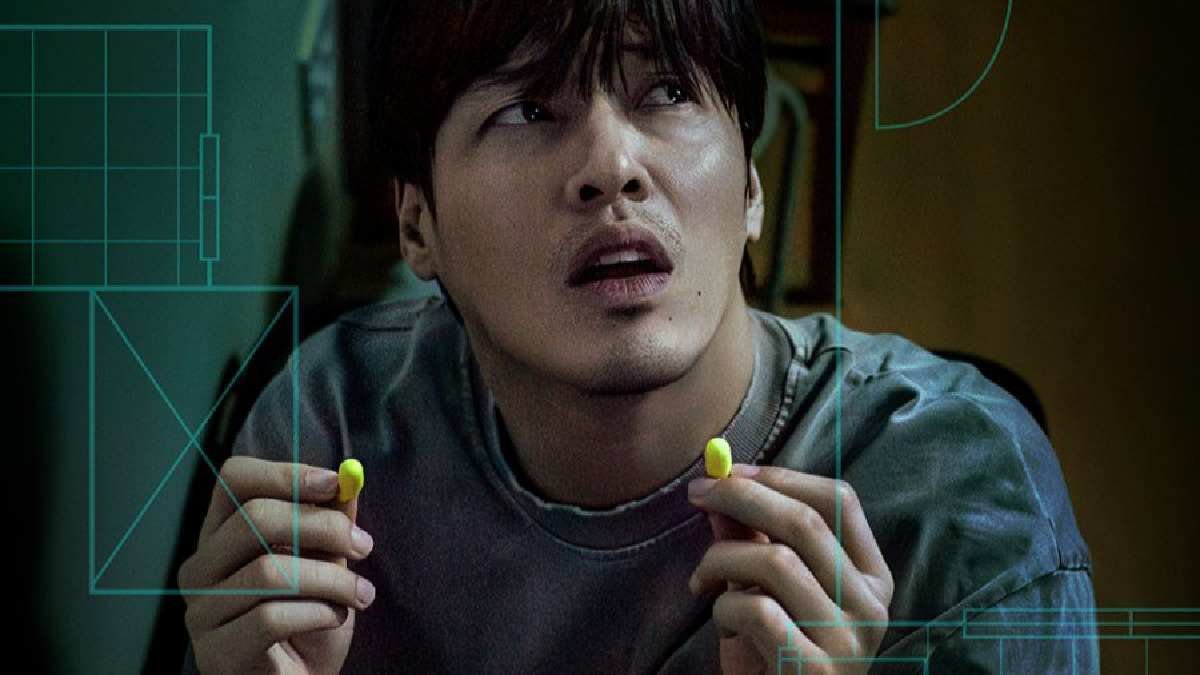
You just finished watching it. Your head is probably spinning. Honestly, the Wall to Wall Korean movie ending is designed to leave you staring at the credits in a state of mild shock. It isn’t just a simple thriller conclusion; it’s a psychological gut-punch that recontextualizes everything you thought you knew about the neighbors, the noise, and the protagonist’s sanity.
Korean cinema has this specific knack for taking high-concept premises—like the "inter-floor noise" conflict—and turning them into a mirror for societal decay. In Wall to Wall (originally titled Baru), we follow Yang-woo, a man who has poured every single won into a new apartment, only to find himself trapped in a literal and metaphorical nightmare. If you're looking for a neat, happy resolution where everyone shakes hands, you've come to the wrong place. This film wants you to feel as claustrophobic as its main character.
What Actually Happens at the End of Wall to Wall?
Let's get into the weeds. The tension in the film builds around the mysterious noises coming from the floor above, but as the Wall to Wall Korean movie ending approaches, the perspective shifts. We realize that the external conflict with the neighbors is merely a catalyst. Yang-woo’s obsession with his "perfect" investment becomes his undoing.
The climax isn't just about a fight; it’s about the collapse of a man’s identity. When the truth about the source of the noise—and the reality of the apartment complex's inhabitants—is revealed, it’s clear that the "walls" were never just physical. They were the barriers he built to protect his ego and his social standing. The final sequence suggests a cycle of violence and paranoia that doesn't necessarily end when the screen goes black.
It’s messy. It’s loud. It’s deeply cynical about the Korean real estate market.
The Psychological Breakdown and That Final Shot
Director Kim Tae-joon, who previously gave us the tense Unlocked, uses the architecture of the building to frame Yang-woo’s descent. By the time we reach the Wall to Wall Korean movie ending, the apartment itself feels like a living, breathing antagonist.
Many viewers are left wondering: Was it all in his head?
Not exactly. While the film flirts with the "unreliable narrator" trope, the consequences are very much real. The blood on the floor isn't a hallucination. However, the film purposefully blurs the line between Yang-woo’s justified frustration and his escalating psychosis. He becomes the very thing he feared. He becomes the "bad neighbor." The irony is thick enough to choke on.
Why the Noise Matters
In South Korea, cheong-gan-so-eum (inter-floor noise) is a genuine social crisis. People have actually been murdered over footsteps or dragging chairs. By using this as the central hook, the movie taps into a collective anxiety.
- The noise represents the proximity of "the other."
- It highlights how thin the veneer of middle-class civility is.
- The ending forces the audience to ask: How far would I go to protect my peace?
Yang-woo’s journey reflects a man losing his grip on reality because he cannot control his environment. He bought the dream, but he inherited a nightmare.
Comparing Wall to Wall to Other K-Thrillers
If the Wall to Wall Korean movie ending felt familiar, it's likely because you've seen Parasite or Burning. These films share a DNA of "home as a trap." But where Parasite focuses on class infiltration, Wall to Wall focuses on class isolation.
The protagonist isn't poor. He’s "house poor." He’s someone who has achieved the status symbols of success but lacks the mental stability to enjoy them. This makes the ending even more tragic. He didn't lose his home to a villain; he lost his soul to a mortgage.
Honestly, the pacing in the final thirty minutes is breakneck. You barely have time to breathe before the next revelation hits. It’s a masterclass in tension, even if some of the logic leaps require a bit of a "suspension of disbelief" from the audience. But hey, that's genre cinema for you.
The Hidden Meaning Behind the Credits
Don't just turn off the TV when the music starts. The lingering shots of the apartment building during the Wall to Wall Korean movie ending are there for a reason. They emphasize that this story isn't unique. Every window in that massive concrete block hides a potential version of Yang-woo’s story.
The film is a critique of the "apartment republic" (A-pa-teu Gong-hwa-guk). In a society where your worth is tied to your postal code, the loss of your home—or the "purity" of that home—is equivalent to death.
Common Misconceptions About the Ending
Some folks think the neighbor was a ghost. They weren't.
Others believe Yang-woo died in the final struggle. The movie leaves that slightly more ambiguous, but the impact is what matters. Whether he physically survives or not, the life he knew is over. He is forever marked by the violence of the confrontation.
It’s also worth noting the sound design. If you watch the ending again with headphones, the layering of sounds—the scratching, the distant muffled voices—suggests that even in "silence," there is no peace. The ending isn't a resolution; it's a permanent state of hyper-vigilance.
Actionable Steps for the Perplexed Viewer
If you’re still scratching your head about the specific plot beats of the Wall to Wall Korean movie ending, here is how to process it:
- Watch for the color shifts: Notice how the lighting in Yang-woo’s apartment changes from warm, "successful" gold to cold, sickly blue as his mental state deteriorates.
- Re-examine the first 15 minutes: Most of the clues about the neighbors are planted right at the start. The "rules" of the building aren't just background noise; they are the cage bars.
- Research "inter-floor noise" in Seoul: Understanding the real-world context of these disputes makes the character’s extreme reactions feel much more grounded in reality.
- Compare the original webtoon: If you really want the deep lore, look up the source material. While the movie takes liberties, the core nihilism remains.
The film is a brutal reminder that we never truly know who is living on the other side of the drywall. It’s a story about the cost of living—not in terms of money, but in terms of our humanity. Yang-woo wanted a wall to protect him, but he ended up being crushed by it.
To fully grasp the weight of the finale, consider the recurring motif of the "boundary." In the final moments, every boundary—legal, moral, and physical—is crossed. The result is a chaotic, bloody mess that serves as a stark warning about the isolation of modern urban life. You don't just watch this ending; you survive it.
Next time you hear a thud from the ceiling, you might find yourself looking at your own walls a little differently. That's the real power of the movie. It turns your own home into a place of suspicion. And honestly? That's the scariest twist of all.