So, you’re trying to figure out if Freddy Fazbear is actually "kid-friendly" or if those glowing eyes are going to cause a month of nightmares. It's a valid question. Honestly, the Five Nights at Freddy's (FNAF) franchise is a bit of a chameleon when it comes to age ratings. One minute you’re looking at a cute, pixelated mini-game, and the next, a mechanical bear is screaming in your face while your screen turns to static.
Basically, if you’re looking for a one-size-fits-all answer, you won't find it. The games, the movie, and the books all play by slightly different rules.
The Games: Why ESRB Loves the Letter T
If you head over to the ESRB website right now, you’ll see a very consistent pattern. Almost every single entry, from the original Five Nights at Freddy's to the sprawling neon mess of FNAF: Security Breach, carries a T for Teen rating.
What does that actually mean in the real world?
It means the ESRB thinks the games are generally suitable for ages 13 and up. They cite "Fantasy Violence" and "Mild Blood" as the main culprits. But here’s the kicker: the violence in FNAF is rarely "on-screen." When an animatronic catches you, they lunge. The screen cuts to black or static. You don't see the gruesome details of a human being stuffed into a metal suit—the game just heavily implies it.
That "implication" is exactly why 9-year-olds have been obsessed with this franchise for a decade. It’s scary enough to feel "grown-up" but not so graphic that it gets banned from the house.
However, recent titles like FNAF: Into the Pit (released in 2024) and FNAF: Secret of the Mimic (2025) have pushed the envelope a bit more. Into the Pit actually features visible blood trails and darker thematic elements like kidnapping and murder, though it stays in that Teen bracket because of its 2D, pixelated art style.
What Is FNAF Rated on the Big Screen?
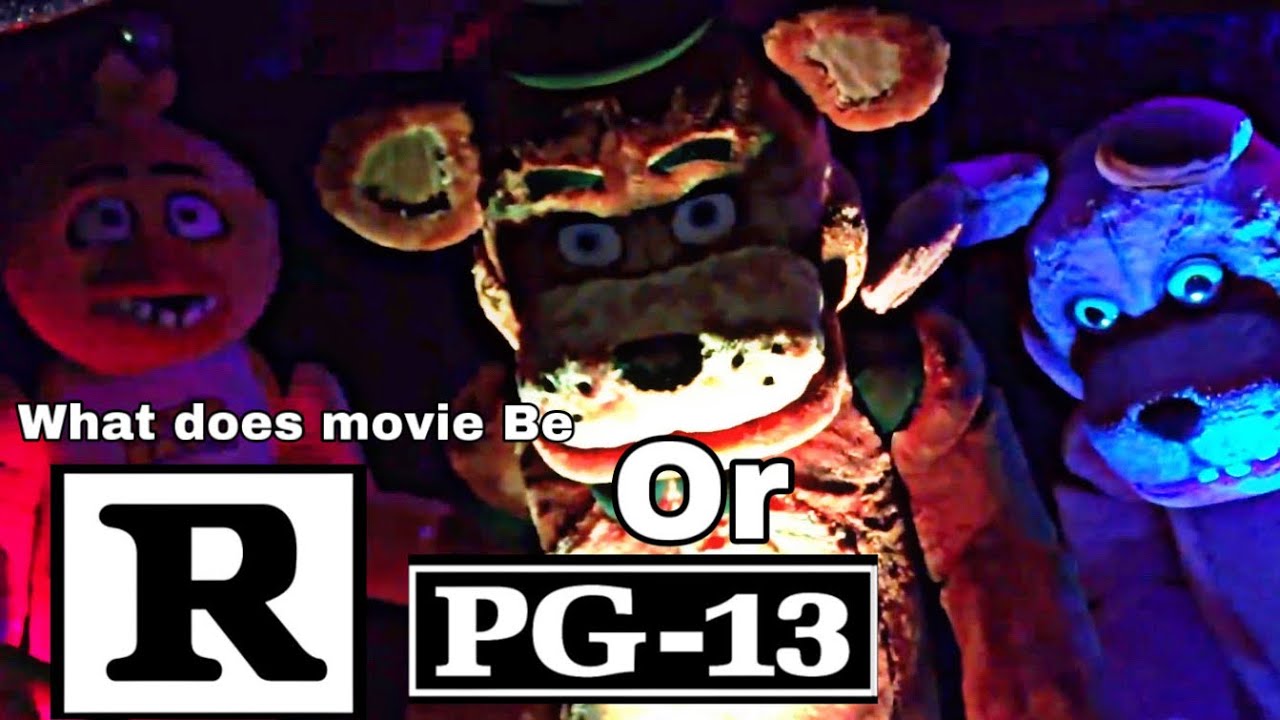
When the movie finally dropped, the rating was the biggest point of contention in the entire fandom. People were literally begging for an R-rating so they could see the "real" horror.
They didn't get it.
The Five Nights at Freddy's movie is rated PG-13.
The Motion Picture Association (MPA) gave it this tag for "strong violent content, bloody images, and language." If you've seen the film, you know exactly which scenes they’re talking about. There is a specific moment involving a shadow and a "shredder" that is pretty gnarly, even if you don't see the direct impact.
Interestingly, the rating situation gets stricter once you leave the United States:
- United Kingdom: The BBFC gave it a 15 rating. They felt the "threat and horror" were too intense for younger teens.
- Australia: It landed an M rating (Recommended for mature audiences 15+).
- New Zealand: Cross-rated as M, specifically noting that the film portrays children in danger.
Breaking Down the Content: What You're Actually Seeing
If you're a parent trying to decide if your 10-year-old can handle it, ignore the letter for a second and look at the actual "stuff" in the content.
1. The Jump Scares
This is the franchise's bread and butter. It’s loud. It’s sudden. In the games, the entire loop is built on the anxiety of waiting for the scare. If your kid is sensitive to loud noises or high-tension environments, FNAF is going to be a struggle, regardless of the rating.
2. The Lore (The Dark Part)
This is where FNAF gets weird. Underneath the "jumpy robot" surface is a story about a serial killer (William Afton) who murdered children and stuffed them into suits. It’s heavy. While the games don't show the murders, the Security Breach and Help Wanted games include dialogue and environmental storytelling that can be deeply unsettling for younger kids who actually pay attention to the plot.
3. Gore and Blood
In the early games, you almost never saw blood. In the movie, you see "bloody images"—think bloodstains on walls or a character’s hand being injured. It’s not Terrifier level gore, but it's definitely a step up from a standard Disney villain death.
The "Gateway Horror" Phenomenon
Psychologists and gaming experts often call FNAF "Gateway Horror." It's like the Goosebumps of the digital age. It provides a "safe" way for kids to experience fear and adrenaline without the trauma of R-rated slashers.
But honestly? Every kid is different. I’ve seen 8-year-olds who can recite the entire lore of the "Bite of '87" without blinking, and 14-year-olds who can't sleep after ten minutes of Sister Location.
Actionable Advice for Parents and New Players:
- Watch a "Let's Play" first: Before buying a game like Security Breach or Help Wanted 2, watch five minutes of gameplay on YouTube. You'll know within sixty seconds if the vibe is too much.
- Check the Platform: Mobile versions of the games are often slightly less "intense" visually than the PC or console versions, simply because of the smaller screen and lower resolution.
- The Movie is a Different Beast: If your kid played the games, they’ll probably handle the movie fine. But if they've only seen the "cute" fan-made songs on YouTube, the PG-13 movie might be a shock to the system.
- Start with the "Core Collection": If you're new, start with the first game. It’s the purest version of the experience and the most "contained" in terms of horror.
The reality is that FNAF lives in that "edgy teen" space. It’s designed to be spooky, but it’s also a business that knows its biggest fans are often under 18. That PG-13/Teen rating is the sweet spot that keeps the lights on at Freddy Fazbear’s Pizzeria.
If you’re ready to dive in, just remember to keep an eye on the power meter—and maybe leave a hallway light on.