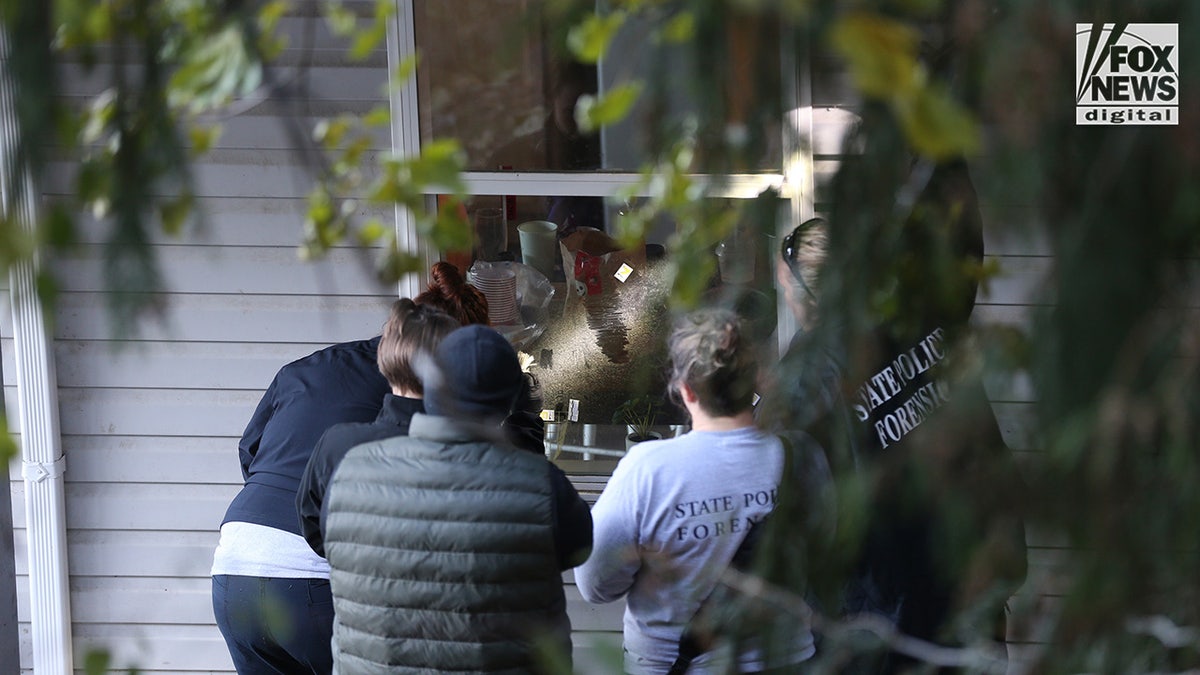
It was a cold, quiet Sunday morning in Moscow, Idaho, when the world changed for a small college town. You’ve probably seen the photos of 1122 King Road. It’s that three-story, grey house that looked like any other student rental until the yellow police tape went up in November 2022. Honestly, the Idaho 4 murder scene is one of the most complex puzzles forensic investigators have faced in recent history. It wasn’t just a crime; it was a chaotic, high-intensity forensic nightmare that pushed the limits of modern DNA technology.
People often think a crime scene is like what they see on TV, where everything is sterile and obvious. That's not how it worked here.
The house was a "social hub." That means hundreds of people had been through those doors in the weeks leading up to the tragedy. Think about the sheer volume of DNA, fingerprints, and hair. For the Moscow Police and the FBI, the Idaho 4 murder scene wasn't just about finding evidence; it was about filtering out the noise of a hundred college parties to find one specific monster.
The Layout of 1122 King Road
To understand the evidence, you have to visualize the house. It was built into a hill. The "first floor" was actually the basement level, accessible from the front. The "second floor" was where the kitchen and living room were, with a sliding glass door that led to a back patio. Then you had the third floor.
The geography of the house matters because of how the killer moved.
Ethan Chapin and Xana Kernodle were found on the second floor. Kaylee Goncalves and Madison Mogen were on the third. This wasn't a quick "in and out" situation. The perpetrator navigated three levels in a house filled with roommates. Two other roommates were on the bottom floor and, incredibly, survived the night. This layout is basically why the timeline is so tight. When you look at the Idaho 4 murder scene, the physical space tells a story of targeted movement.
That Infamous Knife Sheath
The most significant piece of evidence wasn't a fingerprint or a strand of hair. It was a tan leather knife sheath.
Investigators found it on the bed, right next to Madison Mogen’s body on the third floor. It had "USMC" and the Ka-Bar Marine Corps eagle globe and anchor insignia stamped on it. But the real kicker was the "single source of male DNA" found on the button snap. This is what eventually led the FBI to Bryan Kohberger.
It’s kinda wild when you think about it.
One tiny mistake—leaving behind a sheath—is what broke the case open. If that sheath hadn't been left at the Idaho 4 murder scene, we might still be looking for answers. Forensic experts like Joseph Scott Morgan have pointed out that in a struggle, things get dropped. Adrenaline makes you clumsy. That sheath is a physical manifestation of a killer's moment of panic or oversight.
The Complexity of Bloodstain Pattern Analysis
Blood tells a story. At this specific scene, it told a story of extreme violence.
The term "cast-off" refers to blood that flies off a weapon as it’s being swung. In a confined space like a bedroom, cast-off patterns allow investigators to reconstruct the height of the attacker and the direction of the blows. Because the weapon was a fixed-blade knife—likely a Ka-Bar style—the sheer amount of biological evidence was overwhelming.
It wasn't just on the beds. It was on the walls. It was on the floors.
The Digital Footprint and the White Elantra
While the physical Idaho 4 murder scene was being processed, a digital scene was being built. Police started looking at the "neighborhood canvas." This involves grabbing every scrap of Ring doorbell footage and CCTV they could find.
Enter the white Hyundai Elantra.
You've heard about the car. It was seen looping the neighborhood multiple times between 3:29 a.m. and 4:20 a.m. This is what we call "digital forensics." By overlaying the car's movements with the suspected time of death, investigators created a virtual map of the killer’s approach and escape. It’s a reminder that today, a crime scene isn’t just four walls; it’s every satellite, cell tower, and doorbell camera in a five-mile radius.
Why Some Evidence Is Still Disputed
There's a lot of talk about the "latent shoe print."
During the second processing of the house, investigators found a "diamond-shaped pattern" print outside the door of one of the surviving roommates. It was found using amido black, a chemical that reacts with proteins in blood to reveal faint prints.
Defense teams often challenge this kind of stuff. They'll ask:
- How old was the print?
- Could it have been from a previous guest?
- Was the "diamond pattern" specific to a certain brand of shoe, like Vans?
The reality is that the Idaho 4 murder scene was a high-traffic environment. This makes "touch DNA" and old footprints a legal gray area. The prosecution has to prove that the evidence found wasn't just "there," but that it was left there at the time of the murders.
The Surviving Roommates and the "Frozen Shock" Phase
One of the most debated aspects of this case is why it took so long to call 911.
One roommate reported seeing a figure in black clothes and a mask. She described herself as being in a "frozen shock phase." From a psychological perspective, this is a real thing. Your brain tries to rationalize what it's seeing. "Oh, it's just a party guest," or "It’s a prank."
This testimony adds a layer of chilling realism to the Idaho 4 murder scene. It wasn't a silent house. There were thuds. There was a dog barking. There were voices. The fact that someone walked right past a roommate in the hallway is the stuff of nightmares.
Demolition of the King Road House
In December 2023, the house was torn down.
Some people hated this. They felt like the jury should have been able to walk through the rooms to understand the acoustics and the tight hallways. The University of Idaho, which owned the property at that point, decided it was a "permanent visual reminder" of the tragedy.
Before it was razed, the FBI went back in. They used 3D laser scanning to create a "digital twin" of the house. This means that even though the physical Idaho 4 murder scene no longer exists, the jury can still "walk through" it using VR or high-res renderings. It’s a huge shift in how we handle evidence in the 21st century.
Fact-Checking Common Misconceptions
There are a few things people get wrong about this case constantly.
First, the "missing" 911 call. People wonder why it was a "unconscious person" call. Usually, when a dispatcher gets a call from a traumatized person who can't fully explain the horror they've found, they default to "unconscious person" until police arrive. It’s standard procedure, not a conspiracy.
Second, the dog. Murphy, the dog belonging to Kaylee and her ex-boyfriend, was in a separate room. He didn't interfere with the crime. He was later found safe.
Third, the weapon. The knife has never been found. Investigators have searched ponds, trash cans, and hillsides. In many ways, the Idaho 4 murder scene is a puzzle with one very sharp, missing piece.
Practical Insights and the Future of Forensic Science
This case has changed how we look at "Investigative Genetic Genealogy" (IGG). The FBI took the DNA from the sheath and uploaded it to public databases. They didn't find a direct match for the suspect; they found his relatives.
By building a family tree, they narrowed it down to Bryan Kohberger.
What you should take away from this:
- Your DNA is public. Even if you've never taken a test, if your third cousin has, you are on the grid.
- Physical evidence is king. Digital footprints (car pings, phone data) are great, but the sheath is what makes the case.
- The "Golden Hour" is a myth. In this case, the investigation took weeks of painstaking lab work. It wasn't solved in 60 minutes.
If you are following this case, the next big step is the trial. We’ll finally see the high-resolution photos of the Idaho 4 murder scene that the public hasn't been allowed to view. It will be a grim, clinical look at what happened in those early morning hours.
To stay informed on the legal proceedings, you should follow the official court filings from the Latah County District Court. These documents provide the only verified updates on evidence admissibility and trial dates. Understanding the difference between "Internet theories" and "sworn affidavits" is the only way to truly grasp the weight of this case.
Stay skeptical of "leaks" on social media. Stick to the primary sources. The truth of what happened at 1122 King Road is buried in the forensics, not the rumors.
Next Steps for Deep Research:
- Review the Probable Cause Affidavit: This is the foundational document that outlines the DNA evidence and car sightings.
- Monitor Motion Hearings: These determine what evidence from the house will actually be shown to the jury.
- Study Forensic 3D Modeling: Look into how the FBI uses Matterport and Leica scanners to preserve crime scenes before demolition.