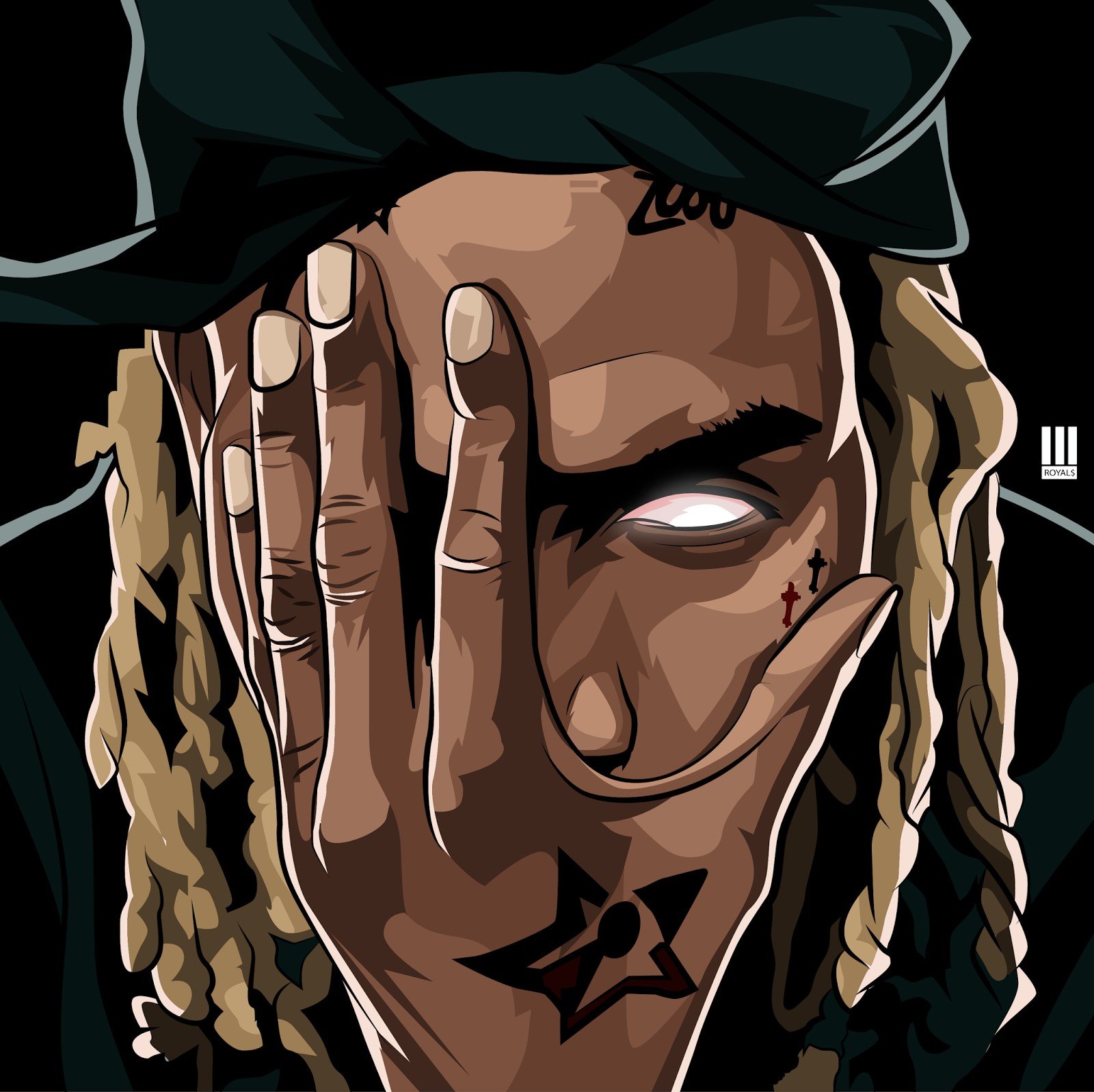
You couldn't escape it in 2015. Whether you were in a club, at a high school prom, or just scrolling through Vine, that gravelly, melodic "1738" ad-lib was the soundtrack to the year. Fetty Wap didn't just drop a song; he dropped a brand. It became a linguistic virus. But if you ask the average person today what does Fetty Wap mean by 1738, they might stumble. Most people thought it was a zip code. Others guessed it was a police code or maybe a lucky number.
The truth is actually way more "top shelf" than that.
Fetty Wap, born Willie Maxwell II, was shouting out his crew, the Remy Boyz. But the crew name itself wasn't just a random choice. It was a direct homage to Remy Martin 1738 Accord Royal, a premium cognac. In the world of Paterson, New Jersey, where Fetty is from, that specific bottle represented the ceiling. It was the "finest" thing you could get your hands on.
The Liquor Behind the Legend
To understand why a rapper would obsess over a specific year, you have to look at the history of the Remy Martin house. They’ve been around forever. The "1738" date refers to the year King Louis XV of France granted Rémy Martin a decree to plant new vines—a rare honor at the time because planting new vines was actually forbidden during a famine.
Fetty wasn't trying to give a history lesson on French viticulture, though. For the Remy Boyz—consisting of Fetty, Monty, and Dice—the number 1738 was shorthand for being the best. It was about luxury. If you were 1738, you weren't drinking the cheap stuff. You were the "top of the crop."
He once explained in an interview with Associated Press that they called themselves the Remy Boyz because they only wanted the best. "1738 is the finest liquor in the world," he’d say. It’s a bit of hyperbole, sure, but in the context of hip-hop branding, it was genius. It gave his music a built-in identity before he even finished the first verse.
Why "Trap Queen" Made the Number Iconic
"Trap Queen" was an anomaly. It was a love song about cooking crack. It was gritty but impossibly sweet. When that "1738" dropped right at the beginning of the track, it acted like a starter pistol.
The song peaked at number two on the Billboard Hot 100. It stayed in the top ten for twenty-five consecutive weeks. That is an absurd amount of time for a debut single from an artist who, months prior, was relatively unknown outside of the Tri-state area. Because the song was such a juggernaut, the ad-lib became synonymous with Fetty's entire aesthetic.
You have to remember the era. This was the peak of the "ad-lib" transition in rap. Migos were perfecting the triplet flow, and Future was dominating the murky atmosphere of the Atlanta sound. Fetty brought something different from Jersey—a "trap-pop" sensibility that felt optimistic. The 1738 shout-out felt like an invitation to a party rather than a threat.
The Cultural Saturation of 1738
It got weird. The number started appearing everywhere.
Kansas City Royals players started fining each other if they didn't work the number 1738 into post-game interviews. Lorenzo Cain and Mike Moustakas were obsessed with it. It became a locker room meme that spilled over into professional sports media. When a bunch of pro baseball players start quoting a rapper from Paterson, you know the branding has transcended the music.
Then there were the Google searches. In 2015, searches for "What does 1738 mean" spiked so hard it rivaled political events. People were genuinely confused. Was it a gang sign? A secret society? No. Just a very successful marketing byproduct for a French cognac house that probably didn't see it coming.
Interestingly, Remy Martin didn't initially have an official deal with Fetty. Usually, brands are hesitant to lean into "trap" associations. But the organic growth was too big to ignore. Eventually, the brand recognized the impact. You can't buy that kind of authentic cool.
The Remy Boyz and the "Squad" Mentality
The crew was everything to Fetty. He rarely did an interview without Monty by his side. By branding the group "Remy Boyz 1738," he created a collective identity. It wasn't just about the soloist; it was about the team.
This is a recurring theme in hip-hop—think Wu-Tang, A$AP Mob, or Odd Future. But Fetty’s version was rooted in this specific image of high-end indulgence. It’s a classic rags-to-riches trope. You go from the streets of Paterson to shouting out $50-a-bottle cognac on the world stage.
Common Misconceptions About the Number
Let’s clear some things up.
- It’s not an area code. Paterson’s area code is 973.
- It’s not his birthday. Fetty was born in 1991.
- It’s not the number of his house. People love to over-analyze. Sometimes, a number is just a number. But in this case, it was a very specific choice. It signaled a lifestyle. When you hear that "1738" now, it immediately teleports you back to a specific window of time between 2015 and 2016. It’s sonic nostalgia.
The Technical Brilliance of the Ad-lib
From a music theory perspective—if we want to get nerdy about it—the way Fetty sang "1738" was crucial. He didn't just say it. He used his signature "warble."
Fetty Wap has a unique vocal range that sits somewhere between a yell and a croon. He lost his left eye to congenital glaucoma as a child, and he’s often spoken about how that shaped his confidence and his "I don't care" attitude. That rasp in his voice when he shouts "1738" adds a layer of authenticity. It sounds raw. It sounds human.
The ad-lib usually hits on a specific beat, often right before the bass drops. It creates a Pavlovian response in the listener. You hear the number; you know the hook is coming. It’s effective songwriting, even if it feels accidental.
The Legacy of 1738 in 2026
Where does that leave us now? Fetty Wap’s career has seen its share of ups and downs, including significant legal troubles that have sidelined him in recent years. But "1738" remains a permanent fixture in the hip-hop lexicon.
It’s a case study in accidental branding. Remy Martin 1738 Accord Royal is still a popular bottle, and many people still refer to it as "the Fetty Wap liquor." That’s a level of impact most marketing firms would kill for.
It also paved the way for other artists to use specific numbers as identifiers. While artists have always repped their zip codes or area codes (like Drake and the 416/6ix), Fetty proved you could use a brand-associated number to create a "vibe" that felt universal.
How to Use This Knowledge
If you’re a creator, an artist, or just someone trying to understand the "why" behind pop culture, the 1738 story is a lesson in specificity.
Fetty didn't just say "I drink expensive stuff." He picked a specific year from a specific bottle. That specificity made it catchy. It made it searchable. It gave people something to talk about.
If you want to apply this "1738 energy" to your own life or brand, consider these steps:
Find Your Signature Don't be generic. If you have a brand or a project, find a specific detail—a number, a color, a phrase—that is uniquely yours but carries a "premium" feel.
Lean Into Your Story Fetty didn't hide where he was from. He mixed the high-end (1738) with the street (the trap). That contrast is where the magic happens.
Consistency is King He didn't say it once. He said it in every song. He said it in every interview. He made it impossible to think of Fetty Wap without thinking of those four digits.
The Takeaway
So, what does Fetty Wap mean by 1738? It’s a tribute to the Remy Boyz and their "top shelf" lifestyle, inspired by Remy Martin 1738 cognac. It’s a symbol of excellence from the perspective of someone who started with nothing.
It’s also a reminder of a time when music felt a little more melodic, a little more fun, and a whole lot more "1738."
Next time you hear that classic intro, you aren't just hearing a number. You’re hearing a decree. You’re hearing the sound of a kid from Jersey who decided he deserved the finest things in life and then told the whole world about it until they believed him.
Check out the original "Trap Queen" video or his self-titled debut album to hear how he weaves the ad-lib into different tempos. You'll notice it's never just filler; it's the heartbeat of the track. If you're looking to understand the mid-2010s rap explosion, 1738 is the perfect place to start your research.