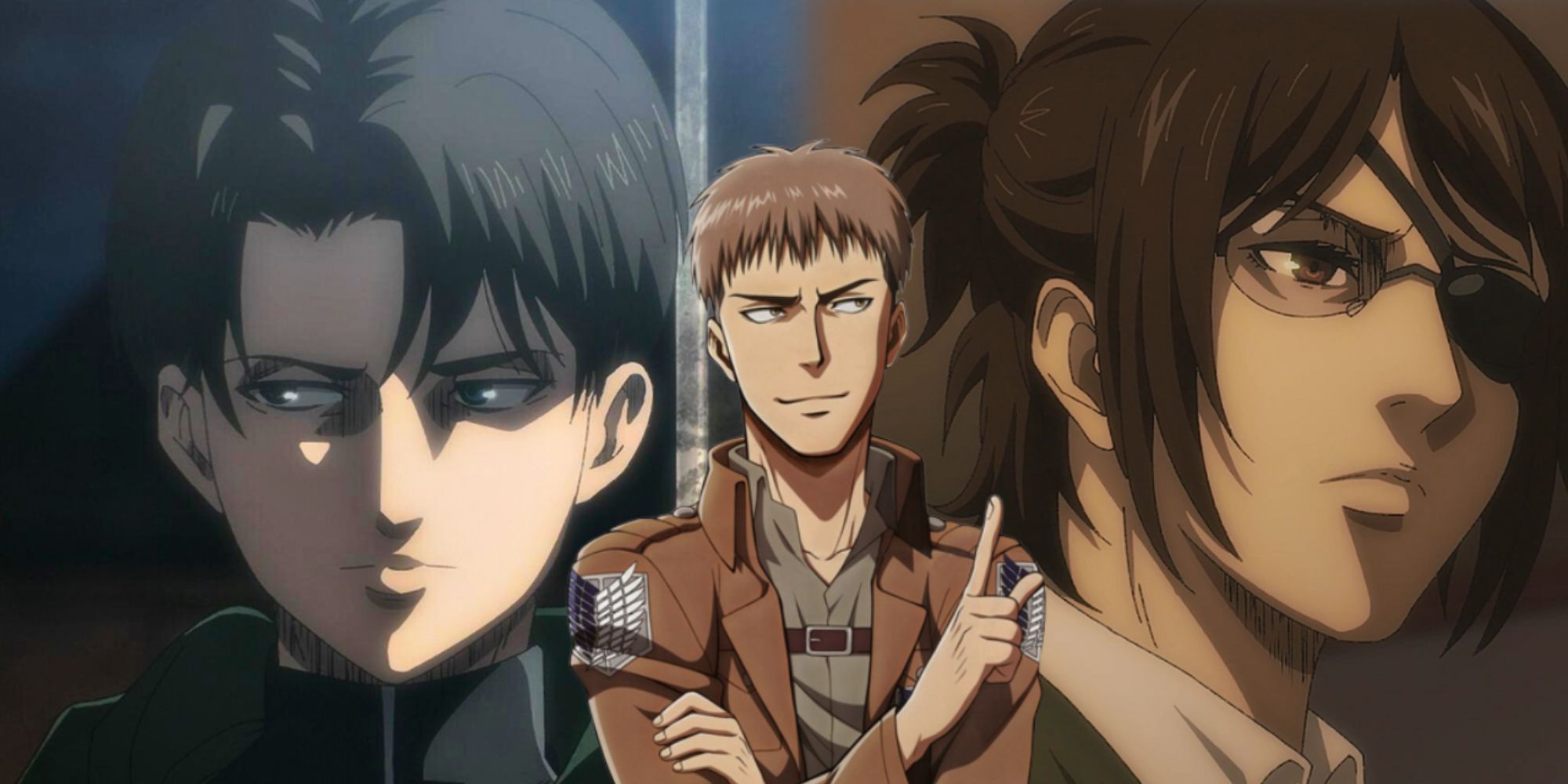
Hajime Isayama didn't just pick names out of a hat. When you first hear a name like Bertolt Hoover or Dot Pixis, it sounds clunky. Borderline goofy, honestly. But as the story of Shingeki no Kyojin unfolds, you realize these choices were surgical. Most attack on titan characters names are a chaotic blend of Old German, biblical references, and weirdly specific European surnames that anchor the series in its pseudo-Germanic, post-apocalyptic setting.
Names matter here. They aren't just labels; they're foreshadowing.
The Cultural Mashup Behind Attack on Titan Characters Names
Most people assume the names are just "German-inspired." That’s a massive oversimplification. Isayama actually used a name dictionary for some of the more obscure European ones.
Take Eren Yeager.
The name "Eren" has Turkish roots, often translated to "saint" or "holy person." It’s a stark contrast to "Yeager," which is a phonetic play on the German word Jäger, meaning hunter. From the very first chapter, his name tells you exactly what he is: a holy hunter. A man on a crusade.
Then you have Mikasa Ackerman. Her name comes from a Japanese pre-dreadnought battleship. Isayama famously believed that naming female characters after famous warships would lead to success. It worked. But "Ackerman"? That’s German for "plowman" or "field worker." It’s gritty. It’s grounded. It suggests a lineage of people who do the hard work in the shadows, which fits the Ackermans' role as the "byproduct of Titan science."
Why the localized spellings change everything
If you’ve spent any time in the fandom, you’ve seen the "Bertholdt" vs "Bertolt" vs "Burrito" memes. The translation of attack on titan characters names from Japanese katakana back into Romanized European languages is a nightmare.
- Reiner Braun: Braun means "brown" in German. It's common, sturdy, and unflashy. Exactly how Reiner wanted to be seen before his psyche fractured.
- Armin Arlert: Isayama said he chose this name because it sounded like "aluminum." He wanted something that felt distinct and easy to remember.
- Erwin Smith: A surprisingly "normal" name. Erwin is a classic German name (think Erwin Rommel), while Smith is the most generic English surname imaginable. It makes him feel like a man of the people, despite his genius.
The Biblical and Mythological Undercurrents
You can't talk about these names without looking at the Marleyan side of the pond. Once the basement door opened, the naming conventions shifted slightly.
Zeke Jaeger.
Zeke is often short for Ezekiel, a prophet in the Hebrew Bible. Ezekiel had visions of the "valley of dry bones" coming to life. If you’ve seen the ending of the series, the parallel between Ezekiel’s visions and Zeke’s plan for the Subjects of Ymir is almost too on the nose. He isn't just a "beast"; he's a man who thinks he’s a savior for a dying race.
Then there’s Frieda, Uri, and Rod Reiss. "Reiss" can be linked to the German word for "twig" or "branch," perhaps a nod to the coordinate and the branching paths of the Paths. It’s subtle. It’s the kind of detail that makes you want to re-read the whole manga with a dictionary in your lap.
The Weird Ones: Why "Dot Pixis" and "Nile Dok"?
Some names just feel... off.
Dot Pixis sounds like a digital art file. Nile Dok sounds like a brand of rugged footwear.
Isayama has admitted in interviews that he sometimes just liked the sound of certain Western names without worrying about their prestige. It adds to the uncanny valley feeling of Paradis Island. It’s a world that looks like our history but is fundamentally broken and rearranged.
The "Eldian" vs "Marleyan" Divide
As the series progresses, the names become a tool for world-building.
The Marleyan names often lean into more Latin or diverse European roots (Pieck, Porco, Falco, Gabi). "Falco" and "Gabi" feel more modern, more "connected" to the outside world than the archaic, almost medieval names of the Wall-dwellers like "Hange Zoe" or "Sasha Blouse."
Speaking of Sasha, "Blouse" is a direct reference to the German "Blaus," which relates to "blue" or, more interestingly, the phrase "to be blue" (to be drunk/distracted), though most fans link it to the simple garment. It highlights her commoner status. She wasn't born from a prestigious line of warriors. She was just a girl who liked meat.
Hidden Meanings You Probably Missed
The name "Ymir" is the most significant one of all.
In Norse mythology, Ymir is the ancestor of all jötnar (giants). The gods killed Ymir and used his body to create the world. In the series, Ymir Fritz is the source of all Titans. Her body was literally consumed to build an empire. Isayama didn't just borrow the name; he borrowed the entire tragedy.
And then there's Historia Reiss.
Her name is literally "History." When she sheds the fake persona of "Christa Lenz" (a name that sounds like a pure, virginal "Christ-like" figure), she reclaims her role as the one who must carry the history of the walls. It’s a literal transformation from a lie to a legacy.
The Levi Paradox
Levi's name is actually Hebrew (Levy), meaning "joined" or "attached."
It’s ironic for a character who loses almost everyone he ever attaches himself to. Isayama reportedly took the name from a documentary he saw (Jesus Camp), liking the way it sounded. Even though it wasn't a deep-seated linguistic choice from day one, it evolved into a symbol of the "strongest soldier" who is permanently tied to the survival of humanity.
Practical Insights for Fans and Writers
If you’re trying to understand the lore better, don’t just look at the subtitles. Look at the kanji and the intended European roots. The names tell you the character's trajectory before the plot even gets there.
- Watch for "Jäger" variations: Any character associated with hunting or freedom usually has a name tied to movement or predatory animals.
- Observe the "Ackerman" trend: They are always named after workers or common concepts, never royalty. This reinforces their role as tools of the crown.
- Note the shift in naming: As the series moves from the Walls to the Global stage, names become more linguistically diverse, reflecting the "opening" of the world.
To truly grasp the weight of these characters, you have to look at them through the lens of the world Isayama built—a world that is a messy, beautiful, and terrifying reflection of our own history. The names aren't just cool-sounding labels. They are the final remnants of a culture that was almost wiped out by the Titans.
Next Steps for Deep Lore Enthusiasts
To get the most out of your next re-watch or re-read, keep a tab open for a German-English dictionary. Pay close attention to the characters introduced in the Marley arc versus those from the 104th Cadet Corps. You'll notice that the 104th has much more "traditional" Germanic names, symbolizing their isolation and preserved history, while the Marleyans represent a more "colonized" and blended naming convention. Checking the official Attack on Titan guidebook can also clarify some of the more debated Romanizations that occurred during the series' decade-long run.