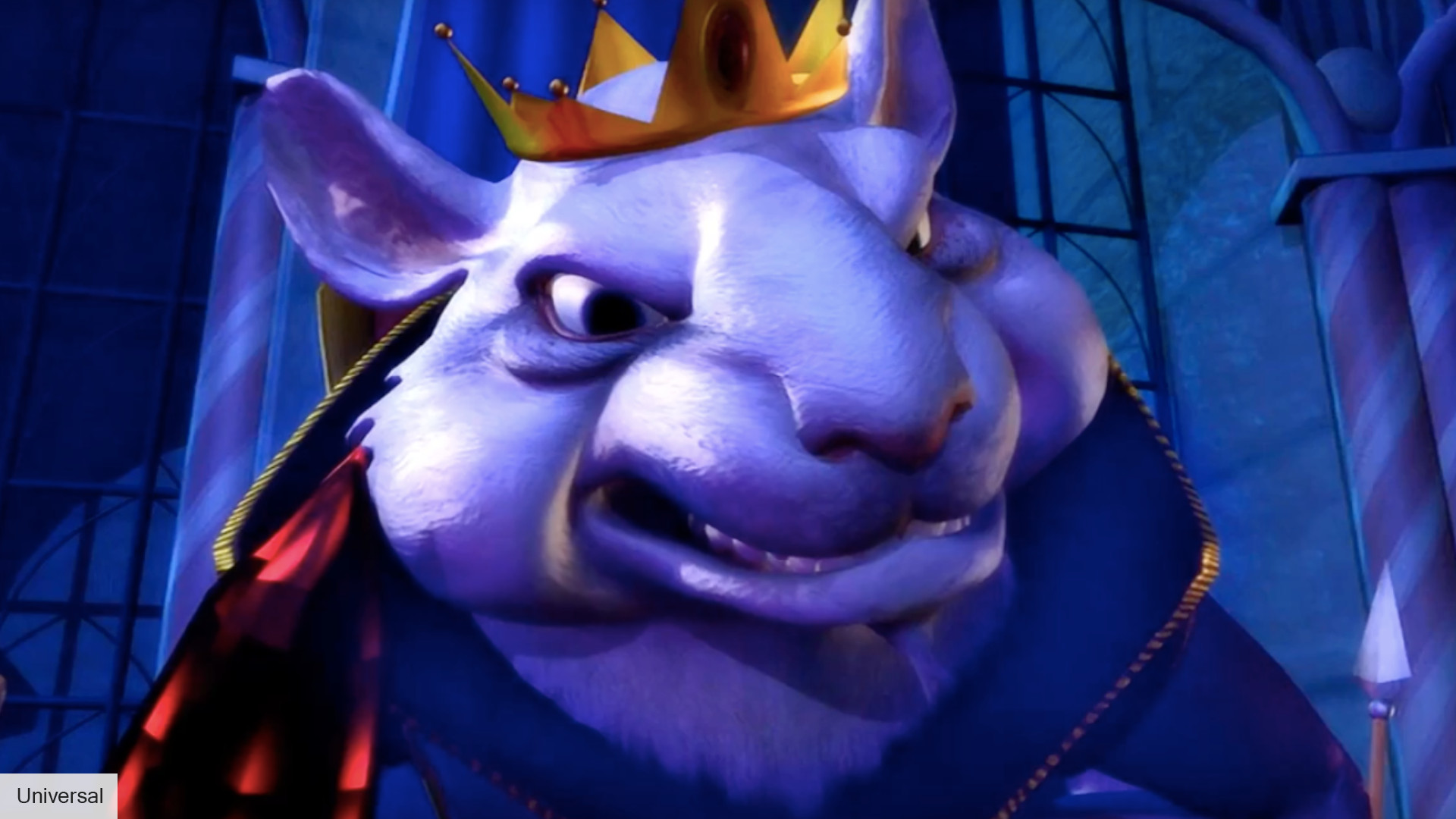
If you grew up in the early 2000s, you probably remember the exact moment the CGI revolution hit your living room. It wasn’t Toy Story. It was a blonde doll spinning in a pink tutu. But while Barbie was the star, the real reason 2001’s Barbie in the Nutcracker stuck in our collective psyche wasn't just the ballet. It was that terrifying, caped rodent. Honestly, the Barbie in the Nutcracker Mouse King might be the most effective villain Mattel ever put on screen.
He's mean. He's small. He has a voice that sounds like gravel in a blender. Tim Curry, the absolute legend behind the voice, gave this character a level of theatrical menace that most kids' movies today just don't touch. Most modern villains have "reasons" or "trauma." Not this guy. The Mouse King just wanted to be big and mean. That's it.
The Mouse King's Magic Was Genuinely High-Stakes
Let’s talk about the magic. In the world of Parthenia, magic isn't just sparkles and rainbows. It’s a weapon. The Mouse King carries a scepter that doesn't just shoot "bad vibes"—it literally shrinks people. He shrinks Clara. He tries to turn the Nutcracker into firewood. There’s a specific kind of cruelty in a villain who wants to make everyone else smaller just so he can feel tall.
Most people forget that the Mouse King wasn't actually the original ruler. He was a usurper. He took over the kingdom while the Prince was away, and he ruled through pure, unadulterated fear. When you watch the movie now, the animation might look a bit dated—those early 2000s textures are definitely "smooth"—but the atmosphere is still there. The way he lurks in the shadows of the cave, flanked by his bat-like henchman Pimm, creates a genuine sense of dread. Pimm, by the way, is the perfect foil. Where the Mouse King is all cold fury, Pimm is the bumbling comic relief who reminds you that this is, technically, a movie for children.
Why Tim Curry Made the Character Iconic
You can’t talk about the Barbie in the Nutcracker Mouse King without talking about the voice acting. Tim Curry is a master of the "campy but terrifying" niche. He brings the same energy to the Mouse King that he brought to FernGully or The Rocky Horror Picture Show.
He sneers. He draws out his vowels. When he says "Everything you see belongs to me," you believe him. Most voice actors in direct-to-video movies back then were just mailing it in. Not Curry. He treated this role like Shakespeare. This is actually a huge part of why the movie was a massive commercial success, moving millions of units on VHS and DVD. It felt premium. It didn't feel like a toy commercial, even though we all know it totally was.
The Final Showdown: How the Mouse King Met His End
The climax of the film is actually pretty clever for a "Barbie movie." Usually, the hero wins because they’re "good at heart" or whatever. In Barbie in the Nutcracker, the Mouse King is defeated by his own arrogance and a well-placed piece of footwear.
Clara (Barbie) doesn't use a sword. She doesn't have a magic wand. She uses a slipper. She throws her pointe shoe at the Mouse King while he's mid-spell, causing his scepter to backfire. He shrinks himself. It’s poetic justice at its finest. He becomes a tiny, literal mouse, scurrying away into a hole. This specific ending resonated because it showed that you don't need to be a giant warrior to take down a tyrant. You just need good aim and a bit of courage.
A Masterclass in Villain Design
Visually, the Barbie in the Nutcracker Mouse King is a total vibe. He’s got that tattered red cape. He has the single gold tooth. He’s got the weirdly long, spindly fingers that mouse-hybrids shouldn't have.
- He wore a crown that looked too heavy for his head, emphasizing his greed.
- His scepter was powered by a red gem that glowed whenever he was being particularly nasty.
- Unlike the Nutcracker, who moved with the stiff grace of a soldier, the Mouse King moved like a predator.
The contrast between the soft, pastel world of the Sugarplum Princess and the dark, jagged aesthetics of the Mouse King’s lair is a textbook example of visual storytelling. It’s one of the reasons the film holds a 74% audience score on Rotten Tomatoes decades later. People don't just remember the dancing; they remember the conflict.
The Cultural Legacy of a Rodent Tyrant
It’s easy to dismiss these movies as fluff. But for a generation of kids, this was their introduction to Tchaikovsky and the world of ballet. The Mouse King provided the necessary "weight" to the story. Without a credible threat, the journey to find the Sugarplum Princess would have felt like a walk in the park.
The Barbie in the Nutcracker Mouse King set the standard for future Barbie villains. Later movies like Barbie as Rapunzel or Barbie of Swan Lake tried to replicate this with characters like Gothel or Rothbart, but they never quite captured that same "Tim Curry magic." There was something uniquely unsettling about a mouse who wanted to be a king.
Why the Mouse King Still Matters in 2026
Nostalgia is a powerful drug. With the recent "Barbiecore" explosion in pop culture, fans are revisiting these older films with fresh eyes. We're seeing a massive uptick in "villain appreciation" posts on social media. People are realizing that the Mouse King was a genuinely well-written antagonist.
He represents the classic "Napoleon Complex." He's a small creature with a massive ego. In a world that often feels like it's being run by people with similar personality traits, the Mouse King feels weirdly relevant. Plus, the choreography—which was motion-captured from real New York City Ballet dancers—makes the fight scenes feel more grounded and "real" than modern CGI fights that rely on too many explosions.
Analyzing the Plot Holes (Because No Movie is Perfect)
Wait, if the Mouse King had the power to shrink the Prince into a Nutcracker, why didn't he just... eliminate him? Villains always make this mistake. They want to savor the victory. The Mouse King didn't just want the Prince gone; he wanted him humiliated.
Also, how did Pimm the bat stay loyal for so long? The Mouse King treated him like garbage. Honestly, Pimm is the unsung hero of the "bad guys" for just putting up with that management style. If this were made today, Pimm would definitely have a redemption arc or a spin-off series on a streaming platform.
Practical Takeaways for Fans and Collectors
If you're looking to dive back into the world of Parthenia or introduce a new generation to the Barbie in the Nutcracker Mouse King, here is how to do it right.
First, don't just watch the YouTube clips. The full movie is usually available on major streaming platforms or can be found on legacy DVD sets. The soundtrack, featuring the London Symphony Orchestra, is the best way to experience the story. It turns a "kids' movie" into a genuine cinematic experience.
Second, look for the vintage Mattel action figures. The Mouse King doll from 2001 is a bit of a collector's item now. Unlike the Barbie dolls of that era, the Mouse King figure had a unique sculpt that captured his "rat-like" features perfectly.
Lastly, pay attention to the subtext. This movie is about growth—literally and figuratively. Clara starts the movie feeling trapped and "small" in her grandfather's house. The Mouse King represents the external forces that try to keep us small. By defeating him, she realizes that her size (and her status) doesn't define her power. That's a lesson that stays with you long after the credits roll and the tutu is packed away.
Check out the original 2001 DVD extras if you can find them. They include a "Living a Ballet Dream" featurette that shows how the dancers worked with the animators. It gives you a whole new appreciation for the physical work that went into making a digital mouse look like he could actually dance—or at least, dance well enough to try and take over a kingdom.