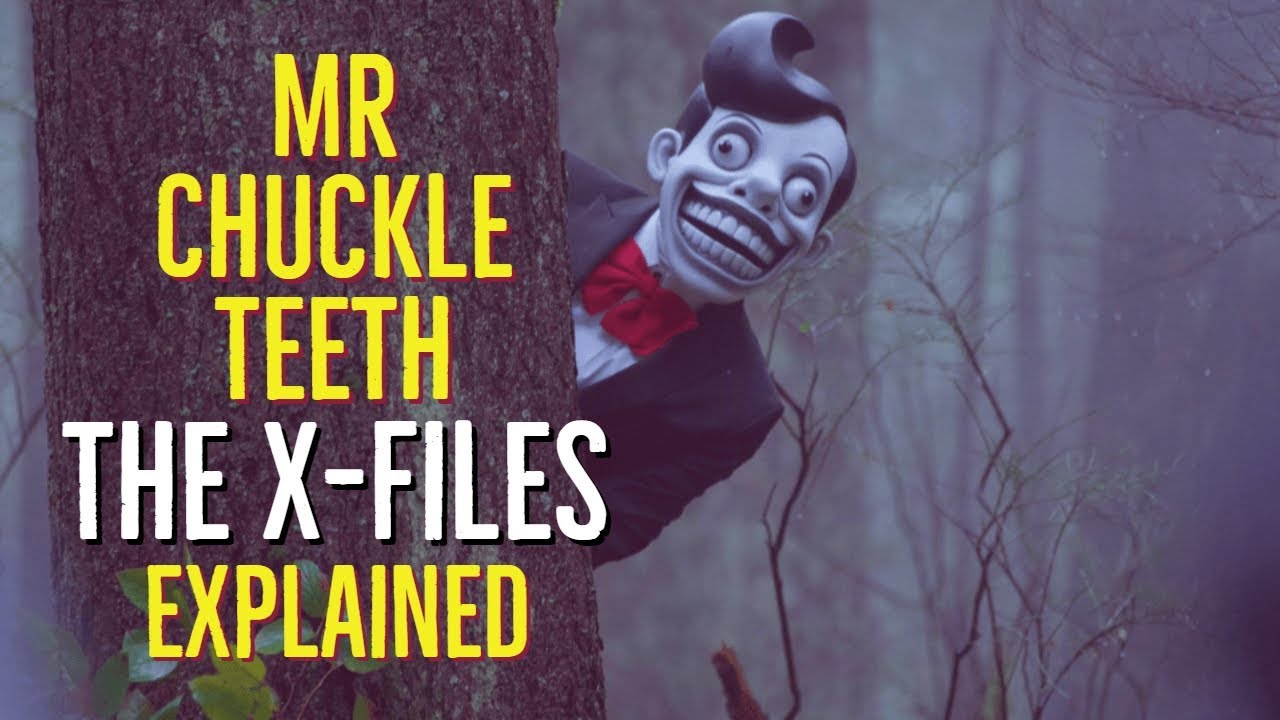
Nightmares don’t usually wear bowties.
But then there’s Mr. Chuckle Teeth. If you’ve sat through the later seasons of The X-Files, you know exactly which toothy, top-hat-wearing hell-sprite I’m talking about. He didn't show up in the nineties. He wasn't part of the original cultural zeitgeist that made everyone afraid of grey aliens and bees. No, this guy was a product of the 2018 revival—specifically Season 11, Episode 5, titled "Familiar."
And honestly? He might be the most effective "Monster of the Week" the show produced in twenty years.
He's a children's show character. Or at least, he's supposed to be. With those oversized, unblinking eyes and a grin that literally stretches from ear to ear, he feels like a fever dream version of Barney or Bozo the Clown. Except he hangs out in the woods of Connecticut. He lures children to their deaths with a catchy, synthesized jingle. He is the personification of "uncanny valley," and he’s the reason a lot of us still feel a little twitchy near a playground after dark.
The Folk Horror Roots of Mr. Chuckle Teeth
"Familiar" wasn't just another procedural episode. It was a love letter to folk horror. Think The Wicker Man or Midsommar, but set in a gray, drizzly New England town called Eastwood. The writer, Benjamin Van Allen, leaned heavily into the idea of "Old World" witchcraft bubbling up in a modern American suburb.
Mr. Chuckle Teeth isn't a demon in the traditional sense, though he certainly acts like one. He’s a manifestation. In the episode, the town is cursed—or rather, the people in it have invited something dark through their own petty grievances and secrets. The creature takes the form of whatever will lure its victim. For a young boy named Andrew Eggers, that form is his favorite TV character.
That’s the brilliance of the design.
He’s colorful. He’s vibrant. In the dull, muted palette of a rainy forest, his bright red suit and yellow skin pop like a digital glitch. It shouldn't be scary. It’s a doll. But when he starts moving—that jerky, stop-motion-esque gait—everything shifts. It’s wrong. Your brain tells you it’s a person in a suit, but the movement suggests something without bones.
Why the Design Actually Works (And Why It Ruined Our Sleep)
Let’s talk about the teeth. They’re huge. They’re square. They’re far too numerous for a human mouth. When Mr. Chuckle Teeth appears on a TV screen within the show, he looks like a budget-bin version of a Saturday morning puppet. But when Mulder sees him in the woods, the scale is off. He’s too tall.
The production team, led by legendary X-Files director Holly Dale, used practical effects to sell the horror. It wasn't just a CGI blur. There was a physical presence on set. This matters because it gives the actors something real to react to, and it gives the audience a sense of tactile dread.
The sound design is equally haunting.
The "Mr. Chuckle Teeth" song is a simple, repetitive melody. It’s the kind of thing that would be annoying if you heard it in a toy store, but out in the wild? It’s a death knell. It plays on the "creepy kid" trope that The X-Files has mastered over decades, dating all the way back to episodes like "The Calusari" or "Chinga."
Interestingly, many fans compared him to "Mr. Noseybonk," a terrifying character from the 80s British kids' show Jigsaw. If you haven't seen Noseybonk, don't Google it before bed. The resemblance is striking—the same fixed, manic expression and long nose. It taps into a primal fear of the "mask" that never changes expression, even while it's doing something horrific.
Beyond the Jump Scares: The Ritualism of "Familiar"
Mulder and Scully are often at their best when they’re disagreeing about the nature of evil. In "Familiar," Mulder goes full "Spooky" Mulder, identifying the presence of a "Grimoire"—a book of magic—and the ritualistic nature of the killings.
The episode suggests that the town’s collective sins fueled the entity. Mr. Chuckle Teeth wasn't just a random monster; he was a tulpa of sorts, a thought-form brought to life by a literal witch hunt. The town’s police chief was hiding an affair, and the tension in the community was a powder keg.
The monster took a symbol of innocence and twisted it.
That’s a recurring theme in horror, but The X-Files does it with a specific procedural grit. You have Scully performing an autopsy on a child—a scene that is remarkably grim even for this show—contrasted with the bright, smiling face of a puppet. It’s that juxtaposition that makes the revival seasons worth watching. While the "Mythology" episodes about Mulder’s father and alien colonizers often felt bloated and confusing by Season 11, the standalone monster episodes like this one proved the show still had teeth.
Big, square, white teeth.
The Legacy of the Grinning Man
Is Mr. Chuckle Teeth as iconic as the Flukeman? Maybe not. Does he have the emotional weight of Peter Gerety’s character in "Pusher"? No. But he represents a specific era of horror where the "Creepypasta" aesthetic began to influence mainstream television.
He feels like something that would go viral on a dark corner of Reddit. He’s built for the internet age—a visual that is instantly recognizable and deeply unsettling.
The episode also reminds us that The X-Files was always a show about the stuff we leave behind. The old ways. The spells buried under suburban asphalt. When the "demon" is finally dispatched by being set on fire, it doesn't feel like a victory. The damage is done. A kid is dead. A family is destroyed. Mr. Chuckle Teeth was just the messenger.
How to Revisit the Episode Without Losing Your Mind
If you're planning a rewatch, here is the best way to approach "Familiar" and the Mr. Chuckle Teeth phenomenon:
- Watch the 1970s classics first. To really "get" the vibe, watch The Blood on Satan's Claw. You’ll see where the DNA for this episode came from. The "folk horror" subgenre is all about the soil being poisoned by history.
- Pay attention to the background. One of the best things about this episode is that the creature appears in the background of shots before the characters notice him. It’s a classic horror technique that rewards a high-definition screen.
- Listen to the lyrics. If you can stomach it, listen to the "Chuckle Teeth" song lyrics. They are intentionally nonsensical, which adds to the feeling of a childhood memory being corrupted.
- Look for the "Hellhound." Mr. Chuckle Teeth isn't the only form the entity takes. The episode also features a black dog, a classic omen of death in British and New England folklore.
Don't go into this expecting a happy ending or a grand explanation of the alien conspiracy. This is a standalone nightmare. It’s about the fact that sometimes, the things we create to entertain our children are the things that end up haunting us the most.
Next time you’re walking through a park and you hear a faint, tinkling melody coming from someone’s phone or a distant toy, just keep walking. Don't look for the man in the top hat. Some mysteries are better left unsolved, and some teeth are better left unseen.
The best thing you can do now is go back and watch the episode on a dark Tuesday night. Turn the lights off. Just don't blame me if you start seeing a yellow-faced man in the corner of your eye when you try to go to sleep.